
Business
Naira drops over N100 against Dollar despite decline in inflation rate

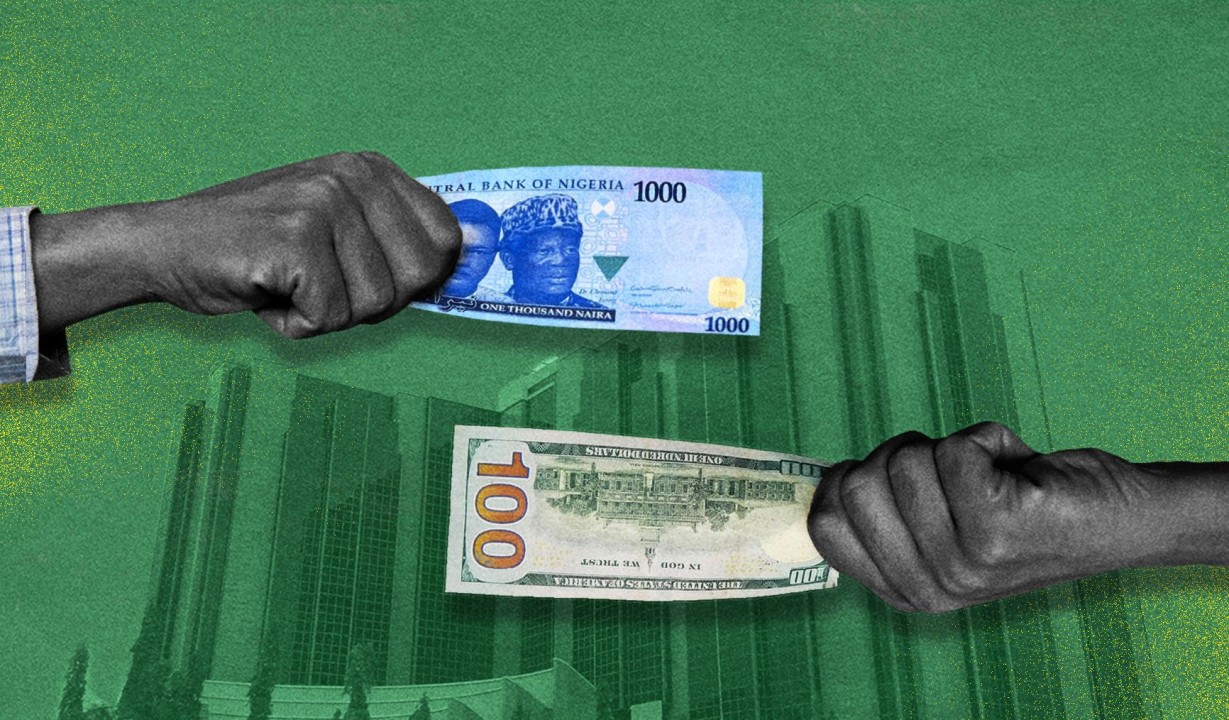
Despite a slowdown in headline inflation in Nigeria, the Naira has depreciated significantly against the U.S. dollar at the official exchange rate.
On Tuesday, the local currency was traded at N1,656 per dollar at the Nigerian Autonomous Foreign Exchange Market (NAFEM), a sharp drop from Monday’s rate of N1,546 per dollar.
In contrast, the parallel market saw a modest appreciation of the Naira, which traded at N1,660 per dollar, up from N1,665 per dollar. This discrepancy highlights ongoing volatility in Nigeria’s foreign exchange markets.
The August inflation data revealed a decrease in both headline and food inflation rates. According to the Nigerian Bureau of Statistics (NBS), headline inflation fell to 32.15% from 33.40% in July, while food inflation eased to 37.52% from 39.53%. The lower inflation rates are attributed to decreased food prices during the harvest season.
READ ALSO: Naira drops 3.61%, crosses N1,600 amid market volatility
Meanwhile, the U.S. dollar gained momentum against most currencies, including the Naira, following stronger-than-expected U.S. retail sales data. The U.S. Dollar Index, which measures the dollar against a basket of six major currencies, rose slightly to 100.90, reflecting a recovery from earlier lows.
This gain comes as investors anticipate the Federal Reserve’s upcoming policy decision, with current market expectations suggesting a potential interest rate cut.
The Federal Reserve is set to conclude its policy meeting later today, with investors keenly awaiting its decision. Recent U.S. economic data, including a 0.1% rise in retail sales for August and a rebound in factory production, suggests that while the Fed might consider easing monetary policy, significant rate cuts are unlikely given the strengthening labor market and inflationary pressures.
Fed funds futures now show a 63% probability of a 50-basis point rate cut, up from 30% a week ago, with a 37% chance for a 25-basis point cut. Despite these shifting probabilities, some analysts caution that the market may be overestimating the extent of potential rate cuts.
As Nigeria braces for possible foreign capital inflows later in the year, the divergence between official and parallel market rates, coupled with global economic trends, continues to influence the Naira’s performance and broader market sentiment.


-

 Business1 week ago
Dangote Refinery IPO: 70% Subscription claim meets fourfold demand assertion as investors seek clarity
-

 Featured4 days ago
Inside INEC’s race to prepare for Nigeria’s 2027 elections
-

 Latest6 days ago
UCTH faces morgue crisis as 50 unclaimed corpses await mass burial
-

 Featured4 days ago
2027: APC unveils nationwide campaign timetable, Tinubu to rally in 12 states
-

 Business6 days ago
BREAKING: Nigeria’s Inflation Rate Drops to 14.63% in September
-

 Aviation1 week ago
Germany opens online application route for student, EU Blue Card and other long-stay visas
-

 Business5 days ago
President Tinubu and the Low Transport Fares Fiasco
-
 Business4 days ago
Court dismisses ₦170m Trade Fair contract claim, says Zenith Bank was not a party