
Business
Naira drops to N1,544/$1 at official rate, stays stable in parallel market

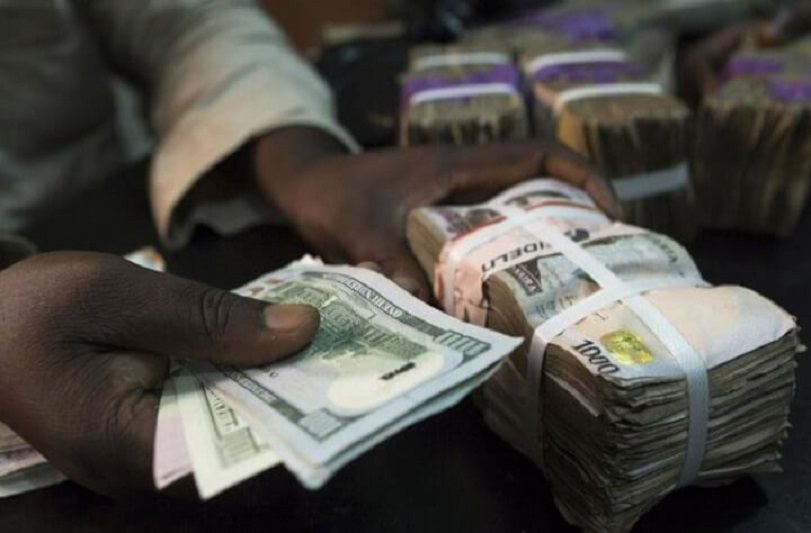
The Nigerian naira shed N5 against the U.S. dollar at the official exchange window on Thursday, September 19, 2024, closing at N1,544/$1, according to data from the Nigerian Autonomous Foreign Exchange Market (NAFEM).
This represents a marginal depreciation compared to the previous day’s rate of N1,539/$1.
Despite this decline at the official window, the naira remained steady in the parallel market for the third consecutive day, trading at N1,665/$1.
This consistency indicates a stabilization in the unofficial forex market, despite ongoing economic pressures.
The naira’s performance against other major currencies saw little movement. It held firm against the British pound at N2,220/£1 and the Canadian dollar at N1,280/CA$1, reflecting no change from the prior day’s rates.
However, the local currency recorded a slight gain of N5 against the euro, improving to N1,835/€1 from N1,840/€1.
Financial analysts attribute the naira’s volatility at the official window to persistent forex liquidity challenges and heightened demand for the dollar among importers.
READ ALSO: Naira crisis, controversial fuel prices: Nigerians question FG transparency
Adewale Ogunleye, a senior economist at Lagos-based investment firm Afrinvest, explained, “The naira’s marginal loss against the dollar reflects ongoing structural issues in Nigeria’s foreign exchange system. While the official window is under pressure from increased demand for imports, the parallel market has seen relative stability due to central bank interventions.”
Ogunleye also pointed to the impact of global oil prices on Nigeria’s forex earnings, stating, “With oil prices remaining volatile, Nigeria’s revenue base continues to struggle, weakening the supply of foreign currency to the market.”
Other experts, like Mary Olatunji of Financial Derivatives Company, emphasized the need for reforms in Nigeria’s forex management.
READ ALSO: Experts assess fuel pricing crisis as Tinubu’s naira policy targets cartel
“There’s a fundamental mismatch between supply and demand in the forex market. The Central Bank of Nigeria must implement more robust policies to ease liquidity shortages and encourage foreign investment,” Olatunji noted.
As the naira continues to navigate these challenges, analysts expect further fluctuations in the short term, particularly at the official window. The parallel market, while steadier for now, may also face renewed pressure depending on the central bank’s interventions and broader economic trends.
The slight gain against the euro suggests some room for optimism, as improved trade balances with European nations could provide a buffer against further depreciation. However, without deeper structural reforms, the naira’s long-term stability remains uncertain.


-
 Latest6 days ago
Israel marks 3 years since October 7 Hamas attack amid Gaza strikes, election debate
-

 Energy6 days ago
Fuel Battle: Dangote, marketers and government clash over petrol imports
-

 Energy1 week ago
Petrol, diesel prices rise 86% in 2026 as costs hit fresh highs
-

 Football7 days ago
Nigeria’s World Cup exit under spotlight as FIFA’s DR Congo files emerge
-

 Energy1 week ago
Has Iran lost control of the Strait of Hormuz? Oil flows rebound as war disruptions persist
-

 Latest7 days ago
US Court set to rule on release of FBI, DEA records on Tinubu
-

 Latest17 hours ago
Full List: Meet the 2026 Nobel Prize winners across six categories
-

 Business7 days ago
Nigerian investors at a crossroads as fixed-income yields slide