
Business
Naira sustains gains as CBN boosts forex market with $230m

By Odunewu Segun
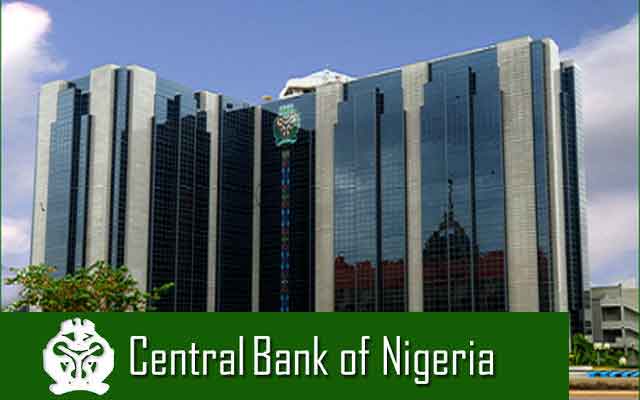
The naira has continued to strengthen in the parallel market, going for N460/$, its highest level in more than three months, following the series of intervention by the Central bank of Nigeria.
The latest intervention, National Daily gathered involved the sales of about $230 million to about 16 banks through the forward contract agreement.
This forms part of the fulfillment of the apex bank’s pledge to ensure liquidity in the interbank market under the latest policy announced last week.
Of the 16 financial institutions, 13 are commercial banks, one is a development financing establishment, while two are merchant banks.
An analysis of the auction’s participants showed that nine commercial banks and one merchant got $162.85 million at bid rates ranging from N325/$ to N360/$, while six others got $58.52 million at bid rates between N315/$ and N320/$.
However, the first 10 banks with a total request of $162.85 million in the forwards contract have the maturity date of March 27, 2017, while the other six have a maturity date of April 24, 2017.
Last week, the regulator offered $500 million in 60-day forward contract, but ended up selling $370 million, as some banks could not back up their bids with naira equivalent or provisions.
A sub-Saharan economist for RenCap, Yvonne Mhango, said: “There are rays of light in Nigeria’s outlook…foreign reserves have risen over 20 per cent to $29 billion and a more comfortable CBN has this week announced changes to its foreign exchange policy and injected more dollars into the local market. Since Monday (February 20), the parallel market rate has strengthened,” she said.
Research analyst at FXTM, Lukman Otunuga, said that though Monday’s new foreign exchange policy, which made more dollar available for the few at 20 per cent above the official rate is already easing some pressures, it does little to solve the major problem of multiple exchanges.
According to Otunuga, Nigeria’s five adopted exchanges continue to add to the uncertainty with both firms and investors constantly left confused. The bearish combination of depressed oil prices, foreign exchange scarcity and tepid economic fundamentals continue to expose the Nigerian economy to downside risks.













-

 Business1 week ago
Dangote Refinery IPO: 70% Subscription claim meets fourfold demand assertion as investors seek clarity
-

 Featured4 days ago
Inside INEC’s race to prepare for Nigeria’s 2027 elections
-
Business1 week ago
Dangote Refinery IPO Extension: Was the 70% subscription report overhyped?
-

 Latest6 days ago
UCTH faces morgue crisis as 50 unclaimed corpses await mass burial
-

 Featured4 days ago
2027: APC unveils nationwide campaign timetable, Tinubu to rally in 12 states
-

 Business6 days ago
BREAKING: Nigeria’s Inflation Rate Drops to 14.63% in September
-

 Aviation1 week ago
Germany opens online application route for student, EU Blue Card and other long-stay visas
-
 Business4 days ago
Court dismisses ₦170m Trade Fair contract claim, says Zenith Bank was not a party