
Business
Nigeria’s debt to World Bank increases by 48.69 in 2 years

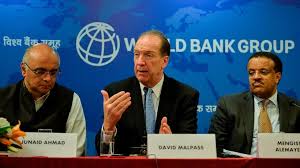
Statistics from Nigeria’s Debt Management Office (DMO) has revealed that the World Bank’s portfolio in Nigeria now stands at $8.52 billion, indicating an increase of 48.69% within a two-year period.
Between March 31, 2015 and March 31, 2018, Nigeria’s indebtedness to the global bank increased by $2.7 billion, up from $5.73 billion to $8.52 billion.
Meanwhile, some disbursements from the World Bank were yet to be captured in Nigeria’s debt statistics as at the time of this report.
National Daily gathered that a large percentage of Nigeria’s indebtedness belongs to the International Development Association, an arm of the World Bank which gives concessional loans to troubled and “fragile” countries. Nigeria owes the International Development Association the sum of $8.4 billion.
Nigeria also owes about $124.18 million to the International Bank for Reconstruction and Development, another arm of the World Bank.
From the foregoing, it can be seen that the total sum of Nigeria’s World Bank debt (that is $8.52 billion) accounts for about 38.6% of the country’s entire foreign debt.
Nigeria has over the years relied on loans from the World Bank to finance/facilitate many projects, even on occasions when such policy moves were controversial.
As at March 31st, 2018, the entirety of Nigeria’s foreign debt portfolio stood at $22.07 billion. The country is indebted to the African Development Bank to the tune of $1.32 billion. It also owes the African Development Fund the sum of $835.14 million.
Other multilateral organisations Nigeria is indebted to are: The International Fund for Agricultural Development – $160.38 million; The Arab Bank for Economic Development – $5.88 million; The EDF Energy, France – $70.28 million and the Islamic Development Bank – $17.5 million.
A further breakdown of the country’s indebtedness to multilateral organisations shows that it makes up about 49.56% of its external debt portfolio. This is unlike bilateral debt which makes up only 10.61% or $2.34 billion in exact terms.
Unfortunately, as Nigeria has over time continued to borrow billions of dollars from different sources while increasing its debt portfolio, there are little or zero tangible results to substantiate these huge borrowings, even as the majority of Nigerians continue to perish in extreme poverty.











-

 Latest6 days ago
US Immigration fees rise from October 16 as USCIS announces new charges
-
 Latest1 day ago
Israel marks 3 years since October 7 Hamas attack amid Gaza strikes, election debate
-

 Business6 days ago
Nigeria’s $55bn reserves raise fresh questions over naira value
-

 Health5 days ago
Florida sues Pfizer over deceptive COVID-19 vaccine marketing
-

 Business7 days ago
Tuoyo Erikowa wins digital marketing personality of the Year at 2026 EDGE awards
-

 Crime5 days ago
From camp to captivity: How kidnappers now target NYSC Corps members on highways
-

 Featured6 days ago
2027: Can Nigeria’s opposition still unite behind a single presidential candidate?
-

 Crime5 days ago
Fulani Militia leader linked to Christian killings arrested in Plateau