
Business
Nigeria’s economic recovery remains fragile, says World Bank

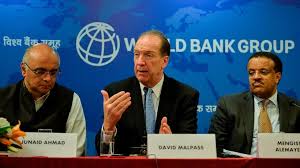
The World Bank in its latest Bi-annual Economic Update released at the weekend has described Nigeria economic recovery plans as being fragile despite assurances from government officials that the country is on its way out of recession.
The Bank said that while it maintains its forecast that Nigeria could return to positive economic growth in 2017, it believes the recovery is fragile due to risk associated with the nation’s oil sector.
It stated: “Growth is forecast to return into positive territory in 2017, largely on the back of recovery in the oil sector as the government intensifies efforts to restore peace and stability in the Niger Delta, improve its Joint Venture (JV) relationships with international oil companies while strong growth in the agricultural sector continues.
However, given the risks associated with the oil sector, recovery is fraught with a high degree of fragility and risks; notably from future shocks to the oil price or further unrest in the Niger Delta, which is not yet fully stabilized, as well as from the incomplete implementation of new JV cash call arrangements.”
ALSO SEE: LCCI calls for faithful implementation of ERGP
The Bank however pointed out that: “Nigeria can build on the oil-driven economic recovery anticipated for it in 2017 by strengthening its macroeconomic policy framework and implementing the structural reforms needed to diversify the economy and break out of a boom and bust cycle.”
Speaking on the Economic Recovery and Growth Plan (ERGP), Rachid Benmessaoud, Country Director for Nigeria opined that: “The ERGP, if implemented successfully, would lead to expanded transportation infrastructure, the increased reliability of supply of power by restoring financial viability to the power sector, an improved business environment, improved educational attainment, strengthened public institutions, and improved transparency and anti-corruption.”
The World Bank economic update on Nigeria also noted that over the last four decades, Nigeria’s GDP growth rate has failed to keep pace with those of more developed economies, an experience common among commodity exporters. More so, oil has continued to dominate its growth pattern but the volatility of oil-dependent growth imposes welfare costs, which impede progress in social and economic development, as was very clear over the last year.
A cross-country analysis of the determinants of growth carried out for the report underscores the importance of sound macroeconomic management and stability for growth, while confirming that inflation, government consumption, and currency misalignment (over-valuation) are negatively correlated with growth.









-
 Business7 days ago
Dangote Refinery IPO: 70% Subscription claim meets fourfold demand assertion as investors seek clarity
-

 Latest1 week ago
Umahi defends Lagos-Calabar highway route changes amid public outcry
-
Business1 week ago
Dangote Refinery IPO Extension: Was the 70% subscription report overhyped?
-
 Featured4 days ago
Inside INEC’s race to prepare for Nigeria’s 2027 elections
-

 Latest6 days ago
UCTH faces morgue crisis as 50 unclaimed corpses await mass burial
-
 Featured4 days ago
2027: APC unveils nationwide campaign timetable, Tinubu to rally in 12 states
-
 Business6 days ago
BREAKING: Nigeria’s Inflation Rate Drops to 14.63% in September
-

 Featured1 week ago
El-Rufai, ADC governorship candidate’s court appearance puts Kaduna opposition politics in focus