
News
Pacific Islands Forum urges Japan to rethink decision to discharge nuclear wastewater

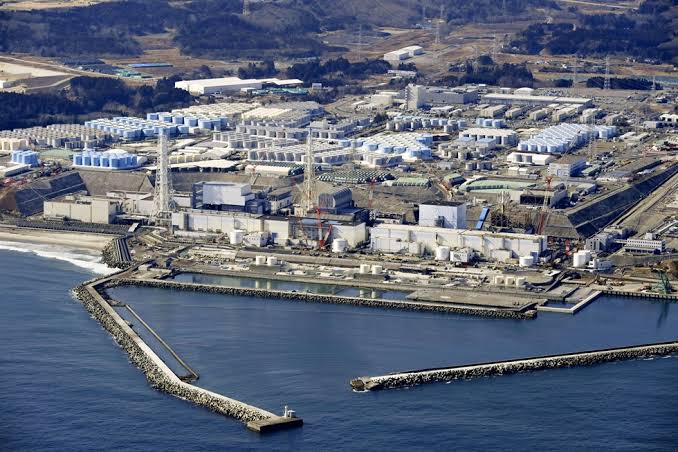
The Pacific Islands Forum (PIF), has expressed deep concern over Japan’s decision to dump wastewater from the Fukushima nuclear plant into the sea, urging them to rethink their decision.
According to a statement on Wednesday by the PIF, calling Japan to rethink on the discharge of the wastewater.
The Secretary-General, Dame Meg Taylor said that the PIF noted with deep concern the decision by the Japanese government to discharge the Advanced Liquid Processing System (ALPS) Treated Water from the Fukushima Daiichi Nuclear Power Station into the Pacific Ocean.
PIF wished to highlight and reiterate the position of the forum region in relation to this matter.
As required under the international law, and as highlighted by the States Parties of the Treaty of Rarotonga, also known as the South Pacific Nuclear Free Zone (SPNFZ) Treaty, in December 2020.
Japan should take all appropriate measures within its territory, jurisdiction or control to prevent significant trans boundary harm to the territories of the Pacific, including the South Pacific Nuclear Free Zone, Taylor said.
She said that the PIF’s view was that Japan had not taken sufficient steps toward addressing the potential harm to the Pacific, including possible environmental, health and economic impacts.
According to her, the Pacific’s fisheries and oceans resources are critical to the Pacific livelihoods and must be protected.
PIF urgently called on the Japanese government to hold off the conduct of the discharge of the ALPS Treated Water until further consultations were undertaken with PIF members and an independent expert review was undertaken to the satisfaction of all PIF members.
Founded in 1971, the PIF is an inter-governmental organisation that aims to enhance cooperation between countries and territories of the Pacific Ocean, including formation of a trade bloc and regional peacekeeping operations.
The Treaty of Rarotonga, which was inked by PIF members in 1985, bans the manufacture, possession, stationing, and testing of any nuclear explosive device in Treaty territories for which the parties are internationally responsible.
It also bans the dumping of radioactive waste at sea.


-

 Latest5 days ago
US Immigration fees rise from October 16 as USCIS announces new charges
-
 Latest6 hours ago
Israel marks 3 years since October 7 Hamas attack amid Gaza strikes, election debate
-

 Business5 days ago
Nigeria’s $55bn reserves raise fresh questions over naira value
-

 Health4 days ago
Florida sues Pfizer over deceptive COVID-19 vaccine marketing
-
![Edo Special Court sentences four kidnappers to death over woman’s abduction [VIDEO]](https://nationaldailyng.com/wp-content/uploads/2026/09/828831764_1099651439663438_3480600082081067427_n-400x240.jpg)
![Edo Special Court sentences four kidnappers to death over woman’s abduction [VIDEO]](https://nationaldailyng.com/wp-content/uploads/2026/09/828831764_1099651439663438_3480600082081067427_n-80x80.jpg) Crime1 week ago
Crime1 week agoEdo Special Court sentences four kidnappers to death over woman’s abduction [VIDEO]
-

 Business6 days ago
Tuoyo Erikowa wins digital marketing personality of the Year at 2026 EDGE awards
-

 Crime4 days ago
From camp to captivity: How kidnappers now target NYSC Corps members on highways
-

 Featured5 days ago
2027: Can Nigeria’s opposition still unite behind a single presidential candidate?