
Business
Power crisis: Why households, businesses are turning to solar

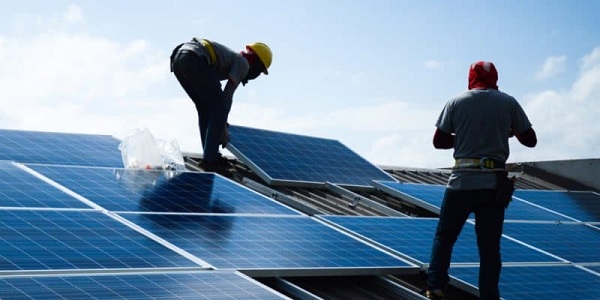
Nigeria’s worsening electricity cost crisis is accelerating a quiet shift away from the national grid and petrol- and diesel-powered generators, as households and businesses increasingly turn to solar and battery systems to control energy expenses.
Lagos-based renewable energy company, Folivision Limited, said demand for solar installations and inverter systems has risen significantly as consumers confront higher electricity tariffs, expensive fuel and persistent concerns over the reliability of grid supply.
While electricity remains one of the country’s most critical infrastructure needs, the rising cost of both grid power and self-generation is forcing consumers to seek alternatives that can provide greater cost predictability.
Band A electricity customers currently face tariffs ranging from about N209 to N225 per kilowatt-hour, depending on the applicable tariff category.
For households and businesses with substantial electricity consumption, the higher tariffs can translate into significantly larger monthly electricity bills.
At the same time, consumers that fall back on generators face another escalating expense as petrol and diesel prices remain substantially higher than they were before the removal of fuel subsidies.
Folivision Chief Executive Officer, Folarin Ajumobi, said the changing economics of electricity were making solar power increasingly attractive to consumers seeking reliable electricity without unpredictable monthly energy expenditure.
READ ALSO: SERAP gives INEC 7-day ultimatum to account for N126.46bn electoral funds
According to him, consumers are beginning to look beyond the initial installation cost and assess solar investments in terms of their potential to reduce long-term energy expenses.
The shift is particularly significant for businesses whose operations cannot tolerate prolonged power interruptions.
The Generator Economy Under Pressure
For decades, petrol and diesel generators have served as Nigeria’s unofficial backup electricity infrastructure. But the economics of generator dependence have become increasingly difficult for businesses operating on thin margins.
Healthcare facilities, supermarkets, schools, offices, restaurants and cold-chain businesses, among others, require relatively continuous electricity. When grid supply fails, their generators immediately become the alternative—turning every hour of operation into a fuel and maintenance cost.
Energy analysts say this is changing the way businesses calculate their cost of production.
Rather than considering electricity simply as a utility expense, companies are increasingly treating energy efficiency and alternative power supply as strategic investments.
Energy economist analysis: The attraction of solar is not necessarily that it eliminates electricity costs completely, but that it can reduce exposure to volatile fuel prices and generator maintenance while giving users greater control over their energy supply.
This distinction is important because the economics of solar depend heavily on system size, battery capacity, electricity consumption patterns, equipment quality, financing costs and how frequently the customer would otherwise run a generator.
Solar’s Biggest Barrier: Upfront Cost
Despite its growing appeal, the transition to solar remains constrained by the initial cost of purchasing and installing a complete system.
A typical installation requires solar panels, inverters, batteries, protection equipment, cabling, installation and ongoing maintenance. For many low- and middle-income households, the upfront capital requirement remains prohibitive.
Folivision said it is attempting to address that challenge through financing arrangements, including Lease-to-Own and Buy Now Pay Later options.
If households and small businesses can spread the cost of solar over several years, the decision becomes less about whether they can afford a complete system today and more about whether the monthly payment is lower than their existing combined electricity and generator expenses.
A Parallel Electricity Market Emerging
Analysts describe the development as more than a temporary response to high electricity prices.
Nigeria is gradually developing a parallel electricity ecosystem in which solar panels, battery storage, inverters, mini-grids and other distributed-energy technologies complement or, in some cases, substitute for conventional grid supply.
The development could have profound implications for Nigeria’s electricity market.
If more high-consuming households and businesses migrate partially or completely to solar, distribution companies could face changes in demand patterns, particularly among customers currently paying higher tariffs.
However, experts caution that solar cannot yet provide a universal replacement for grid electricity.
Large industrial users, densely populated urban communities and consumers with high nighttime electricity demand may require substantial battery capacity or hybrid systems, increasing capital requirements.
Power-sector analyst analysis: The real test for Nigeria’s solar revolution will be whether the industry can move from supplying affluent households and commercial customers to delivering affordable, scalable systems for mass-market consumers.
The Cost of Doing Nothing
For Nigerian businesses, however, the calculation is increasingly being driven by the cost of remaining dependent on conventional power sources.
Every increase in electricity tariffs raises grid costs, while every increase in petrol or diesel prices raises the cost of self-generation.
This creates a difficult choice: pay more for grid electricity, spend more on generators, reduce operating hours—or invest in an alternative energy system.
Folivision’s growing business reflects how that calculation is changing.
The company plans to expand across Lagos and other major Nigerian cities, targeting households, small and medium-sized enterprises and larger commercial users.
For consumers, the solar transition is therefore becoming less about environmental consciousness and more about economic survival.
The emerging question is no longer whether Nigerians need alternative electricity sources, but how quickly solar and other distributed-energy solutions can become affordable enough to serve the wider population.


-

 Latest6 days ago
US Immigration fees rise from October 16 as USCIS announces new charges
-
 Latest1 day ago
Israel marks 3 years since October 7 Hamas attack amid Gaza strikes, election debate
-

 Business6 days ago
Nigeria’s $55bn reserves raise fresh questions over naira value
-

 Health5 days ago
Florida sues Pfizer over deceptive COVID-19 vaccine marketing
-

 Business7 days ago
Tuoyo Erikowa wins digital marketing personality of the Year at 2026 EDGE awards
-

 Crime5 days ago
From camp to captivity: How kidnappers now target NYSC Corps members on highways
-

 Featured6 days ago
2027: Can Nigeria’s opposition still unite behind a single presidential candidate?
-

 Crime5 days ago
Fulani Militia leader linked to Christian killings arrested in Plateau