
Business
Prepares for higher food prices, USAID tells Nigeria, others

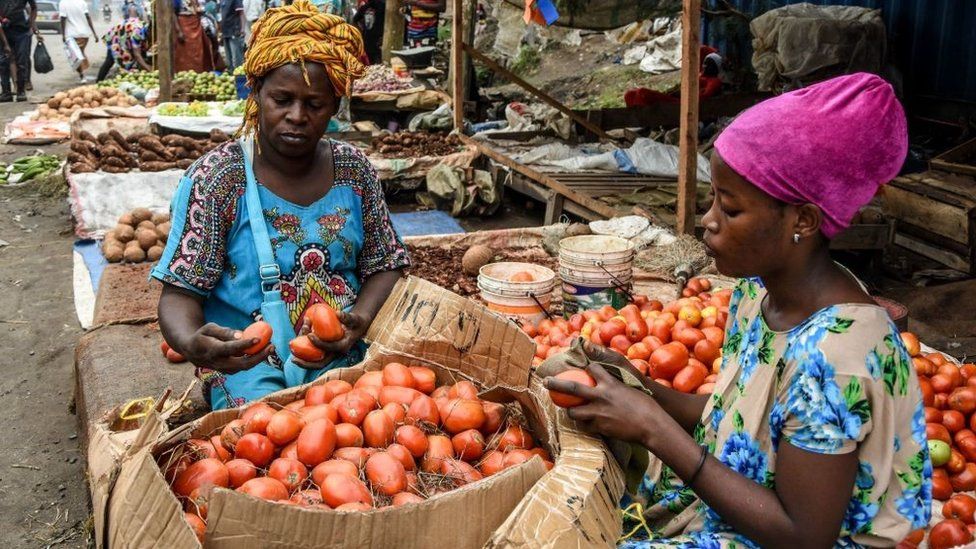
The United States Agency for International Development (USAID) has warned Nigeria and other African countries to prepare for higher food prices.
Speaking at a media briefing on Thursday, Isobel Coleman, USAID’s deputy administrator for policy and programming, attributed the development to Russia’s recent decision to abandon the Black Sea Grain Initiative.
Established in July 2022, the Black Sea Grain Initiative is aimed at abating a global food crisis after Russia invaded Ukraine — a neighbouring country and fellow key grain exporter.
The deal allowed for commercial food and fertilizer (including ammonia) exports from three key Ukrainian ports in the Black Sea — Odesa, Chornomorsk, and Yuzhny/Pivdennyi.
Coleman said the impact of the hike in food prices would be more felt in developing countries that were import-dependent, and had conventionally relied on grain imports from Ukraine.
She said just in the last few weeks since pulling out of the initiative, the government of Ukraine estimated that Putin’s missiles and drone attacks have destroyed 180,000 metric tons of Ukrainian grains sitting in storage.
According to her, the grain is sufficient to feed almost 12 million people for a month.
READ ALSO: USAID enrolls 100 children into Kaduna schools, rebuild damaged houses
“It is very, very important to keep in mind that countries that import grains, those grains are global commodities and they are priced globally. And taking off from the market one of the world’s largest breadbaskets – Ukraine – by doing that, Russia is increasing global food prices,” Coleman said.
“We’ve already seen how when the Black Sea Grain Initiative deal came into place, global food prices came down over time, and since Russia has pulled out of the agreement, food prices have again been on the rise.
“And this affects every country around the world, but it affects most acutely large importing developing countries that have to spend much more of their precious foreign exchange resources to purchase food to feed their populations.”
Coleman said Russia’s withdrawal from the initiative, which in principle, prevented Ukraine from exporting grain to Nigeria and other developing countries, would have dire consequences for food security.
READ ALSO: FCTA, USAID partner to improve FCT primary healthcare systems
She said 65 percent of the grains from the Black Sea Grain Initiative have gone to developing countries and 20 percent have gone directly to the least developed countries.
Coleman recalled that in the wake of the last food crisis that rocked global food security in 2008, the US government launched “Feed The Future” – an approach to invest in food security and making countries more resilient to food crises.
“And today we invest in more than 40 countries across Africa, Asia, Latin America, the Caribbean, really around the world, and we have 20 – sorry, 20 target countries that have very high levels of poverty and hunger, and also a strong potential for agriculture to drive economic growth and to transform food systems,” she said.
Coleman said USAID was currently exploring alternate routes — via the Danube, via road, via rail –for exporting Ukraine’s grains.


-
 Latest1 week ago
Israel marks 3 years since October 7 Hamas attack amid Gaza strikes, election debate
-

 Energy7 days ago
Fuel Battle: Dangote, marketers and government clash over petrol imports
-

 Latest2 days ago
Full List: Meet the 2026 Nobel Prize winners across six categories
-

 Football1 week ago
Nigeria’s World Cup exit under spotlight as FIFA’s DR Congo files emerge
-

 Latest1 week ago
US Court set to rule on release of FBI, DEA records on Tinubu
-

 Business1 week ago
Nigerian investors at a crossroads as fixed-income yields slide
-

 Latest1 week ago
Oyo APC crisis deepens as Oluyole reconciliation meeting ends in brawl
-
 Featured6 days ago
103 Million Voters: What does INEC’s new register say about Nigeria’s population?