
Business
SERAP urges AGF, EFCC to name, shame politicians buying PVCs from poor voters

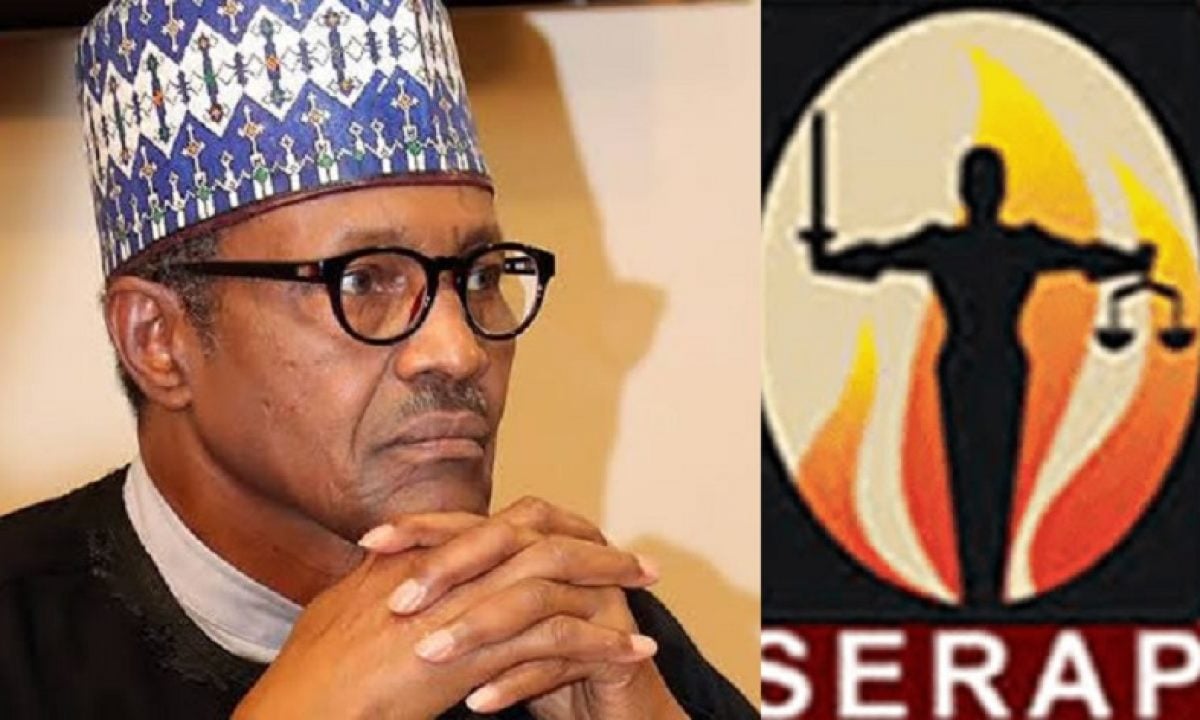
Socio-Economic Rights and Accountability Project (SERAP) has urged President Muhammadu Buhari to urgently direct the Attorney General of the Federation and Minister of Justice Mr Abubakar Malami, SAN, and appropriate anti-corruption agencies like the Economic and Financial Crimes Commission (EFCC) to identify and arrest politicians who are allegedly buying permanent voter cards (PVCs) from poor Nigerians, and promptly bring them to justice.
The Independent National Electoral Commission (INEC) recently alleged that some politicians were buying PVCs from poor Nigerians across the country. The Northern Elders Forum (NEF) had corroborated the allegations, reportedly stating that some politicians were buying PVCs with N2,000 in the north.
In the letter dated 17th December 2022 and signed by SERAP deputy director Kolawole Oluwadare, the organisation said: “Buying of PVCs from poor Nigerians is a threat to fair and representative elections, as it amounts to vote buying, undue influence and improper electoral influence.”
SERAP said, “The allegations that politicians and their sponsors are buying PVCs from poor Nigerians are grave violations of the Nigerian Constitution 1999 [as amended], the Electoral Act, and the country’s international anti-corruption and human rights obligations.”
The letter read in part: “We would be grateful if the recommended measures are taken within 7 days of the receipt and/or publication of this letter. If we have not heard from you by then, SERAP shall consider appropriate legal actions to compel your government to comply with our request in the public interest.
READ ALSO: PenCom reacts to fraud allegations’ petition to EFCC
“No body politic worthy of being called a democracy entrusts the selection of leaders to a process of auction or barter. Inducing poor Nigerians to sell their PVCs intrudes on their freedom to make up their own minds.
“The buying of PVCs from poor Nigerians and the resulting deprivation of the right to participation would completely compromise the legitimacy of representative government.
“Buying of PVCs is a variation of vote buying and undue influence. It would undermine the ability of INEC to effectively discharge its responsibilities under Section 153 of the Nigerian Constitution and paragraph 15(a) of the third schedule of the Constitution, and the Electoral Act 2022.
“It would lead to disparate and discriminatory treatment of poor Nigerians, encourage poor governance, and weaken citizens’ capacity to hold their ‘elected officials’ accountable for their actions.
“When politicians and their sponsors decide to buy the support of the people rather than contest fairly for their votes, there are possibilities that such politicians will show a disregard for democratic rules and a disposition to adopt illegal means becomes inevitable.
“Acting swiftly to address the brazen impunity and allegations of politicians purchasing PVCs from poor Nigerians would also send a strong message to politicians that your government would not tolerate any infringement of the electoral process ahead of the 2023 general elections.”


-
 Featured1 week ago
Inside INEC’s race to prepare for Nigeria’s 2027 elections
-
 Featured1 week ago
2027: APC unveils nationwide campaign timetable, Tinubu to rally in 12 states
-
 Business5 days ago
Naira faces exchange rate gap as Dollar hits N1,380 on parallel market
-
 Business1 week ago
Court dismisses ₦170m Trade Fair contract claim, says Zenith Bank was not a party
-
 Latest1 week ago
Breaking: NNPCL raises petrol price to ₦1,405 per litre amid discount controversy
-
 Featured1 week ago
From kitchen to Supreme Court: Nigerian’s fight over alleged support for terrorists
-

 Football1 week ago
Maresca reveals Guardiola’s reaction to Man City’s 4-2 defeat to PSG
-

 Business7 days ago
NCC launches Internet Governance Working Group to tackle AI risks, boost online safety