
News
South African king sent to jail

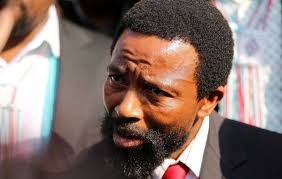
A South African king, Buyelekhaya Dalindyebo who is a nephew of the late Nelson Mandela has begun a 12-year prison sentence for kidnapping, assault and arson. The convicted monarch reported to prison yesterday after his legal attempts to overturn his conviction failed.
The case against King Dalindyebo was related to a dispute he had with some of his subjects about two decades ago.
King Dalindyebo, 51, ascended to the throne in 1989, and has about 700,000 subjects.
He comes from the Thembu clan, to which The Late Mandela, South Africa’s first black president, belonged. He is the first monarch to be jailed in South Africa since minority rule ended in 1994.
King Dalindyebo was accused of kidnapping a woman and her six children, setting their home on fire and beating up four youths, one of whom died, because one of their relatives had failed to present himself before the king’s traditional court.
He handed himself to prison authorities in the eastern city of Mthatha in compliance with a court order after a judge refused to extend his bail on Wednesday, the justice ministry said in a statement.
Earlier, Justice Minister Michael Masutha turned down his request for a retrial, saying there was no legal justification for doing so. King Dalindyebo had maintained his innocence, saying he disciplined his subjects under customary law.
The pervading feeling among several of the king’s subjects is that he has brought disrepute to the Thembu Royal household. This is in light of the fact that his father, Sabata, was a revered monarch who fought against minority rule, and campaigned for the unity of South Africa’s ethnic groups. In a very sharp contrast, his son turned out to be a disgrace, and has paid the ultimate price.
Significantly, South Africa has been lauded for once again demonstrating that, despite its abundant leadership problems, the rule of law is still solidly upheld, even if it means imprisoning a king and alienating some of his subjects ahead of crucial local elections next year.
It is also to the monarch’s credit that after exhausting all his legal options, he reported to prison rather than daring the police to come and arrest him at his palace in South Africa’s Eastern Cape province.
During the actual sentencing in October, the Supreme Court of Appeal said: “His behaviour was all the more deplorable because the victims of his reign of terror were the vulnerable rural poor, who were dependent upon him. Our constitution does not countenance such behaviour.
“We are a constitutional democracy in which everyone is accountable and where the most vulnerable are entitled to protection.“
The argument raging on now is whether the incarcerated king will remain ruler of his people. There are conflicting reports as one royal family spokesman was quoted in the South African media as saying that its elders would meet on Monday to choose a successor, while another spokesman said that he would remain the king despite his imprisonment.
King Dalindyebo defected from the governing African National Congress (ANC) to the opposition Democratic Alliance (DA) party during his legal battles.
His membership was however revoked by the DA following the ruling of the Supreme Court of Appeal.


-
 Featured5 days ago
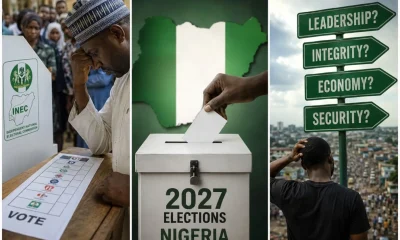
Inside INEC’s race to prepare for Nigeria’s 2027 elections
-

 Latest1 week ago
UCTH faces morgue crisis as 50 unclaimed corpses await mass burial
-
 Featured5 days ago
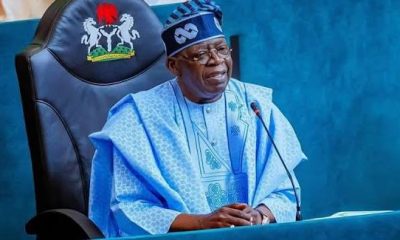
2027: APC unveils nationwide campaign timetable, Tinubu to rally in 12 states
-

 Business6 days ago
President Tinubu and the Low Transport Fares Fiasco
-

 Business1 week ago
BREAKING: Nigeria’s Inflation Rate Drops to 14.63% in September
-

 Business5 days ago
Court dismisses ₦170m Trade Fair contract claim, says Zenith Bank was not a party
-
 Business2 days ago
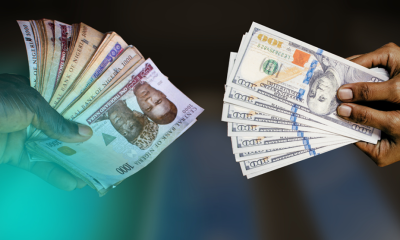
Naira faces exchange rate gap as Dollar hits N1,380 on parallel market
-

 Latest5 days ago
Breaking: NNPCL raises petrol price to ₦1,405 per litre amid discount controversy