
Business
Stakeholders highlight challenges facing FG’s 90,000km fibre cable project

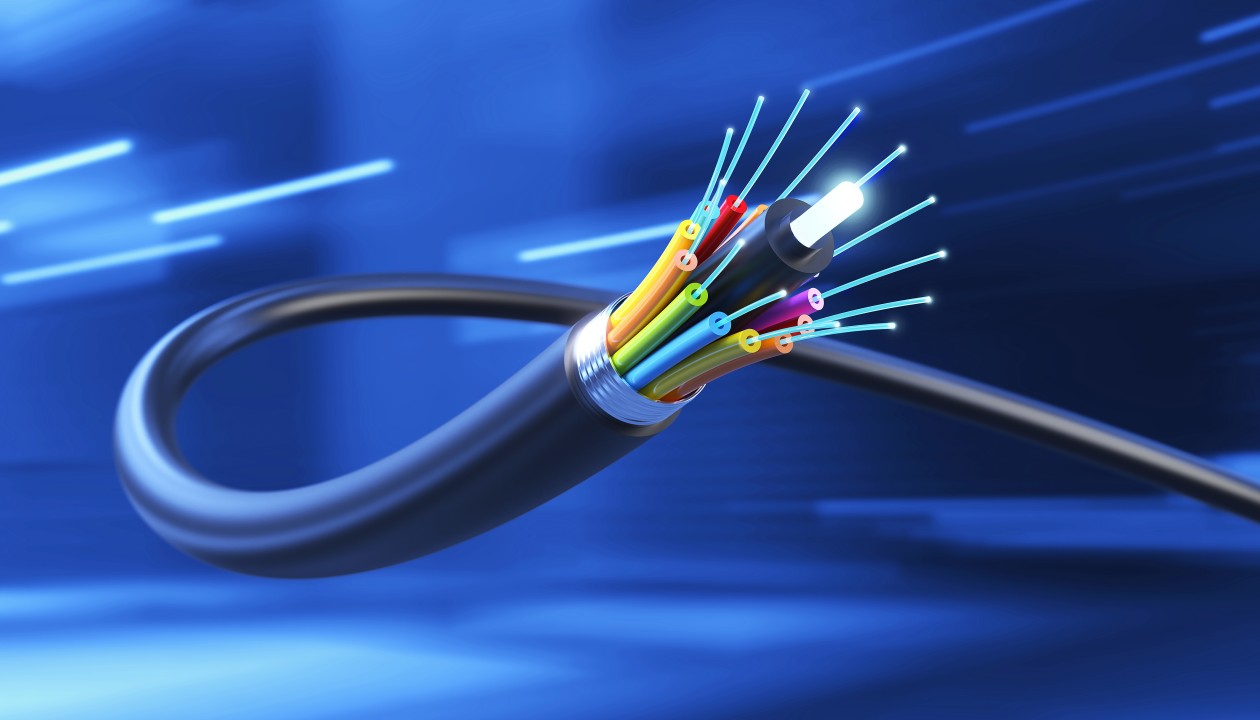
Stakeholders in the telecommunications industry have identified several challenges that could hinder the federal government’s ambitious 90,000-kilometer fibre optic cable project.
During the 6th edition of the Policy Implementation Assisted Forum (PIAFO) held in Lagos on Wednesday, Mr. Chidi Ibisi, Executive Director of Broadbased Communications, discussed these issues in his presentation titled ‘Harmonizing Nigeria’s Fibre Deployment Strategies for Effective Implementation.’
While acknowledging the government’s Special Purpose Vehicle (SPV) initiative as a promising plan to bridge Nigeria’s digital infrastructure gap, he emphasized the need to address existing challenges.
“The issues of high cost of Right of Way (RoW), destruction of fiber cables by road construction companies, and vandalism all need to be addressed for this new SPV initiative to be successful,” Mr. Ibisi stated.
Mr. Chidi Ajuzie, Group Chief Operating Officer of WTES Projects Limited, highlighted the informal RoW extortion by hoodlums as the biggest challenge to fibre cable laying in Nigeria.
READ ALSO: NCC working on policies to increase telecom’s contribution to GDP—Maida
“If I’m trying to lay fibre in some communities here in Lagos, the so-called landowners (omo onile) come out, and a different set of people will keep coming from one street to another, charging you. How do we achieve adequate broadband infrastructure in this kind of situation?” he questioned.
Engr. Gbenga Adebayo, Chairman of the Association of Licensed Telecommunications Operators of Nigeria (ALTON), stressed the need for state governments to take ownership of the project.
“For the project to succeed, sub-national governments need to take ownership. The issue of state governments viewing Right of Way as a source of Internally Generated Revenue (IGR) should be a thing of the past. We can’t talk about the digital economy on one side while the government sees those providing the services as revenue sources,” he explained.
Adebayo further pointed out inconsistencies in policy implementation, noting that while governors might promise free RoW at national meetings, in practice, they impose various levies.
“Governors will go to Abuja and say, ‘In my state, I will give the right of way free of charge.’ When you go to such a state, they may give you the right of way for zero or one Naira, but they will impose developmental, education, state impact, and ecosystem levies. When you add all of these together, it is more than the right of way charges. So, who is playing who?” he asked.
The Federal Government recently launched an SPV to deliver an additional 90,000km of fibre optic cable to enhance internet connectivity across Nigeria. For the project to succeed, addressing these highlighted challenges is crucial.


-

 Football6 days ago
Saka: England still carry World Cup scar
-

 Latest3 days ago
Pastor Chris Oyakhilome announces mother’s passing at 88 [VIDEO]
-

 Latest5 days ago
Arsenal eye €70-80m move for Real Madrid star
-
 Business1 week ago
CBN reduces MPR by 350bps to 23% in major monetary policy shift
-

 Crime4 days ago
Police arrest suspect, launch manhunt for 2 others over Delta Education Director’s death
-

 Latest4 days ago
How adulterated palm oil, coloured pepper are putting consumers at risk
-
 Crime3 days ago
Deaths in NSCDC Custody: Can Nigeria guarantee the safety of detainees?
-
 Latest5 days ago
Obi left $155m in Anambra, Otti insists amid debt controversy