
News
US Embassy moves routine visa processing from Abuja to Lagos

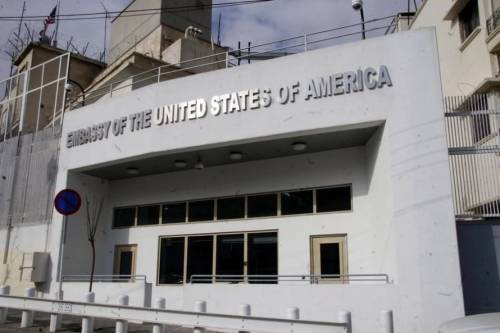
The United States has moved routine visa processing from its embassy in Abuja to the U.S. Consulate General in Lagos, a major change that affects Nigerians seeking regular U.S. visas.
The new arrangement took effect on August 1, 2026, as part of a wider restructuring of U.S. visa services across Africa. Under the policy, routine visa services previously handled in Abuja are being consolidated into designated regional processing hubs.
The U.S. Department of State said the restructuring is intended to strengthen national security by promoting more consistent screening, vetting and visa adjudication, while also improving the efficiency of its overseas operations.
The change does not mean the U.S. Embassy in Abuja has shut down.
The embassy remains operational as a diplomatic mission, but routine visa applicants in Nigeria are now directed to the designated processing location in Lagos. The State Department said the realignment of visa services does not amount to the closure of affected diplomatic posts.
For Nigerians seeking U.S. visas, the practical effect is that applicants who previously expected to complete routine visa processing in Abuja must now follow the procedures applicable to the designated processing location.
The State Department’s updated guidance says applicants in countries where routine visa operations have been realigned should apply at the designated alternate processing post.
The most significant change concerns the location of routine visa interviews and processing.
Nigerians applying for routine U.S. nonimmigrant visas are now expected to use the designated processing arrangements in Lagos. This includes people applying for common categories such as visitor, business, student and other nonimmigrant visas, subject to the applicable U.S. visa rules.
The State Department has also directed applicants to schedule appointments at the appropriate designated processing location and pay the required visa fee as part of the application process.
The change could have a practical impact on applicants who live in Abuja or other parts of northern Nigeria because they may now have to travel to Lagos for their visa appointments.
That could mean additional expenses for transportation, accommodation and other travel-related costs, particularly for applicants who previously lived close to the Abuja embassy.
Applicants who already have visa appointments should not assume that every existing appointment will automatically proceed under the old arrangement.
The U.S. government has advised applicants to follow the instructions issued by the relevant embassy or consulate and to monitor their application accounts and email for appointment information.
Applicants should also avoid making unnecessary payments or booking travel based on information obtained from unofficial agents. The State Department advises visa applicants to use official U.S. government sources for the latest information on appointment procedures and processing locations.
Applicants who are required to apply through the designated processing location must follow the applicable fee and appointment procedures.
Visa fees are generally paid as part of the application process and do not guarantee visa approval. Applicants should therefore confirm the correct payment procedure before making any payment, particularly given the risk of fraudulent agents offering appointments or claiming they can guarantee visa approval.
The U.S. government has repeatedly emphasised that visa applicants should follow official instructions and that appointment availability can change as additional slots are released.
Nigeria is not the only African country affected by the policy.
The U.S. Department of State announced that routine visa services in 25 African locations would be realigned to designated regional hubs from August 1. Abuja was included in the list, alongside diplomatic posts in countries including Benin, Ghana, Rwanda, Sierra Leone and several others.
The State Department described the move as part of a broader effort to consolidate visa operations and make better use of its consular resources while maintaining security screening and vetting standards.
The department has also introduced updated guidance stating that applicants should generally seek nonimmigrant visa appointments in their country of nationality or residence, or at the designated processing post where routine operations are not being conducted.
The movement of routine processing from Abuja to Lagos does not, by itself, cancel valid U.S. visas.
People who already hold valid U.S. visas do not need to apply for a new visa simply because the location for routine processing has changed.
The restructuring concerns where new routine visa applications are processed rather than the validity of visas that have already been issued.
Nigerians planning to apply for a U.S. visa should carefully check the latest instructions from the U.S. Department of State before beginning the application process.
Applicants should use the official U.S. visa appointment system, confirm the designated processing location, pay only the official visa fee and keep track of their appointment information.
They should also be cautious about individuals or agencies promising guaranteed appointments or visa approvals. No agent can guarantee that the U.S. government will issue a visa.
Current U.S. visa wait-time information shows that appointment availability varies by location and visa category, and the State Department notes that new appointment slots may be released periodically.
The relocation of routine visa processing from Abuja to Lagos represents a significant change for Nigerian applicants, particularly those who previously relied on the Abuja embassy.
However, it is important to distinguish the change from a suspension of U.S. visa services in Nigeria.
The U.S. Embassy in Abuja remains operational, while routine visa processing has been realigned to the designated hub in Lagos. For Nigerians seeking new routine U.S. visas, the most important change is therefore the location where they must now complete the relevant visa-processing procedures.


-

 Featured5 days ago
Inside INEC’s race to prepare for Nigeria’s 2027 elections
-

 Latest1 week ago
UCTH faces morgue crisis as 50 unclaimed corpses await mass burial
-

 Featured5 days ago
2027: APC unveils nationwide campaign timetable, Tinubu to rally in 12 states
-

 Business1 week ago
BREAKING: Nigeria’s Inflation Rate Drops to 14.63% in September
-

 Business6 days ago
President Tinubu and the Low Transport Fares Fiasco
-
 Business5 days ago
Court dismisses ₦170m Trade Fair contract claim, says Zenith Bank was not a party
-

 Business2 days ago
Naira faces exchange rate gap as Dollar hits N1,380 on parallel market
-
 Latest5 days ago
Breaking: NNPCL raises petrol price to ₦1,405 per litre amid discount controversy