
Business
Stock market: How investors ended 2016 with N604bn loss


By Odunewu Segun
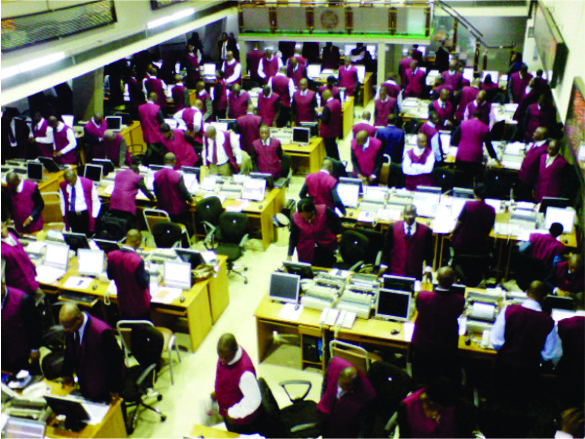
Equities trading on the floor of the Nigerian Stock Exchange (NSE) finished the year 2016 with a loss of N604 billion. This is despite the fact that the last three days of the year witnessed bullish rally on the local bourse with a gain of N133 billion.
Activities on the NSE which opened the trading year high at N9.850 trillion in market capitalisation and 28.642.25 in index at the beginning of trading on January 4, 2016, closed the year on December 30, 2016 at N9.246 trillion and 26,874.62 index points with a year to date loss of about N604 billion or 6.17 per cent year to date.
While assessing the current state of the market, some operators blamed the trend on the state of political, economic and financial situations in the country.
According to the Chief Finance & Strategy Officer of Wema Bank Plc., Mr. Tunde Mabawonku, the apathy being shown by both foreign and local investors in the capital market was not unrelated to the systemic challenge facing the economy.
He noted that the lack of economic policy direction has fuelled uncertainty in the market, which, according to him, has made it difficult to attract and retain investors despite the opportunities that abound.
“The biggest factors affecting investors remain lack of clarity with regards to policy direction, lower oil revenue and the unresolved foreign exchange challenges affecting the nation. Investors do not thrive with uncertainty and the recessionary environment is exacerbating that sentiment. Clarity of policy and government action will help resolve the situation,” he said.
Similarly, the President of Chartered Institute of Stockbrokers (CIS), Mr. Oluwaseyi Abe, capital market listed the major factors responsible for the challenges to include, adverse macro-economic scenario, low level of capital literacy and retreat of foreign portfolio investors due to the hitherto adverse fixed foreign exchange change regime.
The Chief Executive Officer, Espera Global Corporation, Glenn Prince- Abbi, said that the market downturn was due to the low crude oil price, which gave the naira a battering among international currencies in 2016.
He said the anti-corruption war and the Niger Delta militants’ massive destruction of crude oil pipelines contributed to the development in the market.
The financial expert explained that the incidents created a massive shortfall in the country’s planned crude oil production output and export earnings and a fall in the nation’s currency.


-

 Latest5 days ago
Cole-Alegbe unveils memoir, urges leaders to harness technology for lasting impact
-
 Business3 days ago
Nigeria records N12.59trn trade surplus in Q2 2026 — NBS
-

 Business3 days ago
Nigerian Breweries’ H1 profitability strengthens as revenue hits N804bn
-

 Business5 days ago
Jetour G700 PHEV Storms Abuja as Jetour Nigeria Takes Luxury Mobility Showcase to FCT
-

 Featured2 days ago
Peter Obi, Makinde and the 2027 elections: Can unity really challenge APC?
-

 Business1 week ago
Rising crude prices threaten fresh petrol price hike in Nigeria
-

 Business6 days ago
Multinationals exit Nigeria as economic pressures reshape business landscape
-

 Latest3 days ago
Tinubu’s US legal battle: Group questions silence of elder statesmen