
News
MPI: Govt’s strategy to move more Nigerians out of poverty

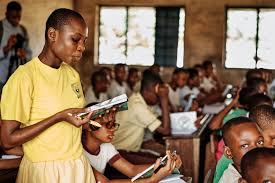
The National Bureau of Statistics (NBS’) recent National Multidimensional Poverty Index (MPI) Report which revealed that 133 million Nigerians are multi-dimensionally poor is the government’s strategy to identify and alleviate more Nigerians out of poverty.
The Buhari Media Organisation (BMO) in a statement in Abuja, by the Chairman, Niyi Akinsiju, and Secretary Cassidy Madueke, indicated that this is contrary to some uninformed views that more people are now living below the poverty benchmark.
BMO said the 40.1% of the estimated 211 million population in Nigeria living below Nigeria’s poverty line of N137,430 per person per year, based on the 2018/19 Nigeria Living Standards Survey (NLSS) by NBS, has not increased.
BMO explained: “The reason MPI recorded 63% of the population as being multi-dimensionally poor is that it used 15 indicators grouped under four dimensions of health, education, living standards, and work and shocks, as against the monetary poverty measurement which uses just one indicator.
“Furthermore, the Nigeria MPI (2022) was conducted in the 109 Senatorial districts across the 36 States, including the Federal Capital Territory (FCT) to offer a multivariate form of poverty assessment, identifying deprivations across the various indicators”.
BMO averred that the federal government’s MPI survey is timely and should in fact have been done a long time ago.
“This is the first time we are conducting a multi-dimensional poverty survey in Nigeria, but not the first time it’s happening elsewhere in the world. MPI, having more indicators, is a graduation from the World Banks monetary measure though the monetary measure for Nigerian remains the same”.
According to the survey, 72 per cent of the 133 million Nigerians who are multi-dimensionally poor reside in rural areas. “This reflects many years of abandonment of the local/rural areas and a carryover of irresponsible governance.
“The rural area is impacted negatively because the sub-nationals are not living up to expectations.
“It took a Buhari government to engage and revitalize the rural economy both at the level of agriculture and rural infrastructure, which is ordinarily the responsibility of the Local and State governments”.
While making a comparison with the previous government, BMO noted that “President Buhari’s government has been able to show this much courage in addressing the issue of poverty in the country, especially in the rural areas.
“This it is done through the National Social Investment Program (NSIP) and the Anchor Borrowers Program (ABP) which have greatly impacted the rural economy and made many farmers millionaires.
“The Federal government has done and is still doing its bit to mitigate poverty in the rural area and the country at large through the deployment of the right policies; the sub-nationals should take a cue and adopt this approach to governance to turn the tide in the trajectory of poverty in the country, ” the group added.


-
 Latest1 week ago
Israel marks 3 years since October 7 Hamas attack amid Gaza strikes, election debate
-

 Energy1 week ago
Fuel Battle: Dangote, marketers and government clash over petrol imports
-

 Latest2 days ago
Full List: Meet the 2026 Nobel Prize winners across six categories
-
 Featured6 days ago
103 Million Voters: What does INEC’s new register say about Nigeria’s population?
-

 Business1 week ago
Nigerian startup 3650HQ moves to cut rising WhatsApp costs for businesses
-

 Football2 days ago
Premier League Matchweek 7: Five Fixtures That Could Shape the Weekend
-

 Business7 days ago
The Ministry of Commerce of Loveworld gets a $1 million boost for new investment fund at LTIF 2026 to promote Trade in Ghana
-

 Features7 days ago
Edo’s 2.5 million vote promise: Can the numbers match the politics?