
Crime
Nigeria, US, UK crack down on West African cybercrime networks, arrest 28

Nigerian, American and British law enforcement agencies have disrupted major cybercrime networks operating across West Africa, arresting 28 suspects and identifying 117 suspected human trafficking victims in Ghana.
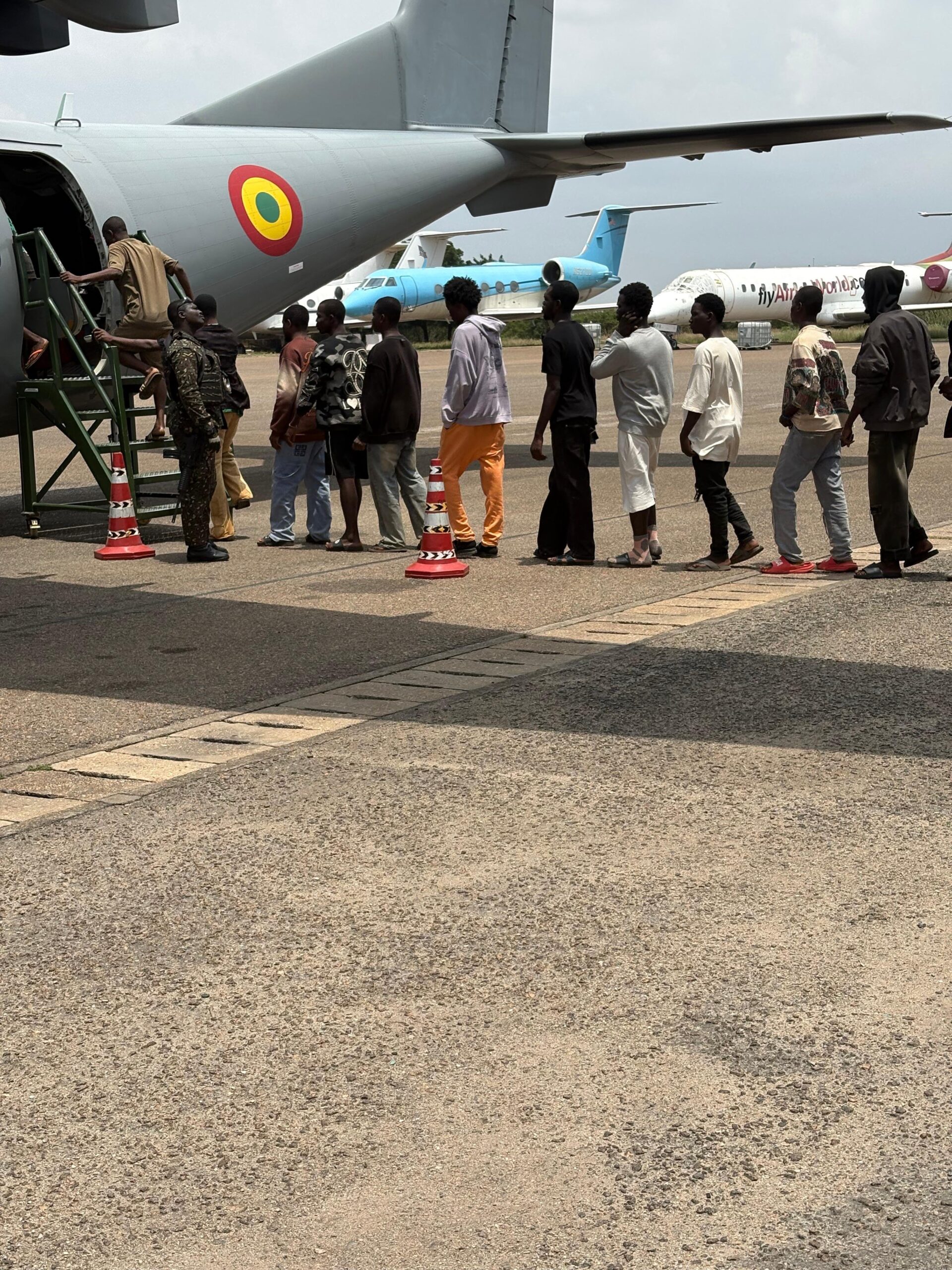
The coordinated operation also led to the repatriation of 120 Nigerians who were allegedly trafficked to Ghana and forced to participate in cybercrime activities, according to Ghana’s Minister for Communication, Digital Technology and Innovations, Sam George.
The US Department of Justice and George announced details of the crackdown in separate statements on Tuesday, describing the operation as part of broader international efforts to dismantle transnational cybercrime networks and protect victims of human trafficking.
The operation, conducted between October 6 and October 9, involved intelligence sharing, coordinated arrests and the removal of millions of fraudulent social media accounts used to target victims in different countries.
According to the US Department of Justice, Nigerian authorities arrested nine suspects, while Ghanaian security agencies apprehended 19 others.
The United Kingdom’s National Crime Agency (NCA) said the arrests in Nigeria were carried out across Delta State, where investigators seized six laptops, 35 mobile phones and 12 routers.
In Ghana, security operatives arrested 19 suspects in Sasaabi, near Accra, and recovered 303 electronic devices suspected to have been used for fraudulent activities. Investigators also identified 117 suspected trafficking victims at locations linked to the operation.
READ ALSO; EFCC arraigns Nigerian-American over alleged $680,000 luxury vehicle fraud
The operation involved Nigeria’s Economic and Financial Crimes Commission (EFCC), the Nigeria Police Force National Cybercrime Centre and other international law enforcement agencies.
Assistant US Attorney General Tysen Duva commended Nigerian and Ghanaian security personnel for their contributions, describing international cooperation as critical to disrupting organised cybercrime.
“I am especially grateful to the courageous law enforcement officers in Ghana and Nigeria,” Duva said.
He explained that collaboration between law enforcement agencies and technology companies had helped investigators identify suspects, dismantle fraudulent networks and protect victims.
The US Justice Department disclosed that participating technology companies removed more than 3.7 million fraudulent accounts, pages and groups targeting individuals across several countries.
The companies also provided intelligence on more than 30 suspected scam centres, contributing to arrests, cryptocurrency seizures and the identification of trafficking victims.
Investigators identified approximately $11 million in funds potentially eligible for freezing in connection with suspected fraudulent operations. However, the authorities clarified that the money had not necessarily been recovered or permanently confiscated.
The criminal schemes uncovered included cryptocurrency investment fraud, impersonation of law enforcement officers, online extortion and other sophisticated financial scams.
US Attorney Jeanine Pirro, who leads the Scam Center Strike Force in Washington, stressed the need for cross-border collaboration, declaring that “transnational fraud demands a transnational response.”
Ghana repatriates 120 Nigerians
In a separate statement posted on his verified X account on Tuesday, George confirmed that 120 Nigerian nationals who were trafficked to Ghana and allegedly forced to work in cybercrime operations had been repatriated to Nigeria.
He expressed appreciation to the Ghana Air Force and the Ministry of Defence for facilitating the return of the Nigerians.
“My sincere gratitude goes to the Ghana Air Force and the Ministry of Defence for facilitating the repatriation of 120 Nigerian nationals who were arrested during #OperationCyberhunt,” the minister said.
George said the operation was led by Ghana’s Cyber Security Authority (CSA), working with intelligence and security agencies in the country and international partners from Nigeria, the United Kingdom and the United States.
He explained that the Nigerian nationals had been trafficked to Ghana and compelled to participate in cybercrime operations before their rescue and repatriation.
The minister also disclosed that security agencies seized a substantial quantity of equipment and other items suspected to have been used in the criminal activities.
The recovered items included 136 mobile phones, 130 laptops, internet connectivity devices, four vehicles, jewellery and 10 Nigerian passports.
One of the vehicles was reportedly stolen from Canada.
George further revealed that eight other individuals arrested in connection with the operation were being processed for prosecution.
“The team is processing 8 other persons for prosecution, and Ghana under President Mahama will remain an unfavourable destination for cyber criminals. For God and Country,” he said.
Victims undergo reintegration
The repatriation follows intelligence-led enforcement activities targeting suspected cybercrime centres, particularly in Ghana’s Greater Accra Region.
Nigeria’s National Agency for the Prohibition of Trafficking in Persons (NAPTIP) had earlier confirmed the arrival of a significant number of returnees, describing them as victims of human trafficking who were allegedly forced into online fraud.
Officials said the returnees were undergoing profiling, counselling and reintegration to support their recovery and help them rebuild their lives following their experiences.
The UK National Crime Agency said previous enforcement operations in Ghana had also uncovered suspected trafficking victims who appeared to have been coerced into participating in criminal activities.
The latest crackdown highlights the links between cybercrime, human trafficking and organised criminal networks operating across national borders.
The US Department of Justice said participating agencies would continue working together to identify and prosecute individuals and organisations involved in international cyberfraud and related trafficking offences.


-
 Latest1 week ago
Israel marks 3 years since October 7 Hamas attack amid Gaza strikes, election debate
-

 Energy1 week ago
Fuel Battle: Dangote, marketers and government clash over petrol imports
-

 Latest2 days ago
Full List: Meet the 2026 Nobel Prize winners across six categories
-

 Latest1 week ago
US Court set to rule on release of FBI, DEA records on Tinubu
-
 Featured6 days ago
103 Million Voters: What does INEC’s new register say about Nigeria’s population?
-

 Business1 week ago
Nigerian investors at a crossroads as fixed-income yields slide
-

 Business1 week ago
Nigerian startup 3650HQ moves to cut rising WhatsApp costs for businesses
-

 Latest1 week ago
Oyo APC crisis deepens as Oluyole reconciliation meeting ends in brawl