
Business
Nigeria struggles with worsening fuel scarcity

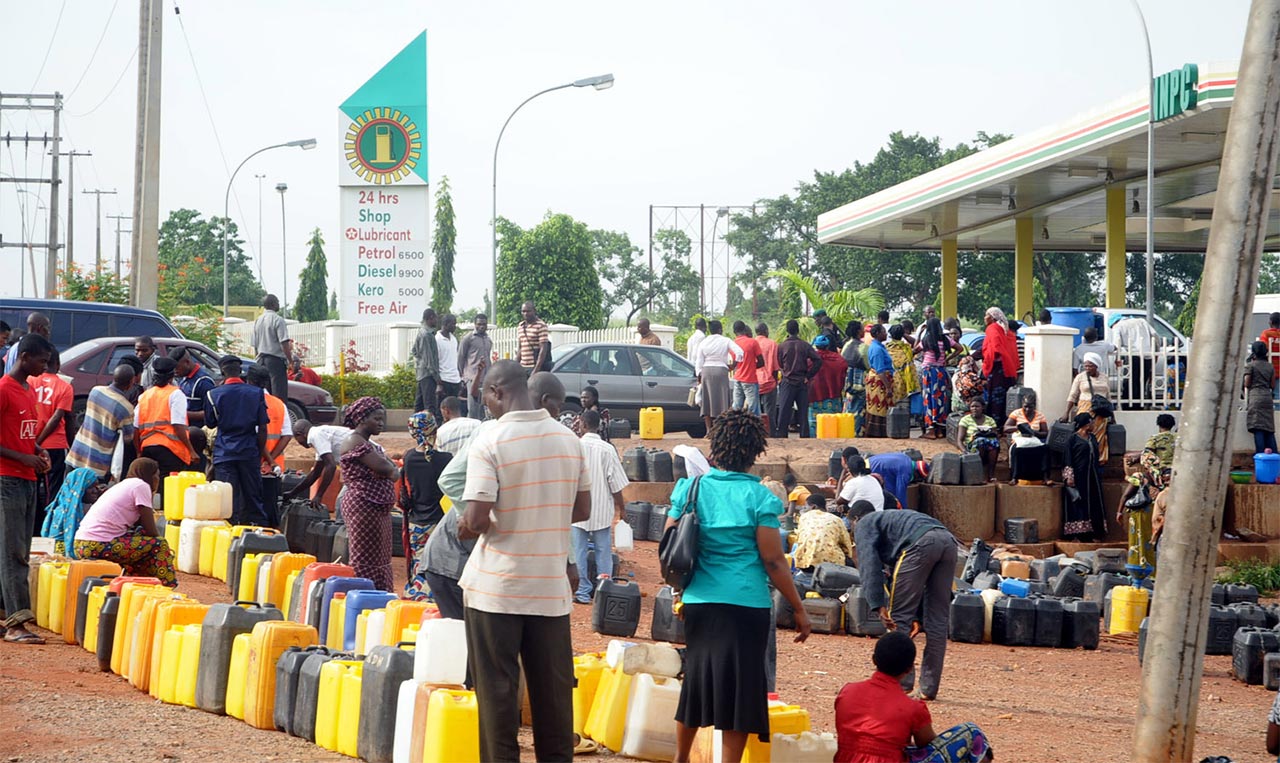
Nigeria is struggling with a worsening fuel scarcity problem less than two months to its high-stakes general elections.
Across cities, the signs of the fuel scarcity are visible in the form of endless queues at filling stations. Sadly, many Nigerians are having to pay as much as N300 per litre of fuel or more after long hours of waiting in queues.
The country’s general elections are scheduled to take place in the next 49 days.
Since December 2022, operatives of the Nigerian Midstream and Downstream Petroleum Regulatory Authority (NMDPRA) have shut down many filling stations for selling fuel above the official price.
But many filling stations located in small communities outside city centres are still selling at outrageous prices, especially in the Southeast and south-south regions.
Meanwhile, a survey showed that Nigerians are worried about what the situation will look like in the coming weeks. As such, they are beginning to hoard fuel. This has also led to a thriving market for black market traders who have continued to make excess profits from the situation.
Amaka, who resides in Port Harcourt, said that residents in the city suffer on both ends – spending hours in queues just to buy fuel and still buying at increased prices.
She said: “I am only going to drive when necessary so that the fuel I just bought will last me for a long time. I have no idea what will happen in the next few days. Maybe we will start buying at N500 per litre from stations and sleeping overnight at stations just to get fuel.”
READ ALSO: Fuel scarcity: Don’t embark on strike, IPMAN appeals to members
Higher transport fares in Enugu: People in Enugu are complaining about having to pay higher fares due to fuel scarcity in January 2023. In our survey, we found that Nigerians in the southeast are paying more for transportation, even though the Christmas holidays are over.
In Enugu state, Bolt rides have increased. A trip from Ituku-Ozalla to Polo Park in Enugu costs N2700 for base vehicles, N2900 for comfort vehicles, and N2100 for tricycles.
Mr. Chibuike, an animal husbandry owner in Imo State said that since Q4 2022, his spending costs have increased significantly due to scarce fuel.
According to him, transportation costs for both his livestock and his workers who shuttle between Imo state, Rivers State and Abia State have become alarming. He knows fuel rates have increased, but he has to transport livestock for sale. He says:
“I have had no choice but to transfer my cost burden to my customers, who are now buying livestock at increased prices as well. I have even lost some customers as a result of increased prices. But my business has to survive.”
With the threat to suspend fuel delivery to the Port Harcourt zone, the fuel scarcity crisis in the area could worsen in the coming weeks unless the situation is rectified.


-

 Football5 days ago
Banda, Chawinga make 2026 Women’s Ballon d’Or top 30 shortlist
-
 Featured5 days ago
Peter Obi, Makinde and the 2027 elections: Can unity really challenge APC?
-

 Business7 days ago
Nigerian Breweries’ H1 profitability strengthens as revenue hits N804bn
-
 Business6 days ago
Nigeria records N12.59trn trade surplus in Q2 2026 — NBS
-

 Latest7 days ago
Tinubu’s US legal battle: Group questions silence of elder statesmen
-
 Energy4 days ago
Brent crude tops $100: What higher oil prices mean for Nigeria
-
 Latest6 days ago
Akpabio courts northern youths for Tinubu’s reforms ahead of 2027
-
 Featured6 days ago
2027: Rivers ADC fires back at Wike, says boasts won’t decide elections