
Business
Nigeria struggles with worsening fuel scarcity

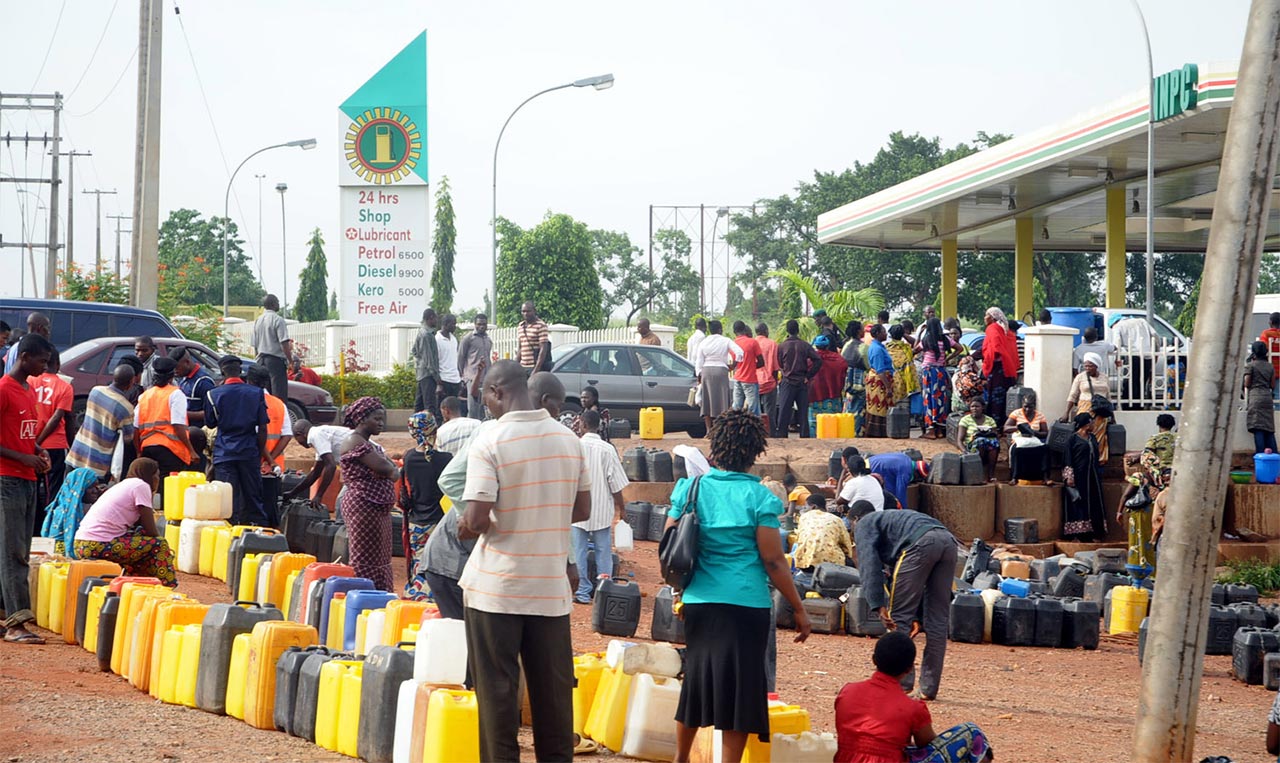
Nigeria is struggling with a worsening fuel scarcity problem less than two months to its high-stakes general elections.
Across cities, the signs of the fuel scarcity are visible in the form of endless queues at filling stations. Sadly, many Nigerians are having to pay as much as N300 per litre of fuel or more after long hours of waiting in queues.
The country’s general elections are scheduled to take place in the next 49 days.
Since December 2022, operatives of the Nigerian Midstream and Downstream Petroleum Regulatory Authority (NMDPRA) have shut down many filling stations for selling fuel above the official price.
But many filling stations located in small communities outside city centres are still selling at outrageous prices, especially in the Southeast and south-south regions.
Meanwhile, a survey showed that Nigerians are worried about what the situation will look like in the coming weeks. As such, they are beginning to hoard fuel. This has also led to a thriving market for black market traders who have continued to make excess profits from the situation.
Amaka, who resides in Port Harcourt, said that residents in the city suffer on both ends – spending hours in queues just to buy fuel and still buying at increased prices.
She said: “I am only going to drive when necessary so that the fuel I just bought will last me for a long time. I have no idea what will happen in the next few days. Maybe we will start buying at N500 per litre from stations and sleeping overnight at stations just to get fuel.”
READ ALSO: Fuel scarcity: Don’t embark on strike, IPMAN appeals to members
Higher transport fares in Enugu: People in Enugu are complaining about having to pay higher fares due to fuel scarcity in January 2023. In our survey, we found that Nigerians in the southeast are paying more for transportation, even though the Christmas holidays are over.
In Enugu state, Bolt rides have increased. A trip from Ituku-Ozalla to Polo Park in Enugu costs N2700 for base vehicles, N2900 for comfort vehicles, and N2100 for tricycles.
Mr. Chibuike, an animal husbandry owner in Imo State said that since Q4 2022, his spending costs have increased significantly due to scarce fuel.
According to him, transportation costs for both his livestock and his workers who shuttle between Imo state, Rivers State and Abia State have become alarming. He knows fuel rates have increased, but he has to transport livestock for sale. He says:
“I have had no choice but to transfer my cost burden to my customers, who are now buying livestock at increased prices as well. I have even lost some customers as a result of increased prices. But my business has to survive.”
With the threat to suspend fuel delivery to the Port Harcourt zone, the fuel scarcity crisis in the area could worsen in the coming weeks unless the situation is rectified.


-
 Featured1 week ago
Inside INEC’s race to prepare for Nigeria’s 2027 elections
-
 Featured1 week ago
2027: APC unveils nationwide campaign timetable, Tinubu to rally in 12 states
-
 Business5 days ago
Naira faces exchange rate gap as Dollar hits N1,380 on parallel market
-
 Business1 week ago
Court dismisses ₦170m Trade Fair contract claim, says Zenith Bank was not a party
-
 Latest1 week ago
Breaking: NNPCL raises petrol price to ₦1,405 per litre amid discount controversy
-
 Featured1 week ago
From kitchen to Supreme Court: Nigerian’s fight over alleged support for terrorists
-

 Football1 week ago
Maresca reveals Guardiola’s reaction to Man City’s 4-2 defeat to PSG
-

 Business7 days ago
NCC launches Internet Governance Working Group to tackle AI risks, boost online safety