
Latest
Resident doctors end strike after Government assurances

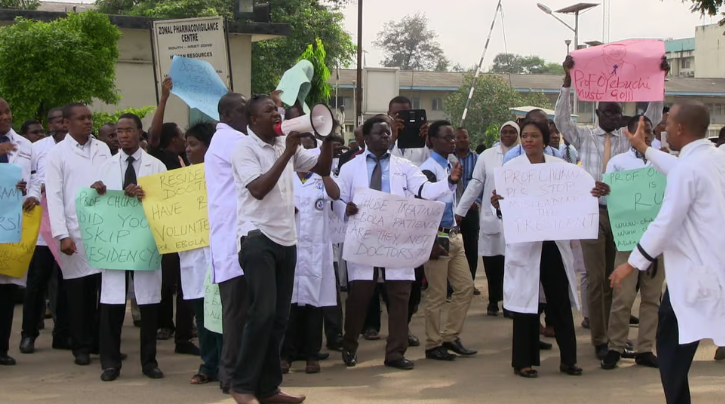
Resident doctors have called off their seven-day strike, which was initiated in protest of the kidnapping of their colleague, Ganiyat Popoola.
The strike, which began last Monday, faced opposition from the Federal Government, who threatened to implement a “No work, no pay” policy against the striking doctors.
Despite these threats, the Nigerian Association of Resident Doctors (NARD) persisted with the strike until its planned conclusion.
NARD President, Dele Abdullahi, announced the suspension of the strike, stating that the association would monitor the Federal Government’s actions over the next three weeks.
He expressed hope that the government would sustain its current efforts to address the situation.
ALSO READ : Governor Yusuf reinstates boarding status of 15 Girls secondary schools in Kano
“We are suspending the strike now,” Abdullahi said. “We will be meeting to review the progress the government has made in the next three weeks.
We are resuming on Monday, September 2, 2024, at 8 am.
The engagement of the government has been a little bit better, and we are hopeful that they will sustain this current line of action.”
The suspension of the strike comes after assurances from the government regarding the ongoing efforts to secure the release of Dr. Popoola and address the concerns of the resident doctors.












-

 Latest5 days ago
Full List: Meet the 2026 Nobel Prize winners across six categories
-

 Football5 days ago
Premier League Matchweek 7: Five Fixtures That Could Shape the Weekend
-

 Latest4 days ago
Umahi defends Lagos-Calabar highway route changes amid public outcry
-

 Business3 days ago
Dangote Refinery IPO: 70% Subscription claim meets fourfold demand assertion as investors seek clarity
-
Business4 days ago
Dangote Refinery IPO Extension: Was the 70% subscription report overhyped?
-

 Latest2 days ago
UCTH faces morgue crisis as 50 unclaimed corpses await mass burial
-
 Featured4 days ago
El-Rufai, ADC governorship candidate’s court appearance puts Kaduna opposition politics in focus
-
 Latest5 days ago
Makinde’s Chief of Staff, Segun Ogunwuyi, resigns