
Latest
Presidency won’t return to the North in 2027–Okupe

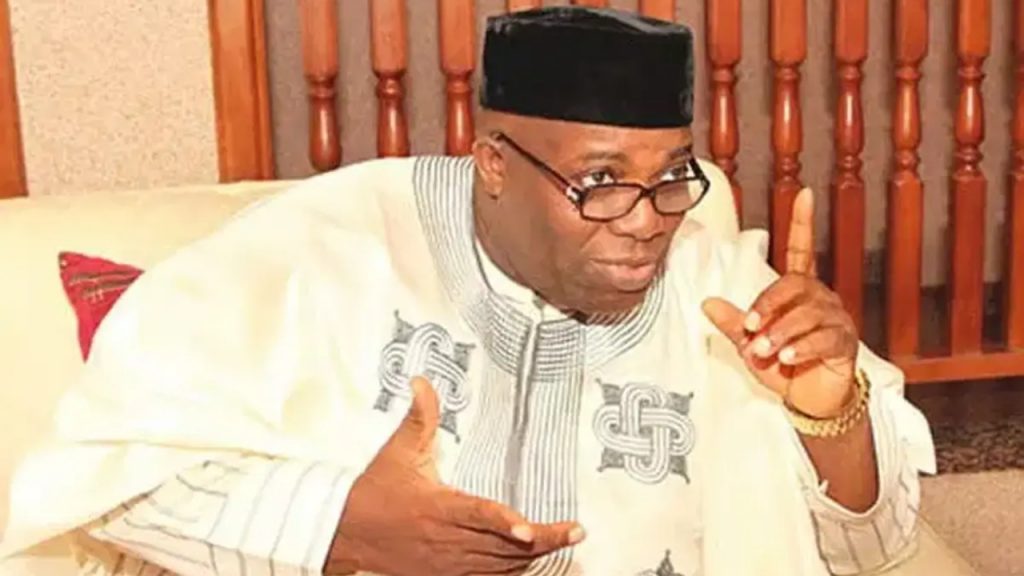
Doyin Okupe, former presidential aide to ex-President Goodluck Jonathan, has asserted that the presidency will not shift back to the North in the 2027 elections, emphasizing that power rotation between the North and South is non-negotiable.
Speaking during an interview on Arise TV on Monday, Okupe addressed the ongoing calls for a Northern candidate to take the helm after President Bola Tinubu’s tenure, declaring such aspirations as incompatible with Nigeria’s established power-sharing tradition.
“Let me make this clear without any ambiguity: in 2027, power will not return to the North. That’s not how we do it,” Okupe remarked.
He further explained that Nigeria’s political structure has historically adhered to an unwritten agreement of power rotation: the North governs for eight years, followed by eight years for the South.
Okupe’s statement comes amid mounting discussions over who will succeed President Tinubu. While some Northern leaders have suggested the next president should hail from the region, Okupe dismissed these calls, stating, “We rotate between the North and the South. The North does eight years, at the end of which the South does eight years.”
READ ALSO: Okupe withdraws support for Obi, cites “Insulting” comments on South-West
He also touched on the broader issue of sectionalism in Nigerian politics, suggesting that the country’s stagnation is rooted in the prioritization of regional interests over national ones.
“The most fundamental problem Nigeria is facing is sectionalism. Those who controlled the affairs of this nation before were more concerned with the national interest than sectional interests,” he noted.
Political analysts have pointed out that Okupe’s comments underscore the deep divisions within Nigeria’s political structure, especially as the country grapples with issues of fairness and inclusivity in leadership selection.
According to Dr. Adebayo Ilesanmi, a political science professor at the University of Lagos, Okupe’s comments reflect a growing sentiment that the power-sharing arrangement between the North and South is crucial for national cohesion.
“While power rotation is not written into the constitution, it has become a political norm and a form of stabilizing the nation’s complex ethnic and regional dynamics. Any attempt to break this tradition could lead to unrest,” Ilesanmi explained.
Okupe’s statement, however, has already sparked a debate, with some Northern politicians insisting on the need for the region to retain control of the presidency in 2027.


-
 Latest1 week ago
Israel marks 3 years since October 7 Hamas attack amid Gaza strikes, election debate
-

 Energy1 week ago
Fuel Battle: Dangote, marketers and government clash over petrol imports
-

 Latest2 days ago
Full List: Meet the 2026 Nobel Prize winners across six categories
-
 Featured6 days ago
103 Million Voters: What does INEC’s new register say about Nigeria’s population?
-

 Business1 week ago
Nigerian startup 3650HQ moves to cut rising WhatsApp costs for businesses
-

 Football2 days ago
Premier League Matchweek 7: Five Fixtures That Could Shape the Weekend
-

 Business7 days ago
The Ministry of Commerce of Loveworld gets a $1 million boost for new investment fund at LTIF 2026 to promote Trade in Ghana
-

 Features6 days ago
Edo’s 2.5 million vote promise: Can the numbers match the politics?