
Business
NNPC refutes claims of Port Harcourt Refinery non-operation, reports 90% capacity

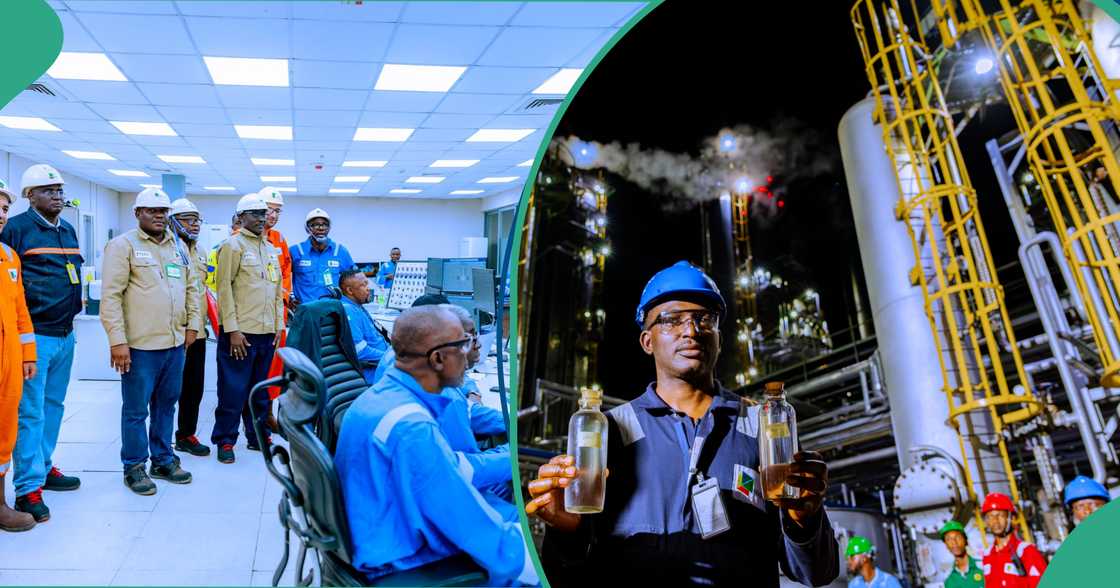
The Nigerian National Petroleum Company Limited (NNPCL) has refuted allegations made by Timothy Mgbere, a community leader from Alesa in Rivers State, who claimed that the Port Harcourt refinery is not yet producing fuel.
In a sharp response issued on Friday, NNPC spokesperson Olufemi Soneye described Mgbere’s comments as “ignorant” and misinformed, aiming to set the record straight about the refinery’s operational status.
Mgbere, who appeared on national television Thursday, accused NNPCL of misleading the public regarding the operations of the Port Harcourt refinery.
According to Mgbere, the refinery was not processing crude oil as claimed by the company, casting doubts on the official narrative that the refinery had resumed production. He further argued that the refinery was still operating “skeletally” and had not yet begun producing Premium Motor Spirit (PMS), also known as petrol.
However, Soneye strongly disagreed with these assertions, clarifying that the Port Harcourt refinery is, in fact, operating at 90% capacity, contrary to Mgbere’s claims.
The refinery, Soneye explained, has been producing fuel and distributing products, including PMS, as part of its resumed operations.
In his statement, Soneye dismissed Mgbere’s comments as “misguided,” particularly pointing out inconsistencies in the community leader’s reasoning. Mgbere had acknowledged seeing fuel being loaded out from the refinery’s gantry but dismissed it as “old stock” from the previous refinery operations. Soneye argued that this claim did not hold up under scrutiny.
Soneye elaborated that the old and new Port Harcourt refineries had been integrated into a single operational unit.
Both refineries now share a common terminal for product load-out, including utilities such as storage tanks and loading gantries. This means that even if fuel was being loaded at the gantry of the new refinery, it could have been sourced from either the old or new refinery, as both are now linked in the operational process.
According to NNPC, the Port Harcourt refinery has a nameplate capacity of 60,000 barrels per day. Currently, the refinery is operating at 90% throughput, producing 1.4 million liters of PMS, along with other products such as diesel and kerosene.
The claim that the refinery is not processing crude oil is also incorrect, according to Soneye, who emphasized that blending naphtha with cracked products to produce gasoline is a standard practice used globally in the oil and gas industry.
READ ALSO: NNPCL defends Port Harcourt refinery operations amid controversy
The refinery’s restart, after years of dormancy, has been one of the key developments in Nigeria’s effort to revive its domestic refining capacity and reduce the country’s reliance on imported fuel.
Despite the positive strides, controversies surrounding the refinery’s current capabilities have emerged, particularly with reports that it may not be processing crude oil but instead blending naphtha.
Oil industry analysts have weighed in on the ongoing debate, with some suggesting that blending practices are common in refinery operations worldwide and should not be viewed as a negative development.
According to Dr. Ayodele Akinwumi, an energy consultant, “Blending naphtha is a regular process, especially when dealing with aging refineries. It’s part of refining operations, and it helps meet local fuel demand even if the refinery isn’t processing crude oil in the traditional sense.”
On the other hand, fuel marketers have raised concerns, claiming that they are yet to receive products from the refinery. This delay has fueled skepticism regarding the refinery’s ability to meet local demand in the short term.
Soneye concluded his statement by urging the public to disregard Mgbere’s claims, calling them “born out of sheer mischief and ignorance.”
The NNPC spokesperson emphasized that the refinery’s restart and its ongoing production were part of Nigeria’s broader strategy to achieve energy self-sufficiency.
He reiterated that the refinery’s output, combined with the blending of naphtha, was meeting fuel supply needs and supporting the country’s energy goals.
As the controversy continues, the NNPC’s efforts to restore the Port Harcourt refinery remain under scrutiny, with the company asserting that the plant is an essential part of Nigeria’s long-term energy strategy, despite challenges related to capacity, product distribution, and market dynamics.


-
 Latest1 week ago
Israel marks 3 years since October 7 Hamas attack amid Gaza strikes, election debate
-

 Energy1 week ago
Fuel Battle: Dangote, marketers and government clash over petrol imports
-

 Latest2 days ago
Full List: Meet the 2026 Nobel Prize winners across six categories
-
 Featured6 days ago
103 Million Voters: What does INEC’s new register say about Nigeria’s population?
-

 Business1 week ago
Nigerian startup 3650HQ moves to cut rising WhatsApp costs for businesses
-

 Business6 days ago
The Ministry of Commerce of Loveworld gets a $1 million boost for new investment fund at LTIF 2026 to promote Trade in Ghana
-

 Features6 days ago
Edo’s 2.5 million vote promise: Can the numbers match the politics?
-

 Football2 days ago
Premier League Matchweek 7: Five Fixtures That Could Shape the Weekend