
Latest
Everything you need to know about the new State Police Bill

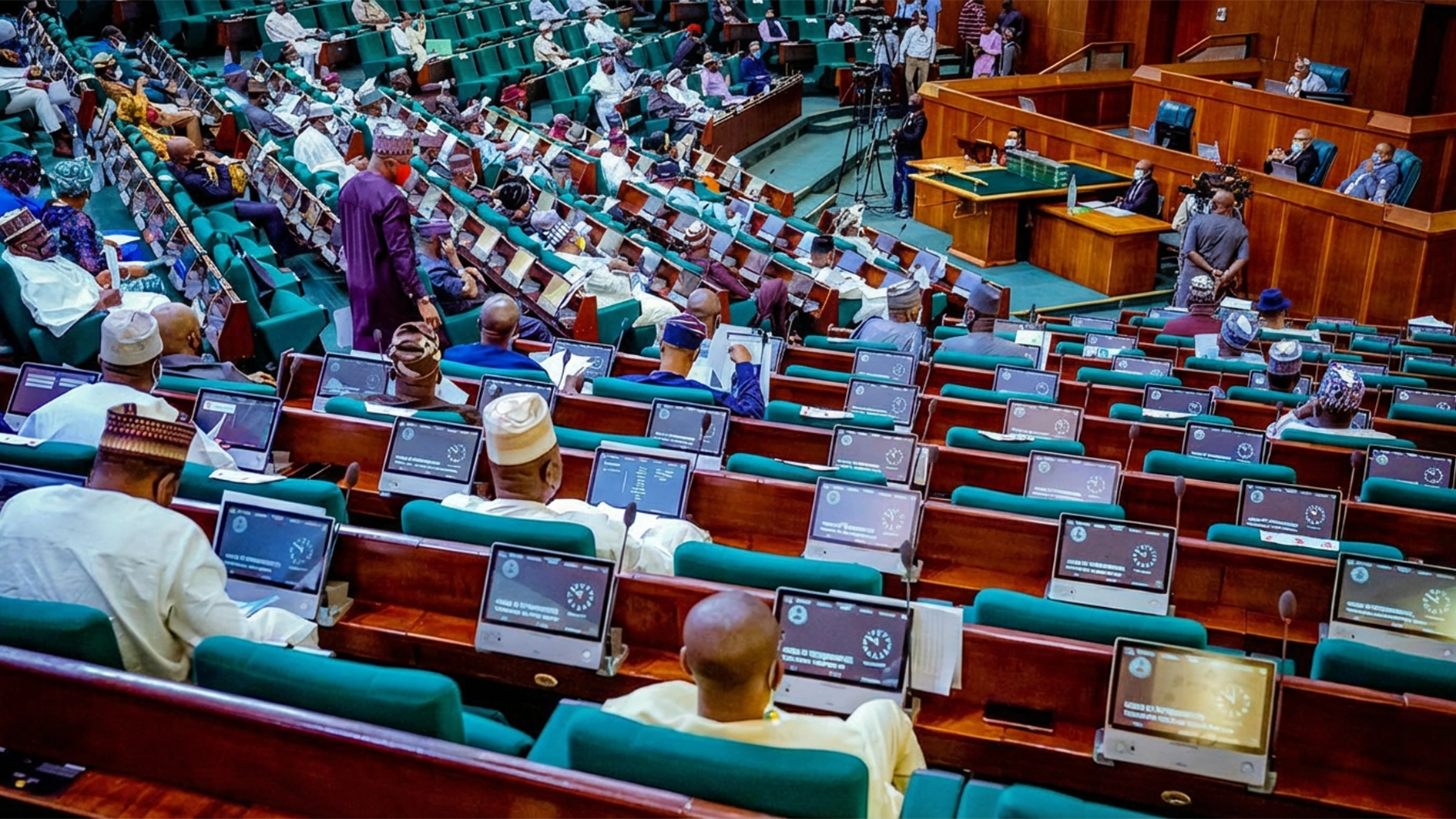
The House of Representatives on Thursday took a major step toward restructuring Nigeria’s security architecture by passing a constitutional amendment bill seeking to establish state police across the federation.
If eventually approved by the Senate, endorsed by state Houses of Assembly and assented to, the bill will introduce a dual policing system under which both federal and state police will operate side by side.
The legislation also grants governors powers to appoint state commissioners of police, creates state police service commissions, limits federal interference in state policing matters and empowers the Federal Government to provide financial support to state police services through grants.
National Assembly to Set Standards
One of the key provisions of the bill is contained in Section 214, which empowers the National Assembly to prescribe the structure, administration, organisation and powers of the federal police while also establishing guidelines for the creation of state police services.
Under the proposal, no state police service can commence operations unless the relevant State House of Assembly passes a law establishing it and the police outfit is certified as meeting nationally approved minimum standards.
Federal Police to Continue Operations Nationwide
The bill makes it clear that the establishment of state police will not replace the existing federal policing system.
Rather, the federal police will continue to perform nationwide policing functions, maintain public security and provide support to state police services where necessary.
The proposed arrangement mirrors policing structures in several federal democracies where federal and sub-national police agencies coexist and share responsibilities.
Federal Intervention Strictly Limited
To guarantee the autonomy of state police services, the bill restricts the circumstances under which the federal police can intervene in state security operations.
According to Section 214(6), federal authorities can only intervene when there is a total breakdown of law and order, when a governor formally requests assistance, or when a state police service becomes ineffective due to financial or administrative challenges.
READ ALSO: House of Representatives approves State Police Bill in landmark security reform vote
Even in such situations, approval must first be obtained from the National Police Council before any intervention can take place.
Governors to Appoint Commissioners of Police
The amendment gives governors significant authority over state police administration.
Section 215 provides that each state police service shall be headed by a Commissioner of Police appointed by the governor on the advice of the National Police Council and subject to confirmation by the State House of Assembly.
Governors will also have the authority to issue lawful directives relating to public safety and order.
However, commissioners who believe such directives violate established policing standards or legal provisions may refer the matter to the National Police Council for review, with the council’s decision deemed final.
The provision seeks to balance gubernatorial authority with professional safeguards against political misuse of police powers.
Checks on Removal of Police Chiefs
The bill introduces strict procedures for the removal of senior police officers.
Under Section 216, the Inspector-General of Police can only be removed for reasons such as gross misconduct, violation of regulations, fraud-related convictions, bankruptcy or mental incapacity.
Any removal must first be recommended by the National Police Council and subsequently approved by a two-thirds majority of the National Assembly.
Similarly, state commissioners of police can only be removed by governors upon the recommendation of the National Police Council and with the approval of two-thirds of the State House of Assembly.
The provision is aimed at protecting police leadership from arbitrary dismissals and political intimidation.
Federal Government May Fund State Police
Recognising the financial burden that policing could place on some states, the bill provides a mechanism for federal assistance.
Section 216A empowers the Federal Government to provide grants and other forms of aid to state police services based on recommendations from the National Police Council and subject to approval by the National Assembly.
The provision ensures that financially weaker states are not excluded from the proposed policing structure while preserving their operational independence.
Federal Authorities Barred from Routine Control
Another major feature of the proposal is the explicit prohibition against routine federal control of state police.
The bill states that no Act of the National Assembly shall confer powers relating to command, deployment, appointment, transfer, suspension or discipline of state police personnel on any federal authority except as provided under constitutional intervention mechanisms.
National Police Council to Have Expanded Membership
The bill also proposes significant reforms to police oversight structures.
The existing Nigeria Police Council would be transformed into a National Police Council with broader representation.
Membership would include representatives of the federal police, state attorneys-general, retired senior police officers, the National Human Rights Commission, the Public Complaints Commission, the Nigeria Labour Congress, the Nigerian Bar Association, the Nigerian Union of Journalists and traditional rulers.
The council will supervise both federal and state police services within constitutional limits, thereby promoting broader civilian participation and oversight in policing matters.
State Police Service Commissions Created
To strengthen accountability and transparency, the bill establishes State Police Service Commissions under Section 197.
The commissions will comprise representatives from the NHRC, Public Complaints Commission, NLC, NBA, NUJ, traditional institutions and retired police officers.
Among their responsibilities will be recommending candidates for appointment as commissioners of police and exercising disciplinary authority over officers below the rank of Assistant Commissioner of Police.
For every commissioner position, each commission must submit three qualified candidates to the National Police Council for consideration.
This multi-layered process is intended to prevent excessive concentration of appointment powers in the hands of governors.


-

 Latest5 days ago
Full List: Meet the 2026 Nobel Prize winners across six categories
-

 Football5 days ago
Premier League Matchweek 7: Five Fixtures That Could Shape the Weekend
-

 Latest4 days ago
Umahi defends Lagos-Calabar highway route changes amid public outcry
-

 Business3 days ago
Dangote Refinery IPO: 70% Subscription claim meets fourfold demand assertion as investors seek clarity
-
Business4 days ago
Dangote Refinery IPO Extension: Was the 70% subscription report overhyped?
-

 Latest2 days ago
UCTH faces morgue crisis as 50 unclaimed corpses await mass burial
-

 Featured4 days ago
El-Rufai, ADC governorship candidate’s court appearance puts Kaduna opposition politics in focus
-

 Business2 days ago
BREAKING: Nigeria’s Inflation Rate Drops to 14.63% in September