
Latest
From battlefields to kidnap camps: The grim fate of Nigeria’s military elite

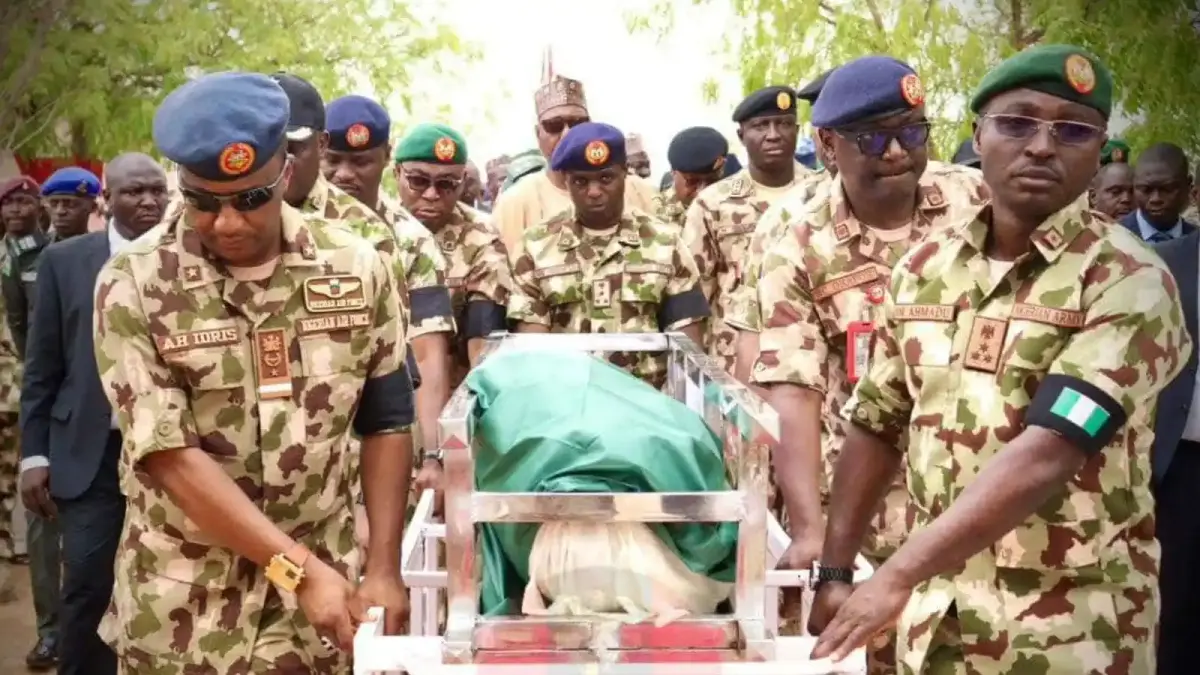
For years, Nigeria’s security forces have stood at the forefront of the country’s battle against insurgency, banditry, kidnapping, and other violent crimes. Yet, in a troubling twist of fate, the very men tasked with defending the nation are increasingly becoming victims of the insecurity they are fighting to contain.
Since the beginning of 2026, no fewer than six serving military commanders and one retired Major General have lost their lives in attacks linked to terrorists and armed criminal groups, highlighting the worsening security situation across the country.
The deaths, which occurred within a span of just a few months, have intensified concerns about the effectiveness of ongoing counterterrorism operations and raised fresh questions about the safety of both civilians and security personnel.
A Deadly Year for Military Leadership
The string of losses began on February 16, when Boko Haram insurgents attacked Mandaragirau community in Biu Local Government Area of Borno State, killing Lieutenant Colonel O.C. Okolo.
The officer’s death sent shockwaves through military circles. He was later laid to rest in his hometown of Obinofia Ndiuno in Ezeagu Local Government Area of Enugu State.
Barely two weeks later, another tragedy struck. On March 1, terrorists reportedly attacked the Mayenti military base in Borno State, killing Major U.I. Mairiga, the commander of the formation.
READ ALSO: Family rejects government’s account of General Rabe Abubakar’s death
The attacks continued with alarming frequency.
On March 6, Lieutenant Colonel S.I. Iliyasu was killed when Boko Haram fighters launched an assault on a battalion position in Konduga, one of the areas that has witnessed repeated insurgent attacks over the years.
Just three days later, on March 9, Lieutenant Colonel Umar Farouq also lost his life during another deadly attack on a military base in Borno State.
April brought no respite.
On April 9, Brigadier General Oseni Omoh Braimah was reportedly killed by fighters of the Islamic State West Africa Province (ISWAP), marking one of the highest-ranking casualties recorded this year.
Four days later, on April 13, Colonel I.A. Mohammed, Commanding Officer of the Nigerian Army’s 242 Battalion in Monguno, was killed in active service, further underscoring the growing dangers confronting military personnel on the frontlines.
The Death That Sparked National Outrage
While the deaths of serving commanders were devastating, the tragic fate of retired Major General Rabe Abubakar struck a particularly emotional chord across Nigeria.
Unlike the others, Abubakar was not killed on the battlefield.
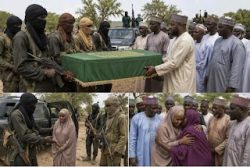
The retired senior officer was abducted alongside his wife on May 30 along the Marabar Musawa-Kafinsoli road in Matazu Local Government Area of Katsina State.
Weeks after the abduction, a video surfaced on social media showing the couple in captivity.
In the footage, the kidnappers demanded the release of three detained individuals identified as Sani, Aminu, and Nasiru, as well as the return of seized livestock.
READ ALSO: Former Defence spokesman, Major General Rabe Abubakar, dies in bandits’ captivity
The video, which circulated widely online, sparked public concern and renewed calls for stronger rescue operations.
However, hopes for Abubakar’s safe return were dashed when the Katsina State Government announced that the retired general had died in captivity.
According to the state’s Commissioner for Internal Security and Home Affairs, Nasiru Mu’azu, the former military officer succumbed to complications arising from diabetes and hypertension while being held by his abductors.
The announcement triggered widespread anger and sorrow, with many Nigerians questioning how a retired senior military officer could remain in captivity for weeks without being rescued.
A Nation Reacts
The death of General Abubakar reignited national debate over Nigeria’s worsening security challenges.
Political leaders, security analysts, and ordinary citizens took to social media and public platforms to express frustration and demand urgent action.
Presidential candidate of the Nigeria Democratic Congress (NDC), Peter Obi, described the incident as both a personal tragedy and a reflection of a larger national crisis.
According to him, the death of a man who dedicated much of his life to defending the country underscores the scale of insecurity confronting Nigerians.
Obi argued that if retired generals, farmers, traders, and ordinary citizens can no longer move freely without fear of attack or abduction, then Nigeria faces a genuine security emergency.
He called for a more intelligence-driven and technology-based security strategy, emphasizing the need for better-equipped personnel, stronger border security, and improved intelligence gathering.
Former Chairman of the Nigerian Electricity Regulatory Commission (NERC), Sam Amadi, also criticized the government’s handling of insecurity.
Amadi questioned how a retired military general could remain in captivity for an extended period without a successful rescue operation, describing the development as a national tragedy.
Similarly, former Senate President and National Chairman of the African Democratic Congress (ADC), Senator David Mark, warned that insecurity has reached alarming levels and now affects virtually every segment of Nigerian society.
He urged citizens and government institutions to unite against terrorism, banditry, kidnapping, and violent crime.
Amid growing criticism, President Bola Tinubu reaffirmed his administration’s stance against negotiating with terrorists and kidnappers.
In a statement issued through his spokesman, Bayo Onanuga, the President insisted that the government would not bow to demands for the release of detained terror suspects.
Tinubu warned that bandits, kidnappers, and sponsors of terrorism must either surrender or face the full force of the law.
According to him, the government remains committed to dismantling criminal networks and restoring security across the country.
A Disturbing Trend
Security experts note that the increasing number of attacks targeting military commanders signals a disturbing evolution in the tactics of insurgent groups.
Historically, terrorists primarily focused on attacking civilian populations, soft targets, and isolated military installations. However, recent incidents suggest a deliberate effort to target senior military personnel and disrupt command structures.
Beyond the immediate loss of experienced officers, such attacks can affect troop morale and complicate military operations in already volatile regions.
For many Nigerians, the deaths of six serving commanders and a retired Major General within a few months represent more than isolated incidents. They symbolize a broader security challenge that continues to test the country’s resilience.
As terrorist groups and armed bandits adapt their methods, pressure is mounting on security agencies and the Federal Government to demonstrate measurable progress in the fight against insecurity.
The deaths of these officers have become painful reminders that in today’s Nigeria, the line between protector and victim is becoming increasingly blurred.
And as families mourn, communities live in fear, and military formations remain on high alert, one question continues to dominate public discourse: if even generals are not safe, who is?


-

 Latest5 days ago
Full List: Meet the 2026 Nobel Prize winners across six categories
-

 Football4 days ago
Premier League Matchweek 7: Five Fixtures That Could Shape the Weekend
-
 Latest4 days ago
Umahi defends Lagos-Calabar highway route changes amid public outcry
-

 Business3 days ago
Dangote Refinery IPO: 70% Subscription claim meets fourfold demand assertion as investors seek clarity
-
Business4 days ago
Dangote Refinery IPO Extension: Was the 70% subscription report overhyped?
-

 Latest2 days ago
UCTH faces morgue crisis as 50 unclaimed corpses await mass burial
-
 Featured4 days ago
El-Rufai, ADC governorship candidate’s court appearance puts Kaduna opposition politics in focus
-
 Latest5 days ago
Makinde’s Chief of Staff, Segun Ogunwuyi, resigns