
Featured
Abdulsalami Abubakar rejects claims military drafted 1999 constitution

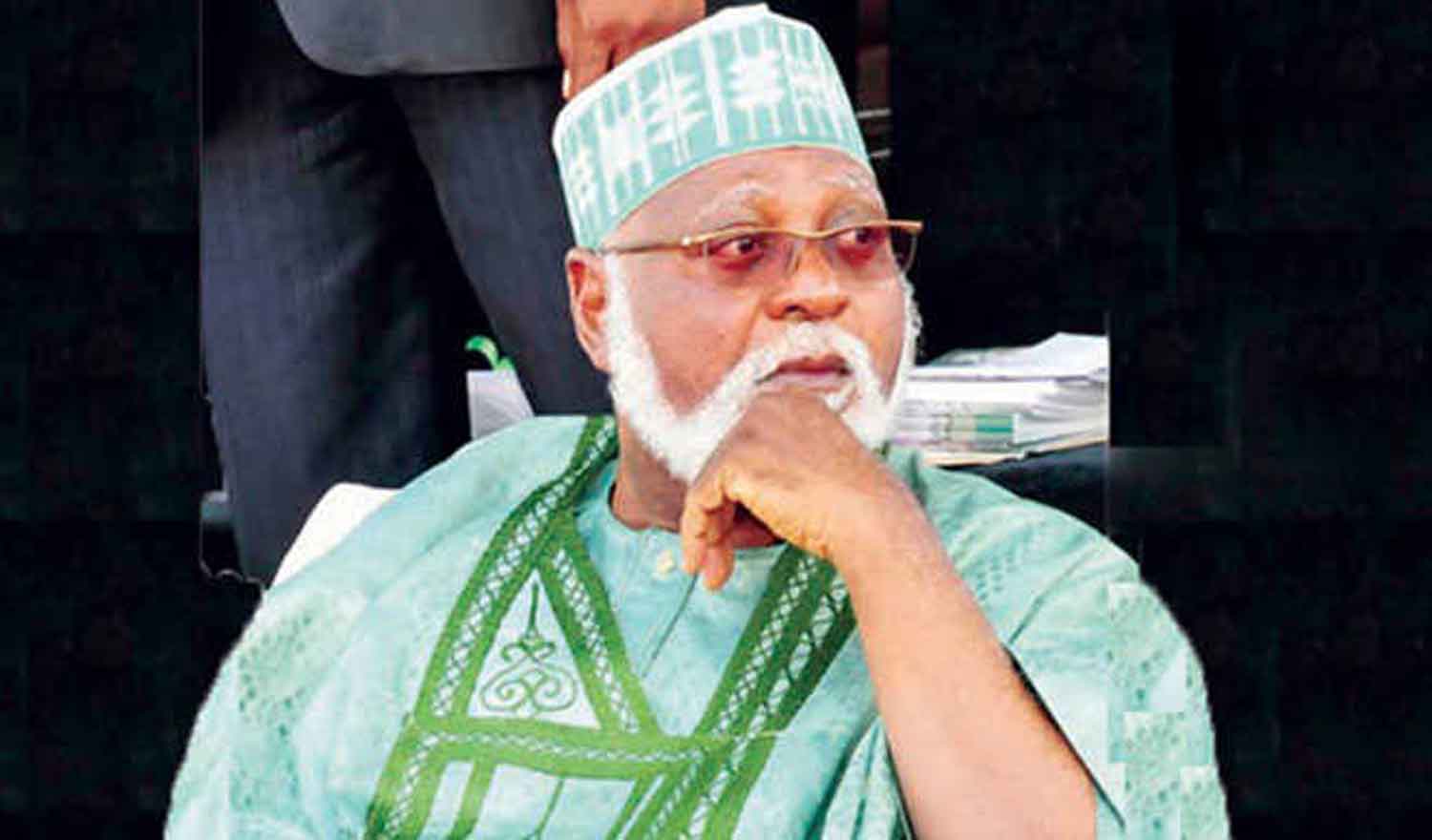
Former Head of State, Abdulsalami Abubakar, has dismissed claims that the military authored Nigeria’s 1999 Constitution, insisting that the document was largely derived from the 1979 Constitution and shaped through consultations with legal experts and the Nigerian public.
Abubakar made the clarification while speaking on the origins of the constitution that currently serves as the legal foundation of Nigeria’s Fourth Republic.
According to the former military ruler, his administration did not create an entirely new constitution during the transition to civilian rule in 1999. Instead, it relied substantially on the 1979 Constitution, which had been developed through extensive deliberations involving constitutional experts and representatives of the Nigerian people before the advent of the Second Republic.
He explained that the tight timeline of the transition programme initiated in 1998 made it necessary to adopt and review an existing constitutional framework rather than convene a fresh constituent assembly and draft a new document from scratch.
“The claim that the military sat down and wrote the 1999 Constitution is false. It was a document drawn substantially from the 1979 Constitution,” Abubakar said.
The legitimacy of the 1999 Constitution has remained a subject of national debate for more than two decades. Critics, including civil society groups and constitutional reform advocates, have often argued that the document lacks full popular legitimacy because it was promulgated through Decree No. 24 of 1999 by the military government rather than being approved through a national referendum.
However, Abubakar noted that the constitution’s foundations predate his administration and were rooted in earlier constitutional processes.
Historical records show that the 1979 Constitution was drafted following deliberations by a Constituent Assembly between 1977 and 1978 before the military government of former President Olusegun Obasanjo handed power to a civilian administration.
Following the death of former Head of State Sani Abacha in June 1998, Abubakar’s administration established a constitutional review committee chaired by the late Justice Niki Tobi to gather public opinion on the constitutional framework that should guide Nigeria’s return to democracy.
The committee reportedly conducted consultations across the country and received widespread support for the adoption of the 1979 constitutional model, which provided for a federal system of government and a bicameral National Assembly.
Despite Abubakar’s clarification, calls for constitutional reform have continued, with many stakeholders advocating amendments to address issues such as devolution of powers, fiscal federalism, local government autonomy, and the concentration of responsibilities on the Exclusive Legislative List.
Observers say the former Head of State’s remarks provide additional context to the historical evolution of the 1999 Constitution, which has governed Nigeria since the return to democratic rule on May 29, 1999, and remains central to ongoing discussions about constitutional restructuring and governance reforms.


-
 Featured6 days ago
Inside INEC’s race to prepare for Nigeria’s 2027 elections
-
 Latest1 week ago
Global excitement builds as Healing Streams Live Services returns October 23
-
 Featured6 days ago
2027: APC unveils nationwide campaign timetable, Tinubu to rally in 12 states
-
 Business1 week ago
President Tinubu and the Low Transport Fares Fiasco
-

 Business1 week ago
BREAKING: Nigeria’s Inflation Rate Drops to 14.63% in September
-

 Business3 days ago
Naira faces exchange rate gap as Dollar hits N1,380 on parallel market
-

 Business6 days ago
Court dismisses ₦170m Trade Fair contract claim, says Zenith Bank was not a party
-

 Latest6 days ago
Breaking: NNPCL raises petrol price to ₦1,405 per litre amid discount controversy