
Business
Naira still undervalued by 25.6% despite gains from FX reforms, says IMF

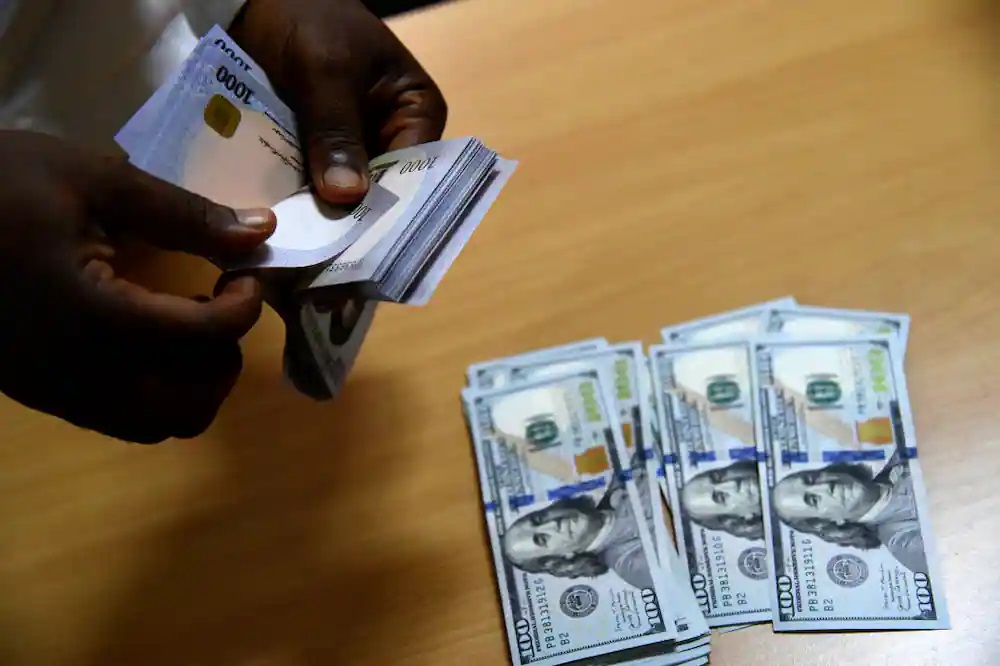
The International Monetary Fund (IMF) has stated that the Nigerian naira remains significantly undervalued despite recent improvements in the foreign exchange market and the currency’s gradual recovery against the United States dollar following sweeping reforms introduced by the Federal Government.
In its latest Article IV Consultation Report on Nigeria, the Washington-based financial institution estimated that the naira is still undervalued by 25.6 percent, suggesting that the local currency continues to trade below levels justified by the country’s underlying economic fundamentals.
The assessment comes nearly three years after President Bola Tinubu’s administration initiated major foreign exchange reforms in June 2023, including the unification of multiple exchange rates and the adoption of a more market-driven currency regime aimed at improving transparency, attracting foreign investment, and boosting liquidity in the FX market.
According to the IMF, its evaluation was based on the Real Effective Exchange Rate (REER) model, a widely used measure that assesses the value of a country’s currency against those of its major trading partners after accounting for inflation differentials.
While the fund acknowledged that the naira had made notable gains over the past year, it maintained that the currency remained substantially below its equilibrium value.
“Despite the REER appreciation that has already taken place in 2025, the EBA-lite REER model indicates a REER gap of -25.6 percent,” the IMF stated in the report.
An undervalued currency generally means that the exchange rate is weaker than what a country’s economic conditions and macroeconomic fundamentals would ordinarily support.
The IMF noted that Nigeria’s Real Effective Exchange Rate appreciated by 32 percent in 2025, indicating a significant strengthening of the naira when adjusted for inflation and measured against the currencies of key trading partners.
However, during the same period, the Nominal Effective Exchange Rate (NEER) — which tracks the currency without adjusting for inflation — depreciated by 5.2 percent.
READ ALSO: $5bn Abu Dhabi deal may expose Nigeria to hidden financial risks, IMF warns
The report showed that the official exchange rate improved from approximately N1,535 per dollar at the end of 2024 to N1,435 per dollar at the end of 2025, representing an appreciation of about 6.5 percent.
Nevertheless, on an annual average basis, the naira weakened slightly, moving from N1,479/$ in 2024 to N1,520/$ in 2025, translating to a depreciation of roughly 2.8 percent.
Based on the IMF’s valuation model, the naira should have been trading at approximately N1,142.04 per dollar using the end-of-2025 exchange rate benchmark, or around N1,130.88 per dollar when calculated using the average exchange rate for the year.
This contrasts sharply with the prevailing official market rate of N1,356.27/$ recorded on Monday.
Nigeria’s foreign exchange landscape has undergone significant transformation since the government dismantled the long-standing multiple exchange-rate framework in 2023.
The reforms initially triggered a sharp depreciation of the naira as the currency adjusted to market realities. However, policymakers argued that the measures were necessary to restore investor confidence, eliminate market distortions, and attract foreign capital inflows.
Since then, the Central Bank of Nigeria (CBN) has implemented additional measures to deepen market liquidity, improve transparency, and clear outstanding foreign exchange obligations.
The IMF acknowledged progress in market functioning but emphasized that exchange-rate flexibility remains critical to correcting the currency’s misalignment over the medium term.
Economic analysts say the IMF’s findings highlight the complexity of Nigeria’s exchange-rate challenges and underscore the importance of sustaining reforms beyond the foreign exchange market.
According to analysts, improving productivity, diversifying export earnings, strengthening fiscal revenues, and reducing dependence on oil receipts remain essential for achieving long-term currency stability.
They note that while recent reforms have improved investor sentiment and increased transparency in the FX market, deeper structural changes are needed to enhance competitiveness and strengthen confidence in the naira.
The IMF concluded that continued efforts to improve market efficiency, strengthen fiscal management, and support the growth of non-oil sectors would play a crucial role in narrowing the exchange-rate gap and reinforcing Nigeria’s external economic position in the years ahead.


-
 Featured6 days ago
Inside INEC’s race to prepare for Nigeria’s 2027 elections
-

 Latest1 week ago
Global excitement builds as Healing Streams Live Services returns October 23
-
 Featured6 days ago
2027: APC unveils nationwide campaign timetable, Tinubu to rally in 12 states
-

 Business1 week ago
President Tinubu and the Low Transport Fares Fiasco
-
 Business4 days ago
Naira faces exchange rate gap as Dollar hits N1,380 on parallel market
-
 Business6 days ago
Court dismisses ₦170m Trade Fair contract claim, says Zenith Bank was not a party
-

 Latest6 days ago
Breaking: NNPCL raises petrol price to ₦1,405 per litre amid discount controversy
-

 Business1 week ago
Rite Foods targets beverage market growth with LIDA Malt