
Crime
Tensions rise over Nigeria’s dual approach as 500 terror suspects face trial, 720 rejoin society

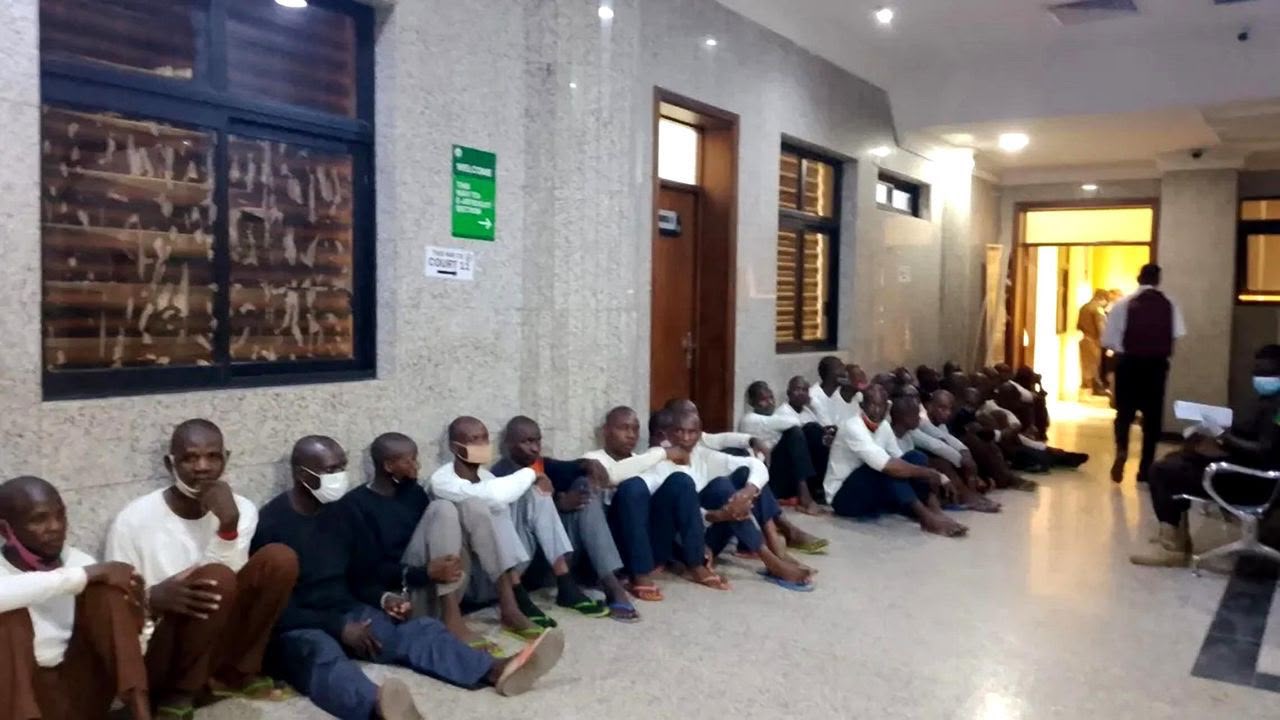
Nigeria’s counter-insurgency strategy is under renewed scrutiny as the Federal Government intensifies mass prosecution of terrorism suspects in Abuja while state authorities in the North-East continue large-scale reintegration of former fighters, even as armed groups reportedly impose taxes on rural communities in parts of the North-West.
The Federal Government has launched one of its largest judicial operations in recent years, bringing more than 500 terrorism suspects before the Federal High Court in Abuja. Officials say the prosecutions target individuals accused of mass killings, arms trafficking, and logistical support for insurgent networks, with hundreds of convictions already recorded in the latest phase of trials.
At the same time, authorities in Borno State confirmed the reintegration of about 720 former insurgents under ongoing de-radicalisation and rehabilitation programmes. The initiative is part of state-backed efforts to process lower-risk ex-combatants through structured rehabilitation before returning them to civilian life in conflict-affected communities.
The parallel approaches reflect Nigeria’s dual-track security strategy, one focused on punitive justice through the courts, and the other centred on rehabilitation and reintegration. Federal prosecutors argue that large-scale trials are necessary to deter insurgency and restore accountability, while state officials maintain that reintegration programmes are essential given the number of individuals surrendering and the long-term need for stability in the North-East.
However, the contrasting approaches have triggered renewed debate among civil society organisations and security analysts, who warn that the absence of a unified national framework could undermine both justice and security outcomes. Critics argue that reintegrating former fighters without broad community reconciliation mechanisms risks deepening mistrust in affected areas.
The debate is further complicated by escalating insecurity in other parts of northern Nigeria. In Sokoto State, residents in some rural communities have reportedly faced renewed pressure from armed groups accused of imposing informal taxes on farmers and villagers, raising concerns about the spread and diversification of criminal networks beyond the insurgency epicentre.
Security experts say the developments highlight the complexity of Nigeria’s evolving threat landscape, where formal insurgent groups, splinter cells, and bandit networks operate alongside rehabilitation programmes and ongoing military prosecutions.
As both federal and state-level interventions continue independently, stakeholders are increasingly calling for a coordinated national framework that balances accountability with reintegration, while addressing emerging insecurity patterns across multiple regions.


-

 Business7 days ago
Dangote Refinery IPO: 70% Subscription claim meets fourfold demand assertion as investors seek clarity
-

 Latest1 week ago
Umahi defends Lagos-Calabar highway route changes amid public outcry
-
Business1 week ago
Dangote Refinery IPO Extension: Was the 70% subscription report overhyped?
-

 Featured3 days ago
Inside INEC’s race to prepare for Nigeria’s 2027 elections
-

 Latest5 days ago
UCTH faces morgue crisis as 50 unclaimed corpses await mass burial
-

 Business5 days ago
BREAKING: Nigeria’s Inflation Rate Drops to 14.63% in September
-

 Featured1 week ago
El-Rufai, ADC governorship candidate’s court appearance puts Kaduna opposition politics in focus
-

 Featured3 days ago
2027: APC unveils nationwide campaign timetable, Tinubu to rally in 12 states