
Maritime
Licensed port agents back FG’s Green Tax on imported vehicles

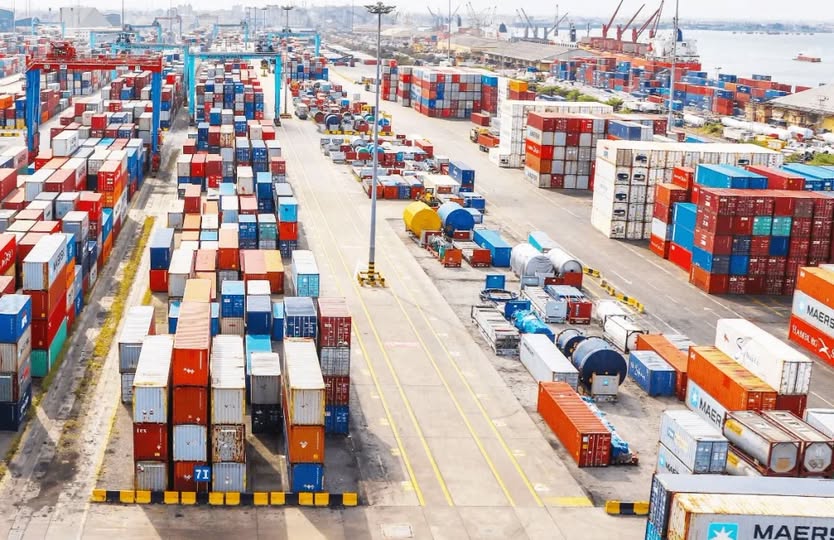
Licensed customs agents and freight forwarders have expressed support for the Federal Government’s newly introduced Green Tax Surcharge on imported vehicles, describing the policy as a positive step toward promoting environmental sustainability while easing the cost of vehicle imports.
The environmental levy, which took effect on July 1, 2026, forms part of the Federal Government’s 2026 Fiscal Policy Measures and is administered by the Nigeria Customs Service (NCS). It introduces an emissions-based tax on imported vehicles powered by combustion engines.
Under the new policy, the Green Tax is calculated based on engine capacity, with vehicles that have larger engines attracting higher charges because of their greater carbon emissions. More fuel-efficient vehicles and electric vehicles benefit from lower rates, while fully electric vehicles enjoy a zero per cent tariff under the policy.
Industry stakeholders say the introduction of the Green Tax has been balanced by a reduction in the Import Adjustment Tax on vehicles, a move they believe will help prevent a significant increase in the overall cost of clearing imported vehicles.
Former Acting National President of the Association of Nigerian Licensed Customs Agents (ANLCA), Dr. Kayode Farinto, welcomed the initiative, saying it reflects the government’s willingness to engage stakeholders while advancing environmental reforms.
According to Farinto, industry operators had previously advocated for a reduction or removal of the 15 per cent levy on used vehicles. He noted that the government instead reduced the levy to five per cent while introducing a Green Tax of between two and four per cent, a decision he said would lower import costs and encourage compliance with global climate initiatives.
He added that the zero-duty incentive for electric vehicles is expected to encourage the adoption of cleaner transportation options and reduce dependence on fossil fuels.
The Nigeria Customs Service has also undertaken stakeholder engagement programmes to explain the implementation of the policy and has integrated the Green Tax assessment into its automated Harmonized System (HS) Code platform to simplify duty calculations and reduce processing delays at the ports.
Although some importers have called for transitional measures for shipments that were already in transit before the policy took effect, many licensed customs agents have welcomed the reform, saying it strikes a balance between environmental responsibility and trade facilitation.
Stakeholders have also advised vehicle importers to pay close attention to engine sizes when purchasing vehicles abroad, noting that selecting smaller, more fuel-efficient models could significantly reduce import costs under the new tax regime.


-

 Business1 week ago
How Ethiopian Airlines is challenging Africa’s aviation narrative through self-reliance
-

 Sports1 day ago
Senegal opens Dakar 2026 Youth Olympic Games, Africa’s first Olympic event
-

 Latest4 days ago
Tinubu endorses Nigeria’s participation in 2026 World Travel Market London
-

 Latest1 week ago
Pastor Chris to lead special family prayers as Healing Streams grand finale holds today
-

 Crime6 days ago
Passengers feared abducted on Kebbi-Abuja journey as viral video shows armed men threatening captives (VIDEO)
-

 Featured7 days ago
Kaduna APC rally sparks row over turnout, alleged rented crowd and AI disinformation
-

 News6 days ago
Rugby: Borthwick Faces Key Selection Questions as World Cup Looms
-
 Featured3 days ago
How court ruling reshapes APC’s Imo West Senatorial contest