
Business
As the Dollar Faces New Rivals, Nigeria Bets on a Stronger Naira

By Arthur Eriye
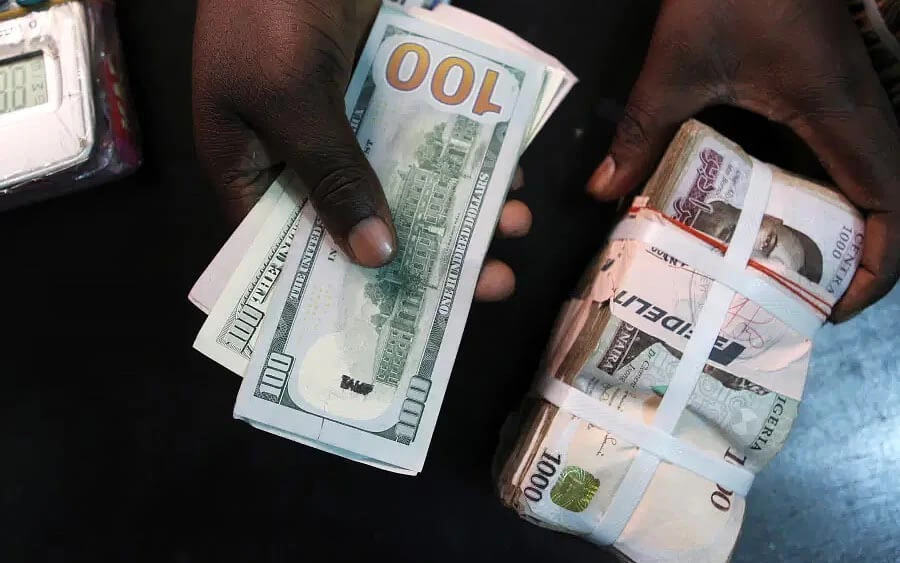
As the BRICS nations strive to lessen their reliance on the US dollar and the global financial landscape gradually transitions towards a multipolar currency framework, Nigeria is counting on comprehensive reforms to bolster the naira. However, economists argue that the long-term stability of the currency will hinge more on internal reforms than on any reduction in the dollar’s global dominance.
For many years, the US dollar has served as the foundation of the global financial system, prevailing in international trade, commodity pricing, and foreign exchange reserves. It continues to be the preferred reserve currency worldwide, constituting approximately 58 percent of global reserves and appearing in nearly 90 percent of foreign exchange transactions.
Nevertheless, discussions surrounding de-dollarisation are gaining traction.
The expanded BRICS coalition—comprising Brazil, Russia, India, China, South Africa, and its new members—is promoting the utilization of local currencies in cross-border trade, while numerous emerging economies are diversifying their reserve assets and decreasing their dependence on the dollar. This trend has accelerated following Western sanctions on Russia, which underscored the dangers of excessive reliance on the dollar-centric financial system.
Although analysts maintain that the dollar will continue to be dominant for years to come, they assert that the global monetary system is slowly becoming more varied.
For Nigeria, the consequences are profound.
READ ALSO; Naira remains stable against Pound at N1,841 amid CBN FX reforms
The naira is particularly susceptible to fluctuations in the dollar, as crude oil—Nigeria’s primary source of foreign exchange revenue—is priced in dollars. Additionally, manufacturers, airlines, and importers heavily depend on the US currency to fund their imports.
As a result, whenever the dollar appreciates or the US Federal Reserve increases interest rates, the pressure on the naira frequently escalates as investors redirect their capital towards dollar-denominated assets.
This elucidates the rationale behind the recent reforms implemented by the Central Bank of Nigeria (CBN), which have aimed at enhancing confidence in the foreign exchange market. The unification of exchange rates, the adoption of a stricter monetary policy, and initiatives to improve market liquidity have collectively contributed to the restoration of investor confidence and the attraction of renewed capital inflows.
Nevertheless, economists contend that reforms related to exchange rates alone cannot ensure a stronger naira. Dr. Muda Yusuf, the Chief Executive Officer of the Centre for the Promotion of Private Enterprise (CPPE), asserts that Nigeria’s foreign exchange dilemma is fundamentally rooted in an export issue. He emphasizes that the nation will only gain from any global currency realignment if it diversifies its non-oil exports, enhances domestic production, and increases foreign exchange earnings beyond crude oil.
In a similar vein, Mr. Bismarck Rewane, Managing Director of Financial Derivatives Company, has consistently maintained that the sustainability of exchange-rate stability relies more on productivity, investment, and the credibility of policies rather than on administrative controls.
Analysts also highlight the potential opportunities presented by the African Continental Free Trade Area (AfCFTA) and the Pan-African Payment and Settlement System (PAPSS), which could enable African businesses to conduct a greater number of transactions in local currencies, thereby diminishing the demand for dollars in regional trade.
However, few expect that the dollar will give up its global supremacy in the foreseeable future. The United States still maintains the largest financial markets worldwide, while the yuan and other rival currencies face significant structural obstacles.
For Nigeria, the more pressing issue is not whether the dollar diminishes in power, but whether the nation can develop an economy that can support a more robust naira.
This entails increasing exports, attracting long-term investments, decreasing reliance on imports, and upholding credible fiscal and monetary policies.
As the global currency environment slowly transforms, Nigeria’s greatest opportunity does not stem from the dollar’s decline, but from reinforcing the economic fundamentals that will allow the naira to thrive in an evolving landscape.


-

 Business1 week ago
Dangote Refinery IPO: 70% Subscription claim meets fourfold demand assertion as investors seek clarity
-
 Featured4 days ago
Inside INEC’s race to prepare for Nigeria’s 2027 elections
-
 Featured4 days ago
2027: APC unveils nationwide campaign timetable, Tinubu to rally in 12 states
-

 Latest7 days ago
UCTH faces morgue crisis as 50 unclaimed corpses await mass burial
-

 Business7 days ago
BREAKING: Nigeria’s Inflation Rate Drops to 14.63% in September
-

 Aviation1 week ago
Germany opens online application route for student, EU Blue Card and other long-stay visas
-

 Business6 days ago
President Tinubu and the Low Transport Fares Fiasco
-
 Business4 days ago
Court dismisses ₦170m Trade Fair contract claim, says Zenith Bank was not a party