
Latest
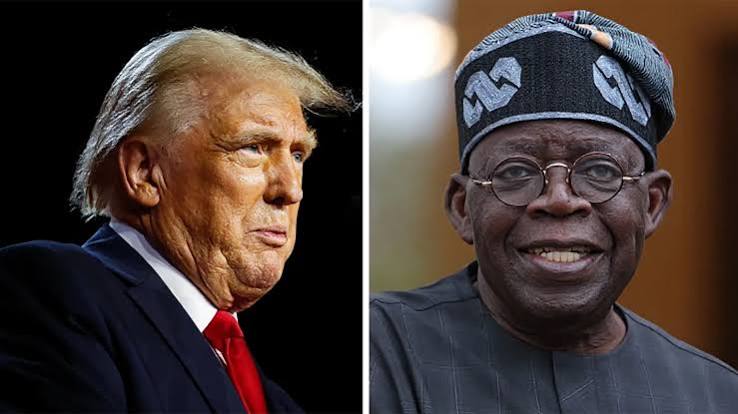
Why Trump is prioritising partnership over pressure in Nigeria’s security fight

Arthur Eriye
Just a few months prior, U.S. President Donald Trump seemed ready to prioritize Nigeria’s escalating security crisis within Washington’s Africa policy framework. His administration openly scrutinized whether President Bola Ahmed Tinubu’s government was adequately addressing the rampant killings that have ravaged communities in Benue, Plateau, Borno, Zamfara, and other states.
American legislators and prominent evangelical organizations urged the White House to adopt a firmer stance, with some advocating for sanctions and increased diplomatic pressure regarding attacks they claimed disproportionately impacted Christian communities.
Currently, the tone has shifted significantly.
Instead of issuing new warnings, Trump has publicly praised Tinubu’s administration for its security initiatives, committed to enhanced cooperation against terrorism, and reaffirmed Nigeria’s significance as one of America’s primary strategic allies in Africa.
This abrupt change has raised questions within diplomatic and policy-making circles. Has there been a dramatic improvement in Nigeria’s security landscape? Has Washington altered its evaluation of the violence? Or have geopolitical considerations taken precedence over human rights issues?
The solution seems to stem from a blend of diplomacy, mutual security interests, and the strategic significance that Nigeria holds in an increasingly competitive global landscape.
Trump’s previous criticisms were made in the context of rising violence that had once again positioned Nigeria among nations grappling with severe security issues. Terrorist assaults by Boko Haram and the Islamic State West Africa Province (ISWAP), rampant banditry throughout the North-West, kidnappings for ransom, and lethal communal conflicts between farmers and herders have collectively resulted in one of Africa’s most intricate security dilemmas.
International human rights organizations have reported ongoing attacks on villages, places of worship, and agricultural communities. Thousands have lost their lives or been displaced, while millions are in need of humanitarian aid. Visuals of destroyed communities and accounts of mass killings have heightened concerns in Washington.
Numerous U.S.-based Christian advocacy groups contended that Christians were being intentionally targeted and called for a more robust American response. Their initiatives gained momentum among conservative legislators and ultimately resonated within the Trump administration.
Abuja, on the other hand, has consistently dismissed claims that the violence represents state-sponsored religious persecution. Nigerian officials contend that the country’s insecurity cannot be simplified to a Christian-Muslim conflict. Instead, they highlight terrorism, organized crime, ethnic strife, competition for limited land and water resources, poverty, and ineffective local governance as the main factors driving violence.
READ ALSO: How Trump-Tinubu security alliance could redefine the War against terror in West Africa
In fact, existing evidence indicates that both Christian and Muslim communities have been significantly affected by terrorist attacks, banditry, and criminal violence. Security analysts have frequently warned against oversimplifying a crisis that involves various armed groups with distinct motivations.
While public discussions regarding the nature of the killings persisted, behind-the-scenes developments began to alter the dynamics between Abuja and Washington.
In recent months, the security collaboration between the two nations has gradually intensified. Intelligence agencies from Nigeria and the United States have enhanced their cooperation in combating terrorist groups operating within the Lake Chad Basin, while military collaboration has strengthened in areas such as surveillance, intelligence collection, and counter-terrorism efforts.
The reported removal of high-ranking extremist leaders through operations that involved intelligence sharing has bolstered the belief that a closer partnership could yield more effective outcomes than overt confrontations.
For Washington, the implications extend beyond Nigeria’s domestic security concerns.
Nigeria holds a distinctive role in the geopolitical framework of Africa. With a population exceeding 230 million and being one of the continent’s largest economies, the nation is crucial for regional security, diplomacy, and trade. Additionally, it plays a pivotal role in ECOWAS peace initiatives and remains one of Africa’s foremost energy producers, despite facing recent production hurdles.
As China continues to broaden its economic influence across Africa and Russia seeks to establish stronger security alliances on the continent, the United States cannot afford to have a strained relationship with Nigeria.
Foreign policy experts suggest that the Trump administration has adopted a more pragmatic approach. Instead of isolating Abuja through sanctions or ongoing public criticism, Washington seems to have determined that continuous engagement presents better opportunities for enhancing regional security while safeguarding American strategic interests.
This calculation is also affected by economic factors.
In spite of macroeconomic challenges, Nigeria continues to be one of the most appealing long-term investment locations in Africa. American firms hold significant stakes in sectors such as oil and gas, financial technology, telecommunications, agriculture, healthcare, and digital infrastructure
The ongoing economic reforms initiated by Tinubu—including the liberalization of exchange rates, the elimination of fuel subsidies, and tax reforms—have garnered renewed interest from global investors. Enhanced diplomatic ties with Washington could further bolster investor confidence at a time when Nigeria is actively pursuing foreign investment to stimulate growth.
READ ALSO: Trump rebrands U.S. 250th independence anniversary celebration as ‘Tribute to America’ Rally
For Trump, endorsing Nigeria’s stability is increasingly viewed as both an economic and security necessity.
Energy considerations further solidify this stance. Although crude oil production has experienced fluctuations due to theft and pipeline vandalism, Nigeria remains a key player in global energy markets. The country’s vast natural gas reserves also position it as a potential supplier for future energy transitions, especially as Europe aims to diversify its supply sources.
In this context, fostering positive relations with Abuja aligns with broader American commercial and strategic interests.
However, despite advancements in diplomacy, insecurity continues to be a persistent issue.
Attacks are ongoing in various regions of northern and central Nigeria. Farmers are still fleeing fertile lands due to fear. Rural enterprises remain at risk. Kidnappings disrupt transportation, education, and commerce, while humanitarian organizations caution that food insecurity is escalating in areas affected by conflict.
Thus, the improved discourse from Washington should not be interpreted as proof that Nigeria has resolved its security crisis.
Rather, it signifies a shift in strategy.
The Trump administration now seems to believe that collaboration, intelligence sharing, and military cooperation are more effective in undermining terrorist networks than diplomatic confrontation.
For President Tinubu, this shift validates months of discreet diplomacy aimed at repositioning Nigeria as a dependable security ally rather than a nation solely characterized by violence.
For Trump, it signifies an acknowledgment that Nigeria’s stability is too crucial to be compromised by political rhetoric. As Africa’s most populous nation, Nigeria remains vital to regional counter-terrorism initiatives, economic engagement, and the broader strategic competition influencing global politics.
Ultimately, what has changed is not the magnitude of Nigeria’s security challenges but Washington’s perception of the most effective response.
The violence has not ceased. Communities continue to grieve their losses, security forces are still engaged in combat with various armed groups, and millions of Nigerians remain under the threat of violence.
Nevertheless, the relationship between Abuja and Washington has entered a new era—one characterized less by public criticism and more by strategic collaboration.
Trump’s shift from pressure to partnership may have eased diplomatic tensions, but it has not ended the violence that continues to claim lives across Nigeria. For Washington, the new approach reflects strategic realism. For Abuja, however, the real test is whether improved relations with the United States can translate into safer communities, stronger institutions and renewed investor confidence. Until that happens, diplomacy alone will not silence the guns.


-

 Latest5 days ago
Pastor Chris Oyakhilome announces mother’s passing at 88 [VIDEO]
-

 Latest7 days ago
Arsenal eye €70-80m move for Real Madrid star
-

 Football4 days ago
How David Beckham made $51.1m from 2026 World Cup, surpassing winners’ prize
-

 Crime6 days ago
Police arrest suspect, launch manhunt for 2 others over Delta Education Director’s death
-

 Latest6 days ago
How adulterated palm oil, coloured pepper are putting consumers at risk
-

 Crime5 days ago
Deaths in NSCDC Custody: Can Nigeria guarantee the safety of detainees?
-

 Latest7 days ago
Obi left $155m in Anambra, Otti insists amid debt controversy
-

 Crime7 days ago
184.5kg Cocaine Bust: NDLEA docks KC Luxury, two accomplices, remands them in custody