
News
Lagos Assembly mulls craftsmen, artisans regulation, targets informal sector tax coverage, checks quackery

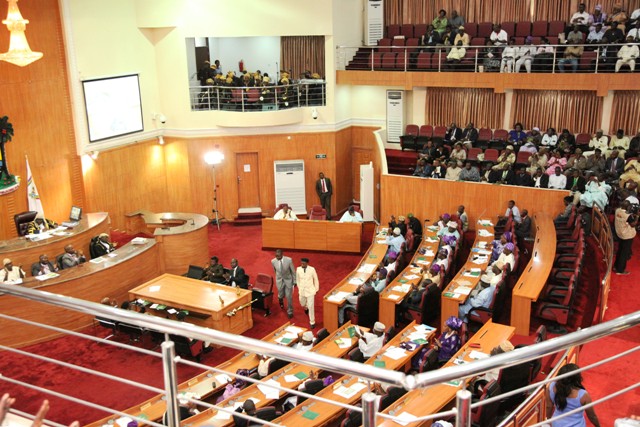
The Lagos State House of Assembly has commenced moves to regulate the activities of artisans and craftsmen across the state with the consideration of a bill seeking to establish the Lagos State Artisans and Craftsmen Regulatory Board.
The bill, titled “Lagos State Artisans and Craftsmen Regulatory Board Bill 2025”, seeks to provide a legal framework for the registration, training, certification and regulation of artisans and craftsmen operating in the state.
Presenting the bill for second reading, the Majority Leader of the House, Noheem Adams, said the proposed legislation was aimed at bringing dignity, order and accountability to the informal sector while protecting consumers from unqualified practitioners.
Adams said Lagos, as Nigeria’s commercial hub, depended significantly on the contributions of artisans and craftsmen to its economy, but noted that the sector had operated for too long without adequate structure, standards and protection.
According to him, “Over 70 per cent of our informal economy is driven by the sweat, skill and enterprise of artisans and craftsmen. Yet, for too long, this critical sector has operated without structure, standards and protection.
“This bill recognises a simple truth: to regulate our artisans and craftsmen is to dignify them, to protect our people, and to strengthen the very foundation of our economy.”
He said the proposed board would be responsible for registering, training, certifying and protecting artisans and craftsmen, while also safeguarding consumers who engage their services.
Adams explained that Section 2 of the bill would empower the proposed regulatory framework to regulate, coordinate and standardise the training, certification and professional conduct of artisans and craftsmen operating in Lagos.
He said the provision would help curb quackery by ensuring that practitioners met verifiable standards of competence and safety.
The lawmaker added that the bill would also protect consumers by ensuring that they had access to a register of certified artisans, thereby enabling them to verify the competence and professional status of practitioners before engaging their services.
On the functions of the proposed board, Adams said Section 5 would empower it to provide loans and financial assistance to registered artisans and craftsmen under terms and conditions prescribed by the board.
He said registered practitioners would also be linked to government empowerment programmes, soft loans, insurance schemes and skills-upgrading initiatives designed to improve their competitiveness and enable them to meet global standards.
He further said the board would maintain a comprehensive register of qualified artisans and craftsmen across the state.
“For the first time, the government will have reliable data on the size, location and needs of our artisans,” he said.
According to him, the board would also be empowered to receive complaints from members of the public concerning the activities of artisans and craftsmen and take appropriate action.
Adams said formal registration would promote accountability and could assist law enforcement agencies in addressing criminal activities associated with the sector.
“Registration creates accountability. It reduces crime, makes it easier to track stolen goods, and gives law enforcement a verifiable database of practitioners across local governments and LCDAs,” he said.
He also highlighted provisions relating to the protection of artisans and craftsmen, noting that the powers of the proposed board were contained in Section 6 of the bill.
The Majority Leader said the bill also contained safeguards against arbitrary exercise of power by the regulatory board.
He cited Section 19(1) and (2), which provide for oversight and directions concerning the operations of the board, including the power of the governor to issue directions of a general or specific nature regarding the discharge of the board’s functions.
Adams urged his colleagues to support the bill, describing it as an important step towards formalising the artisans and craftsmen sector, protecting consumers and creating opportunities for practitioners to access government support.
Hon Adebola Shabi was quick to raise a point of concern regarding the safety of the environment due to the activities of this artisans.
He his colleagues to ensure that environmental safety was incorporated into the regulatory framework, adding that some artisans might unknowingly create hazards in the course of their operations.
He also suggested that the Lagos State Safety Commission and the Ministry of Environment be represented on the proposed regulatory board, given the bill’s emphasis on safety and professional standards.
Another lawmaker Lukmon Olumoh representing Ajeromi 1, said, the proposed bill would enable government to obtain accurate information about artisans, while the legislation could also facilitate government support and funding for skilled workers.
However, he sought clarification on a possible overlap between the proposed board and the e Lagos State Technical and Vocational Education Board (LASTVEB), particularly because of its role in vocational training and certification.
Another lawmaker, Hon Rauf Age Sulaimon Amuwo Odofin 2, said certification was crucial to establishing the competence of skilled workers.
He, however, questioned the qualification requirements for the proposed chairman of the board, noting that while the bill stipulated experience requirements for some members, it did not clearly state the academic qualifications expected of the chairman.
Also, his colleague, Kehinde Joseph representing Alimosho 2, suggested that the minimum age for registration as an artisan be reduced from 18 to 16 years, arguing that many young people begin acquiring vocational skills at an early age.
He also urged the Assembly to scrutinise the proposed registration fees under Section 33 to ensure that the regulatory framework did not become a means of imposing excessive financial burdens on artisans.
Responding to the contributions, the Speaker of the Assembly, Mudashiru Obasa, commended the lawmakers for supporting the bill, describing it as an important piece of legislation with positive implications for several sectors of the state.
Obasa said proper regulation of artisans could contribute to security, economic growth, employment generation and increased internally generated revenue for the state.
He noted that creating a comprehensive database of artisans would help government identify and monitor people operating in the sector, thereby improving security.
According to him, the database would also enable government to better understand the size and capacity of the artisanal workforce and develop policies capable of supporting their growth.
The Speaker said Lagos should explore ways of bringing informal, “over-the-counter” artisans into the formal regulatory system, noting that their registration could also broaden the state’s revenue base.
On calls for government funding and support for artisans, the Speaker urged caution, stressing that any financial intervention must be properly structured to avoid creating additional challenges for the government.
He also emphasised the need to leverage technology and partnerships to expose Lagos artisans to advanced skills and international opportunities.
Obasa said linking local artisans with counterparts in technologically advanced countries could help improve their skills, productivity and competitiveness in the global market.
He cited countries such as China and Taiwan as examples of economies that had developed their technical and manufacturing capacities from their seemingly obscured state to a much coveted status and successfully penetrating international markets.
He said the proposed legislation could therefore provide a platform for Lagos to develop its artisans and integrate them into broader economic and technological development programmes.
Following the debate, the bill was committed to the House Committee on Commerce and Industry for further legislative scrutiny and to report back to the Assembly in two weeks.


-
 Latest1 week ago
Israel marks 3 years since October 7 Hamas attack amid Gaza strikes, election debate
-

 Energy1 week ago
Fuel Battle: Dangote, marketers and government clash over petrol imports
-

 Latest2 days ago
Full List: Meet the 2026 Nobel Prize winners across six categories
-
 Featured6 days ago
103 Million Voters: What does INEC’s new register say about Nigeria’s population?
-

 Business1 week ago
Nigerian startup 3650HQ moves to cut rising WhatsApp costs for businesses
-

 Football2 days ago
Premier League Matchweek 7: Five Fixtures That Could Shape the Weekend
-

 Business7 days ago
The Ministry of Commerce of Loveworld gets a $1 million boost for new investment fund at LTIF 2026 to promote Trade in Ghana
-

 Features7 days ago
Edo’s 2.5 million vote promise: Can the numbers match the politics?