
Latest
Nigeria fails to secure removal from US religious freedom watch list

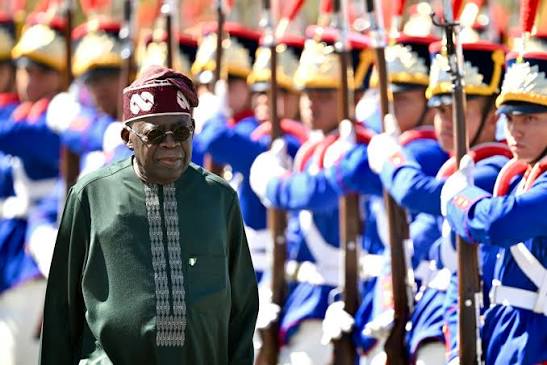
Nigeria remains classified by the United States as a Country of Particular Concern (CPC) after Washington and Abuja concluded their second Joint Working Group meeting without announcing any change to the designation.
The development followed a high-level meeting in Washington on August 12, 2026, hosted by U.S. Under Secretary of State for Political Affairs Allison Hooker for a Nigerian delegation led by National Security Adviser Nuhu Ribadu.
The meeting marked the second formal engagement under the bilateral framework established following Nigeria’s CPC designation and focused on security, religious freedom, accountability and institutional reforms.
The United States designated Nigeria as a CPC on October 31, 2025, under President Donald Trump, citing concerns over violence against Christian communities, particularly in northern Nigeria.
The Nigerian government rejected the designation, maintaining that the country’s security crisis affects citizens across religious lines and that the constitution guarantees freedom of religion.
At the latest Joint Working Group session, the two countries reviewed progress in three key areas: protection of Christian communities in the Middle Belt, strengthening judicial and security institutions to prosecute perpetrators of violence, and expanding military-to-military cooperation.
The discussions also covered the resettlement of internally displaced persons, counterterrorism prosecutions and measures to combat terrorism financing.
READ ALSO: United States Embassy resumes drop box application in Nigeria
However, the talks identified continuing challenges, including civilian deaths and concerns over transparency in humanitarian spending.
The U.S. State Department acknowledged what it described as Nigeria’s reported efforts to address the concerns underlying the designation.
“The United States noted Nigeria’s reported efforts to date, including the prosecution of hundreds of Boko Haram and Islamic State-West Africa (ISIS-WA) suspects, expansion of judicial capacity, and recruitment and training of 50,000 additional police officers,” the department said.
Washington and Abuja also agreed to explore further cooperation in countering terrorism financing, expanding biometric information-sharing mechanisms and strengthening law enforcement capabilities.
The talks involved the U.S. Department of State’s Bureau of Counterterrorism and Bureau of International Narcotics and Law Enforcement Affairs.
Hooker separately met with Ribadu to discuss broader bilateral security priorities, including the protection of Christian communities and deeper security cooperation between the two countries.
Nigeria’s CPC designation triggered significant diplomatic controversy after Trump announced it in October 2025.
The U.S. president cited reports of widespread attacks against Christians and argued that Christianity faced a serious threat in Nigeria. Abuja, however, disputed the characterization, insisting that extremist violence has affected Nigerians regardless of religion.
The Federal Government subsequently intensified diplomatic engagement in Washington and reportedly retained a Republican-linked lobbying firm to challenge allegations of “Christian genocide” and influence perceptions within conservative political circles in the United States.
The first Joint Working Group meeting was held in Abuja on January 22, 2026. Both sides agreed at the time to deepen cooperation on security, justice-sector reforms and the protection of vulnerable communities.
The engagement followed a U.S. military strike against terrorist targets in northwestern Nigeria on Christmas Day 2025, which Washington said was intended to disrupt extremist networks.
Relations have since shown signs of greater cooperation. Trump praised Nigeria’s response to violence in July 2026, while earlier in the year he publicly described First Lady Remi Tinubu as a “very respected woman” during the National Prayer Breakfast in Washington.
Despite the warmer diplomatic tone and U.S. recognition of Nigeria’s counterterrorism and judicial efforts, the latest Joint Working Group ended without any announcement that Nigeria would be removed from the CPC list.
The outcome means the designation remains a significant issue in Nigeria-U.S. relations, with further progress on religious freedom, accountability and security likely to determine Washington’s next review.


-

 Football1 week ago
Premier League Matchweek 7: Five Fixtures That Could Shape the Weekend
-

 Business6 days ago
Dangote Refinery IPO: 70% Subscription claim meets fourfold demand assertion as investors seek clarity
-
 Latest1 week ago
Umahi defends Lagos-Calabar highway route changes amid public outcry
-
Business1 week ago
Dangote Refinery IPO Extension: Was the 70% subscription report overhyped?
-
 Featured3 days ago
Inside INEC’s race to prepare for Nigeria’s 2027 elections
-

 Latest5 days ago
UCTH faces morgue crisis as 50 unclaimed corpses await mass burial
-
 Business5 days ago
BREAKING: Nigeria’s Inflation Rate Drops to 14.63% in September
-
 Featured1 week ago
El-Rufai, ADC governorship candidate’s court appearance puts Kaduna opposition politics in focus