
Latest
Tinubu’s reform gains mount, but cost-of-living crisis persists

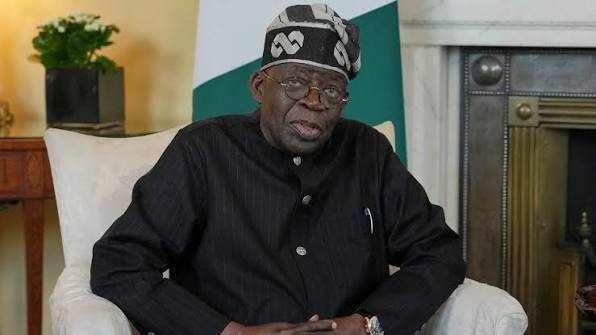
The Federal Government’s latest economic reform scorecard presents a mixed picture: Nigeria’s fiscal position, foreign reserves, investment flows and economic growth have improved, but the reforms have also generated substantial costs for government and households.
Finance Minister and Coordinating Minister of the Economy, Taiwo Oyedele, said the reforms generated N20.4 trillion in incremental resources between June 2023 and December 2025, against N30.64 trillion in additional expenses. Government also borrowed N11.9 trillion during the period.
The figures raise an important question: are the reforms creating enough sustainable economic capacity to justify their immediate social and fiscal costs?
The removal of petrol subsidy generated N15.8 trillion in savings, but the Federal Government received only N5.4 trillion based on the FAAC allocation formula. Another N3.1 trillion came from additional revenue, while borrowing contributed N11.9 trillion.
At the same time, wage adjustments, including the minimum wage increase and allowances, consumed N9.39 trillion, while exchange-rate-related external debt service cost N9.37 trillion.
READ ALSO; Tinubu files: US Judge grants four-day extension in FOIA disclosure battle
This suggests that a significant portion of the fiscal space created by the reforms has been absorbed by higher government obligations rather than directly deployed into productivity-enhancing investments.
One of the clearest gains is in external reserves, which rose from about $35 billion in May 2023 to $52.5 billion in July 2026. The narrowing of the gap between official and parallel exchange rates also indicates improved foreign-exchange market stability.
Capital importation and foreign direct investment have recovered, while stock market capitalisation has expanded sharply. These indicators suggest that investor confidence has improved, although the quality and sustainability of investment inflows will matter more than headline figures.
Although headline inflation reportedly declined from 22.41 per cent in May 2023 to 15.91 per cent in June 2026, Nigerians continue to face substantially higher prices for fuel, food, transportation and basic services.
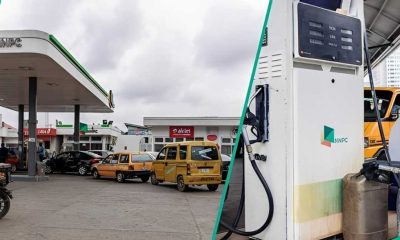
Petrol prices have risen from about N185 per litre to between N1,100 and N1,400, while the minimum wage increased from N30,000 to N70,000.
For households, therefore, lower inflation does not mean lower prices; it means prices are rising more slowly.
Real GDP growth has strengthened, while manufacturing and oil production have also improved. But stronger GDP numbers will have limited meaning if they do not translate into higher real incomes, employment and lower poverty.
The next phase of the reform programme should therefore focus less on stabilisation alone and more on productivity, job creation, food security and household purchasing power.
The scorecard shows that the Tinubu administration has made measurable macroeconomic progress. However, the ultimate test will be whether those gains can be converted into better living standards.
The government’s biggest challenge now is moving from economic stabilisation to broad-based prosperity without creating another cycle of borrowing and inflationary pressure.


-

 Featured1 week ago
Inside INEC’s race to prepare for Nigeria’s 2027 elections
-
 Featured1 week ago
2027: APC unveils nationwide campaign timetable, Tinubu to rally in 12 states
-
 Business4 days ago
Naira faces exchange rate gap as Dollar hits N1,380 on parallel market
-
 Business1 week ago
Court dismisses ₦170m Trade Fair contract claim, says Zenith Bank was not a party
-
 Latest1 week ago
Breaking: NNPCL raises petrol price to ₦1,405 per litre amid discount controversy
-

 Football1 week ago
Maresca reveals Guardiola’s reaction to Man City’s 4-2 defeat to PSG
-

 Featured1 week ago
From kitchen to Supreme Court: Nigerian’s fight over alleged support for terrorists
-

 Business7 days ago
NCC launches Internet Governance Working Group to tackle AI risks, boost online safety