
Latest
US troop withdrawal puts Nigeria’s counterterrorism gains to the test

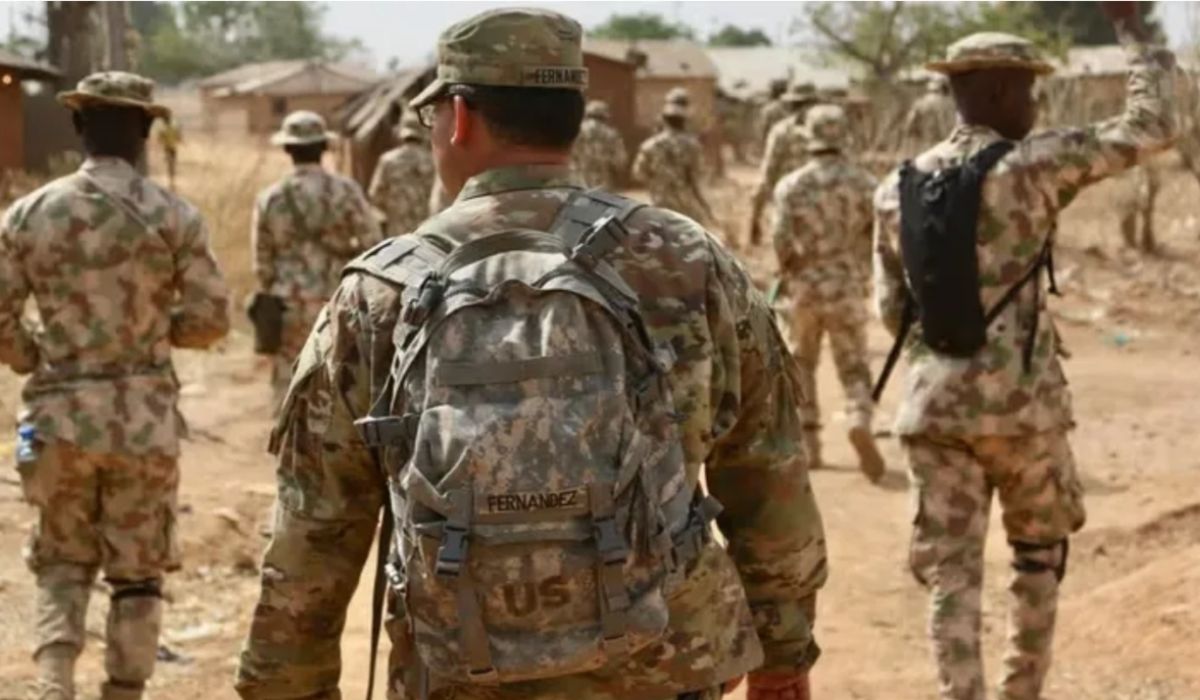
The United States is preparing to withdraw about 200 American troops deployed to Nigeria earlier this year to support counterterrorism operations, bringing an end to a limited military mission that produced notable battlefield gains but failed to halt the broader insurgency.
The withdrawal, expected by late September, is likely to mark a significant shift in Washington’s security engagement with Nigeria. While US officials have described the deployment as a successful example of targeted military cooperation, the decision to pull out the bulk of the contingent raises questions about the sustainability of the gains made during the mission.
The American troops, deployed to northeastern Nigeria in February, participated in intelligence-sharing operations, special forces training and joint counterterrorism missions alongside Nigerian forces.
At the centre of the mission was an effort to improve Nigeria’s ability to locate, track and neutralise leaders of Islamist militant organisations operating across the country.
A mission that delivered results — but not a decisive victory
US officials have pointed to the killing of Abu Bilal al-Minuki, described as a senior Islamic State figure, during a joint US-Nigerian operation in May as evidence of the mission’s effectiveness.
The operation demonstrated the potential impact of combining American intelligence capabilities and specialised military expertise with Nigerian troops operating on the ground.
Washington has also highlighted improvements in intelligence coordination and battlefield training as some of the mission’s most important achievements.
Yet the apparent tactical successes have not translated into a broader end to militant violence.
Armed groups have continued to launch attacks in different parts of Nigeria, underscoring the scale and complexity of the country’s security crisis.
READ ALSO; NFIU reveals tactics terrorist financiers use to move, conceal illicit funds
Security analysts say extremist organisations remain capable of carrying out deadly attacks, particularly in parts of northern and central Nigeria, despite sustained military pressure.
Why Washington is pulling back
The US deployment came after President Donald Trump criticised Nigeria’s handling of terrorist violence, with particular emphasis on attacks affecting Christian communities.
However, Nigeria’s insecurity extends beyond religiously motivated attacks.
For years, both Christians and Muslims have suffered from terrorism, banditry, kidnapping, communal violence and criminal activity. The overlapping nature of these threats has made it difficult to address Nigeria’s security crisis through counterterrorism operations alone.
The planned withdrawal therefore appears to reflect a broader US strategy: achieving specific operational objectives with relatively small deployments rather than establishing a large, permanent military presence.
Under the emerging approach, Washington appears increasingly interested in strengthening the capabilities of local forces while limiting the number of American troops directly involved in African conflicts.
The unanswered question: Can Nigeria sustain the gains?
The most consequential issue arising from the withdrawal may not be the number of American troops leaving, but whether Nigerian forces can maintain the operational advantages developed during the partnership.
A smaller contingent of US personnel, including trainers and intelligence analysts, is expected to remain in Nigeria after the main force departs.
That arrangement could allow Washington to preserve intelligence links and military cooperation without maintaining the full deployment.
But Nigerian security experts have warned that the transition could expose weaknesses if local forces are unable to sustain the tempo of operations achieved with American support.
The concern is particularly significant because intelligence gathering, surveillance, specialised training and precision operations require capabilities that cannot be developed overnight.
A test for Nigeria’s security capacity
The planned withdrawal could ultimately become a test of whether Nigeria’s military and security institutions can convert short-term foreign assistance into sustainable domestic capability.
The US-Nigeria partnership has produced closer intelligence coordination and joint counterterrorism operations against Islamic State-linked and other extremist networks. But the persistence of attacks suggests that eliminating individual militant commanders, while important, does not by itself dismantle the networks sustaining the insurgency.
Nigeria must therefore confront the wider factors driving insecurity, including weak local security structures, porous borders, weapons proliferation, criminal networks, economic deprivation and longstanding communal tensions.
The Nigerian government has not publicly commented on the planned US withdrawal.
For Washington, the mission may be presented as proof that a relatively small American force can deliver measurable security gains through partnership.
For Abuja, however, the departure of most of the troops will represent a more difficult test: whether those gains can survive after the Americans leave.
The answer could determine whether the US-Nigeria security partnership becomes a model for sustainable military cooperation in Africa—or another example of a foreign intervention that delivers tactical victories without resolving the underlying crisis.


-
 Latest5 days ago
Israel marks 3 years since October 7 Hamas attack amid Gaza strikes, election debate
-

 Energy5 days ago
Fuel Battle: Dangote, marketers and government clash over petrol imports
-

 Energy6 days ago
Petrol, diesel prices rise 86% in 2026 as costs hit fresh highs
-
 Energy7 days ago
Has Iran lost control of the Strait of Hormuz? Oil flows rebound as war disruptions persist
-

 Football6 days ago
Nigeria’s World Cup exit under spotlight as FIFA’s DR Congo files emerge
-

 Latest6 days ago
US Court set to rule on release of FBI, DEA records on Tinubu
-
 Business6 days ago
Nigerian investors at a crossroads as fixed-income yields slide
-

 Business7 days ago
LoveWorld Trade and Investment Forum to Convene Business Leaders in Accra