
Latest
Tinubu’s 1993 US case was civil, not criminal, lawyer clarifies

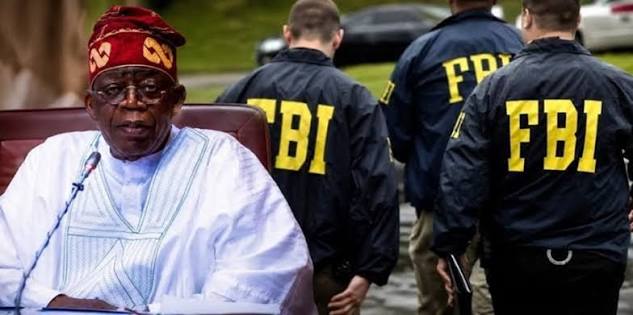
A Nigerian-American lawyer and former federal lawmaker, Kayode Oladele, has rejected claims by some political opponents of President Bola Ahmed Tinubu that the President was prosecuted and convicted of a criminal offence in the United States over proceedings dating back to 1993.
Oladele described the claim as legally inaccurate, arguing that it confuses civil forfeiture proceedings with criminal prosecution and conviction.
According to him, his review of available US court records and dockets found no evidence that Tinubu was criminally charged, tried or convicted in the United States.
He said the case frequently cited by Tinubu’s critics was a 1993 proceeding before the United States District Court for the Northern District of Illinois involving civil forfeiture.
“The distinction is fundamental,” Oladele said, explaining that the proceeding was an in rem civil action directed at property rather than a criminal prosecution against an individual.
He noted that American law treats criminal liability as personal and requires prosecutors in criminal cases to establish guilt beyond reasonable doubt, alongside other constitutional safeguards.
READ ALSO; Tinubu: Tough reforms deliver trade surplus, record reserves, higher credit rating
Civil forfeiture, he argued, operates under a different legal framework and cannot automatically be transformed into a criminal conviction of the owner or person associated with the property.
Oladele cited US Supreme Court decisions, including United States v. Ursery and Various Items of Personal Property v. United States, as authorities recognising the historically distinct nature of civil in rem forfeiture proceedings.
He stressed, however, that describing the proceedings as civil does not mean the underlying allegations or forfeiture were legally insignificant.
Rather, he said, the issue is whether the judicial record supports the specific claim that Tinubu was criminally prosecuted and convicted.
The lawyer also drew a comparison with the case involving former US Congressman William Jefferson, whose criminal prosecution and conviction became linked politically to former Vice President Atiku Abubakar.
According to Oladele, Jefferson was investigated, criminally charged, prosecuted and convicted, while Atiku was not convicted in Jefferson’s criminal case, despite his name featuring in aspects of the investigation.
He argued that politicians who correctly reject attempts to portray Atiku as a convicted criminal merely because he was connected to an investigation involving Jefferson should apply the same legal standard to Tinubu
“If allegations examined during an investigation involving Atiku cannot be converted into a criminal conviction against Atiku, an in rem civil forfeiture proceeding cannot logically be converted into a criminal conviction against Tinubu,” he argued.
Oladele said the appropriate questions in determining whether someone was criminally convicted should be straightforward: Was the individual charged? Was he prosecuted and tried? Was a criminal judgment entered against him?
He further warned against the casual use of terms such as “criminal,” “convict” and “conviction”, noting that such descriptions carry serious legal and reputational consequences.
The former lawmaker also invoked the constitutional principle of presumption of innocence, citing the US Supreme Court’s decision in Coffin v. United States and the corresponding protection under the Nigerian Constitution.
He maintained that political disagreement should not result in different legal standards being applied to political allies and opponents.
Oladele acknowledged that Tinubu’s critics remain entitled to scrutinise the allegations surrounding the 1993 proceedings and draw their own political conclusions.
However, he insisted that such criticism should not be presented as an established criminal conviction where, according to his review, no such judgment exists.
“The law must mean the same thing regardless of whose name appears on the political banner,” he said.
Oladele is a Nigerian-US attorney, former Member of the Nigerian House of Representatives and former Chairman of the House Committee on Financial Crimes.


-

 Health7 days ago
ISRT 2026: Global experts converge in Lagos to advance cancer care across Africa
-

 Football1 week ago
Ballon d’Or 2026: The key rules shaping the race for football’s biggest prize
-

 Business1 week ago
Versat Automobile to launch Chery’s EXEED premium brand in Nigeria
-
 Comments and Issues1 week ago
Digital Rights and the 2027 Poll in Nigeria
-

 Comments and Issues6 days ago
Yes, many kidnappers are embedded in the Nigeria Police
-

 Business5 days ago
Olufemi Olaiya to deliver keynote at Africa Business & Enterprise Conference 2026
-

 Energy1 week ago
Petrol Price War: Where are Nigerians getting the cheapest fuel?
-
 Comments and Issues1 week ago
Tantita and renewed hope in crude oil production