
News
FG tightens foreign travel rules for appointees

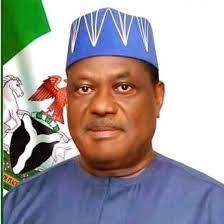
The Federal Government has tightened controls on official foreign travel by ministers, heads of government agencies and other political appointees, reaffirming that prior approval from the Office of the Secretary to the Government of the Federation (OSGF) is required before undertaking official trips outside Nigeria.
The latest directive follows concerns that some government officials have continued to embark on foreign assignments without obtaining the required clearance, despite existing regulations governing official travel.
Secretary to the Government of the Federation, George Akume, has expressed concern over the continued disregard for the rules and warned ministries, departments and agencies against processing expenses relating to unauthorised foreign trips.
The government has reaffirmed that all official foreign trips by federal government appointees must receive prior approval from the OSGF, except where a different arrangement is expressly provided by law or through a specific presidential directive.
The requirement covers ministers, heads of agencies and other senior government officials.
The directive is not entirely new. Rather, it reinforces existing government travel regulations dating back several years, including guidelines issued in 2023 and earlier cost-control directives governing overseas trips by ministers and other public officials.
The latest action indicates that the government intends to enforce those rules more strictly following reports of continued non-compliance.
One of the significant consequences for officials is financial.
The Federal Government has directed ministries, departments and agencies to stop processing payments associated with official foreign trips undertaken without the required prior approval.
In practical terms, an official who travels abroad on government business without obtaining the necessary clearance may no longer expect the government to process the related expenses.
The measure is part of the administration’s broader emphasis on expenditure control, accountability and prudent management of public resources.
According to the SGF’s directive, continued unauthorised foreign travel undermines government coordination, accountability and transparency, while making it more difficult to monitor official engagements undertaken on behalf of Nigeria.
The government also wants greater control over public expenditure at a time when fiscal discipline remains a major policy concern.
By requiring central clearance, the administration can assess whether a proposed trip is necessary, whether it has an official justification and whether public funds should be committed to it.
Under the reinforced procedure, an appointee intending to undertake an official foreign trip must first obtain the necessary approval from the OSGF.
The requirement means officials cannot simply arrange overseas engagements and subsequently seek government approval or reimbursement.
The latest directive specifically warns that the approval must be obtained before the trip takes place.
The Ministry of Foreign Affairs and other relevant government institutions are also expected to ensure that the required approval is in place when processing official travel and related documentation.
The measures apply broadly to Federal Government appointees and public officials undertaking official foreign assignments.
This includes ministers, heads of ministries, departments and agencies, directors-general and other senior officials whose overseas travel is being funded or undertaken in an official capacity.
The rules also build on earlier directives covering chairmen of federal government committees, boards of corporations and government-owned companies.
The restriction, however, concerns official foreign travel. It should not be interpreted as a general ban preventing government officials from travelling abroad for private purposes.
The latest directive should not be confused with the three-month restriction on publicly funded foreign trips announced by President Bola Tinubu in 2024.
The current measure is focused on enforcing the requirement for prior approval and preventing government funds from being used for unauthorised official trips.
The government has cited previous circulars and guidelines as the basis for the requirement, suggesting that the main change is stricter enforcement rather than the creation of an entirely new travel policy.
For ministers, agency heads and other appointees, the message is clear: official foreign travel must be properly authorised before departure.
Officials who ignore the procedure could face difficulties securing government funding or reimbursement for their trips.
The directive also places greater responsibility on permanent secretaries, accounting officers and heads of government institutions to ensure that travel requests comply with the established approval process.
The renewed crackdown comes as the Tinubu administration continues to emphasise fiscal prudence and tighter control of government expenditure.
Foreign travel has previously attracted public criticism because of the cost of air tickets, accommodation, allowances and other expenses associated with official delegations.
The government has therefore increasingly sought to reduce unnecessary spending and impose greater oversight on official trips.
Whether the latest directive will significantly reduce overseas travel will depend largely on enforcement. The SGF’s warning suggests that the administration is now seeking to move beyond issuing guidelines to ensuring that violations have financial consequences.


-

 Latest4 days ago
Cole-Alegbe unveils memoir, urges leaders to harness technology for lasting impact
-

 Business1 week ago
X3M Ideas donates 50 Walkie-Talkies to strengthen security operations in Onigbongbo
-
 Latest1 week ago
2027: Atiku vows direct payment of local government funds if elected president
-

 Business4 days ago
Jetour G700 PHEV Storms Abuja as Jetour Nigeria Takes Luxury Mobility Showcase to FCT
-

 Business2 days ago
Nigerian Breweries’ H1 profitability strengthens as revenue hits N804bn
-

 Business6 days ago
Rising crude prices threaten fresh petrol price hike in Nigeria
-
 Business1 week ago
Naira breaks below N1,330/$, hits strongest level in over two years
-
 Business5 days ago
Multinationals exit Nigeria as economic pressures reshape business landscape