
Latest
Ndume: Bad leadership reflects choices made by Nigerians

By Anuoluwa Amao
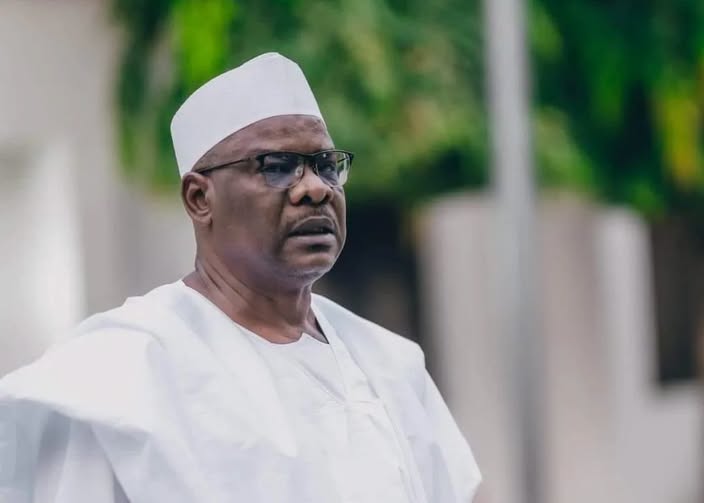
Senator Ali Ndume has challenged Nigerians to look beyond politicians when examining the country’s leadership and governance challenges, arguing that citizens also bear responsibility for the leaders produced through the democratic process.
Ndume, who represents Borno South Senatorial District, made the remarks on Wednesday in Abuja at the presentation of Military Transformational Leadership in Action: The Buratai Era.
The senator was responding to concerns raised by the Emir of Kano, Muhammadu Sanusi II, over the conduct of the political class and the persistent governance and security challenges confronting the country.
While acknowledging that politicians are often blamed for Nigeria’s problems, Ndume argued that political leaders emerge from the same society they govern.
“Politics is people; politics is one way to run democracy, and what is democracy? It’s the government of the people, for the people, and by the people,” he said.
He urged Nigerians to examine more closely the candidates they support, the political parties they belong to and the electoral processes through which leaders emerge.
According to him, citizens cannot completely absolve themselves of responsibility for the quality of leadership in the country.
Ndume also pointed to electoral malpractice, arguing that citizens are sometimes participants in the practices they later condemn when they produce unpopular leaders.
“Even if it is through rigging, it is you people that do the rigging to bring us in,” he said.
READ ALSO; Ndume urges opposition to sell 2027 ideas, not Tinubu’s certificate
The senator’s comments appeared to broaden the debate over Nigeria’s leadership crisis from the conduct of elected officials to the role of citizens in elections and democratic institutions.
He argued that better governance would require greater responsibility from voters, political actors and institutions involved in the electoral process.
Ndume used an analogy to stress the consequences of making poor choices.
“You put garbage in, you expect something good out of it? It’s not possible,” he said.
His position places responsibility for leadership outcomes on both political elites and the wider electorate, although the extent of citizens’ responsibility can vary depending on factors such as electoral integrity, candidate selection, party structures and the availability of meaningful choices.
The remarks came amid renewed national debate over leadership, democratic accountability and the role of political institutions in addressing Nigeria’s security, economic and governance challenges.
Ndume’s intervention also underscored the broader question of whether improving Nigeria’s leadership requires only reform among politicians or a more comprehensive change involving voters, political parties, electoral institutions and other participants in the democratic process.


-

 Trending Stories1 week ago
Davido, Wizkid, Burna Boy or Asake: Who is having the biggest 2026 so far?
-
 Football7 days ago
Premier League releases 2026/27 festive fixtures, 7 matches set for Boxing Day
-

 Crime6 days ago
Anambra Police arrest mother over alleged child sexual exploitation
-

 Business5 days ago
Jetour Nigeria, dealers take dashing, other models to Abuja Experience
-

 Energy1 week ago
Brent crude tops $100: What higher oil prices mean for Nigeria
-

 Business6 days ago
Dangote Refinery IPO shifts spotlight to corporate governance, investor protection
-

 Business3 days ago
Dangote IPO rush crashes Bamboo login as investors flood platform
-

 Business6 days ago
Naira gains ground as Euro holds around N1,548, reserves hit 18-year high