
Featured
UNGA: Can Africa finally turn its natural resources into wealth?

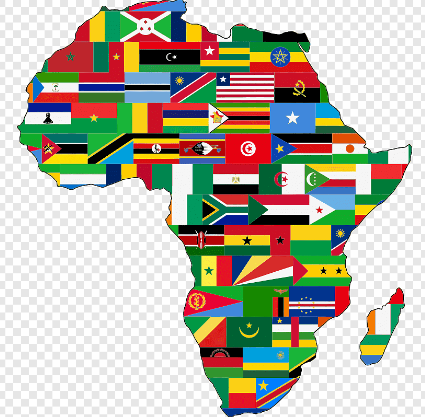
Africa’s long-running struggle to turn its vast natural resources into broad-based economic prosperity has taken centre stage at the 81st United Nations General Assembly, with Nigeria pushing for a fundamental change in how the continent exploits and trades its mineral wealth.
At a high-level Africa Minerals Strategy Group (AMSG) roundtable held on the sidelines of the UN General Assembly in New York, President Bola Tinubu called on African countries to end the export of raw minerals and instead build processing, manufacturing and technology-based industries around the continent’s natural resources.
Represented by Vice President Kashim Shettima, Tinubu warned that Africa could not continue supplying raw materials to the global economy while importing finished products at much higher prices.
The meeting, themed “From Resources to Wealth: Continental Cooperation for Mineral Value Addition, Data Sovereignty, Innovative Financing and Critical Minerals Security,” brought the debate over Africa’s natural-resource model directly into the UNGA discussions.
Tinubu argued that greater cooperation among African countries could provide the scale, financing and bargaining power needed to develop local value chains.
The argument is not new. For decades, many African economies have depended heavily on the extraction and export of commodities ranging from crude oil and gold to copper, cobalt and other minerals, while much of the processing and manufacturing associated with those commodities has taken place elsewhere.
The United Nations has warned that Africa’s growing importance in the global supply of critical minerals could become another version of the continent’s traditional extractive model if countries fail to develop local processing and industrial capacity.
In a September 15 analysis, the UN Office of the Special Adviser on Africa noted that the continent possesses a significant share of minerals needed for the energy transition but has historically captured a relatively small portion of the wealth generated from their exploitation.
Nigeria provides a particularly important example of the challenge.
For decades, crude oil has dominated Nigeria’s export economy. The country has earned substantial foreign exchange from petroleum, but the limited development of domestic refining and associated manufacturing has meant that much of the higher-value activity in the petroleum chain historically occurred outside the country.
The emergence of lithium and other critical minerals presents a different opportunity — but also the risk of repeating the same pattern.
Lithium is increasingly important to global battery supply chains, particularly for electric vehicles and energy-storage systems. Nigeria has attracted growing interest from international investors because of its lithium deposits, while the Federal Government has sought to encourage processing inside the country rather than simply exporting ore.
The United States Geological Survey says Nigeria’s first major lithium-processing facility was commissioned in Nasarawa State in 2024, with a stated processing capacity of 4,000 metric tonnes per day.
The United Nations Economic Commission for Africa has also identified Nigeria’s lithium industry as an opportunity to demonstrate how mineral production can be linked to processing and value addition. Its 2026 work on the sector examined how sustainable lithium production, processing and value addition could contribute to industrialisation and job creation.
The question, therefore, is no longer simply whether Nigeria or other African countries possess valuable resources. The more important question is how much of the economic value generated from those resources remains within Africa.
Nigeria’s lithium industry illustrates both the potential and the difficulties.
A country that exports lithium ore earns money from extraction. A country that processes the ore locally can potentially generate additional economic activity through processing plants, engineering services, transportation, equipment maintenance and skilled employment.
Moving further down the chain into battery materials, battery manufacturing and related technologies could create additional opportunities.
But such industrial development requires more than mineral deposits.
It requires reliable electricity, roads and rail infrastructure, skilled workers, access to finance, geological data, transparent regulation, environmental safeguards and a predictable investment environment.
Without those conditions, restrictions on raw mineral exports alone may not automatically create competitive industries.
That is why the current African debate is increasingly shifting from resource ownership to value-chain development.
Nigeria is not alone in trying to change the traditional model.
Countries across the continent have introduced or considered measures aimed at encouraging domestic processing of minerals. The Africa Minerals Strategy Group says several countries are moving to restrict exports of unprocessed or minimally processed minerals.
The Democratic Republic of Congo, Zimbabwe, Namibia and Tanzania have all taken measures aimed at increasing domestic value addition in parts of their mining sectors. Zimbabwe, for example, has restricted exports of certain raw minerals and lithium concentrates, while other countries have introduced restrictions or policies targeting the export of unprocessed critical minerals.
The objective is straightforward: if Africa supplies minerals needed for electric vehicles, renewable energy systems, electronics and other technologies, African countries want more of the manufacturing and employment associated with those industries to take place on the continent.
But there is a major difference between announcing a ban on raw exports and building a globally competitive processing industry.
The UNGA debate raises a larger question about whether Africa can avoid repeating the experience of the oil era.
Nigeria’s oil experience demonstrates the difficulty of transforming resource wealth into broad industrial development. The country has repeatedly sought to increase domestic refining and petrochemical capacity, while crude exports have remained central to its petroleum economy.
Critical minerals offer another opportunity because the global energy transition is increasing demand for materials such as lithium, cobalt, graphite, copper and rare earth elements.
But the opportunity will depend on whether African countries can negotiate investment agreements that include technology transfer, local employment, infrastructure development and domestic processing without making projects commercially unviable.
Tinubu has argued that African countries must work together rather than compete against one another for investment by offering weaker royalties, lower local-content requirements or excessive concessions.
At the UNGA roundtable, Shettima similarly warned against a situation in which mineral-rich communities remain poor while the resources beneath them generate wealth elsewhere.
For Nigeria, the critical-minerals agenda is also part of a broader attempt to diversify the economy away from excessive dependence on oil.
The Federal Government says reforms in the mining sector have increased government revenue from the industry, with Tinubu’s administration reporting a rise from about ₦6 billion in 2023 to ₦70 billion. The figure was cited by the President in the context of his argument for greater African value addition.
The government has also reported new exploration discoveries. In June, the Minister of Solid Minerals Development, Dele Alake, announced the discovery of a polymetallic mineral province in Kaduna containing platinum-group metals, gold, nickel, copper, lithium and rare-earth elements. The discovery was said to have been verified by the Nigerian Geological Survey Agency.
Such discoveries could increase Nigeria’s resource base, but geological potential alone does not guarantee economic transformation.
The country must still address illegal mining, environmental degradation, inadequate infrastructure, insecurity in some mining areas, limited geological data and the movement of minerals through informal channels.
There is also the question of who ultimately benefits.
If local communities see little improvement in employment, infrastructure and public services despite living around valuable deposits, the expansion of mining could reproduce some of the social tensions associated with resource extraction elsewhere in Africa.
That is ultimately the challenge behind the message Nigeria has taken to the UNGA.
Africa does not lack natural resources. The continent has oil and gas, gold, copper, cobalt, lithium, manganese, graphite, iron ore and other minerals needed by modern industries.
What has historically been more difficult is converting those resources into competitive industries that create sustained employment, technology, tax revenue and infrastructure within African economies.
The current push for mineral value addition therefore represents more than an argument about lithium.
It is a debate about whether Africa can move from being primarily an exporter of commodities to becoming a participant in the higher-value stages of global supply chains.
For Nigeria, the test will be whether the emerging lithium and critical-minerals industry can develop beyond extraction and generate processing, manufacturing, technology and skilled jobs locally.
For Africa, the larger test will be whether the continent can turn the global race for critical minerals into an opportunity for industrialisation — rather than another cycle in which valuable resources leave the continent while most of the wealth created from them remains elsewhere.
The UNGA discussions have put that question firmly on the international agenda. The answer, however, will ultimately depend not on the speeches made in New York, but on the policies, investments, infrastructure and institutions African countries build at home.


-

 News6 days ago
UK, Canada pledge closer cooperation on trade, defence and AI
-

 Business1 week ago
Abuja gears up for Jetour T2’s rugged-luxury experience
-
 Business1 week ago
Tinubu’s economic reforms face public confidence test as cost-of-living crisis persists
-
 Business1 week ago
Dangote: Petrol price gap fuels smuggling as Nigeria faces fresh pump price surge
-

 Business5 days ago
Dangote Refinery IPO: Can small investors really make money from the shares?
-
 Comments and Issues6 days ago
Wavy fuel prices and deepening cost-of-living crises in Nigeria
-

 Football5 days ago
FULL LIST: Eight stadiums to host 2027 Women’s World Cup in Brazil
-

 Business3 days ago
Jetour takes T1 adventure SUV experience to Abuja, targets growing Nigerian market