
Latest
Nigeria at 66: Insecurity, unemployment, inflation, power crisis and healthcare challenges persist

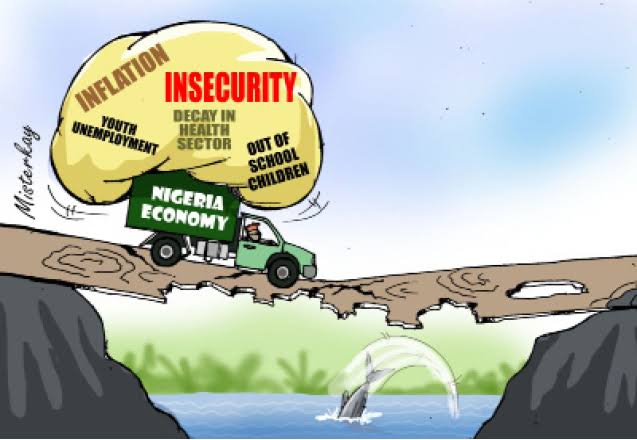
As Nigeria celebrates its 66th Independence Anniversary, the country continues to battle several economic and social challenges, including insecurity, unemployment, rising living costs, unreliable electricity and inadequate healthcare.
Since gaining independence from Britain on October 1, 1960, Nigeria has made significant progress in various sectors. However, millions of citizens still struggle with challenges that affect their livelihoods and access to essential services.
Despite government policies and economic reforms aimed at improving the country’s fortunes, many Nigerians continue to face financial hardship, limited employment opportunities and inadequate public infrastructure.
Here are five major challenges confronting Nigeria as it marks 66 years of independence.
1. Insecurity
Insecurity remains a major concern, with insurgency, banditry, kidnapping and communal violence continuing to affect several parts of the country.
Boko Haram and the Islamic State West Africa Province (ISWAP) remain active in parts of the North-East, while banditry and mass kidnappings have continued to threaten communities in the North-West and North-Central regions.
In the South-East, separatist-related violence and attacks on security personnel have also raised concerns.
Beyond the loss of lives and destruction of property, insecurity has disrupted farming, trade and other economic activities. Thousands of residents have been displaced, while attacks on rural communities have worsened humanitarian challenges.
The continued violence has also affected food production and contributed to the difficulties faced by farmers and businesses.
2. Unemployment and Youth Joblessness
Unemployment and underemployment remain significant challenges, particularly among young Nigerians seeking stable and well-paying jobs.
Despite the country’s large population and growing workforce, the economy continues to struggle to generate sufficient productive employment opportunities.
Many graduates face difficulties securing jobs that match their qualifications, while others turn to informal employment, small businesses and freelance work to survive.
The limited availability of decent jobs has also contributed to the increasing number of Nigerians seeking opportunities abroad.
Although entrepreneurship and the digital economy offer alternative sources of employment, access to funding, infrastructure and business support remains a challenge for many young people.
Creating more productive jobs through industrialisation, skills development and investment remains a major development priority.
3. Inflation and Rising Cost of Living
The high cost of living continues to put pressure on Nigerian households, with food, transportation, housing and other essential expenses consuming a significant portion of people’s incomes.
Although inflation has moderated following earlier increases, many Nigerians continue to struggle with elevated prices.
The removal of fuel subsidies, exchange-rate adjustments and rising transportation costs have contributed to financial difficulties for households and businesses.
For low-income earners, the cost of basic necessities has become particularly burdensome, while many workers struggle to keep up with rising expenses.
Small businesses have also faced higher operating costs, forcing some to increase prices, reduce operations or reconsider expansion plans.
The challenge for policymakers is to ensure that economic reforms translate into improved purchasing power, higher incomes and better living conditions.
4. Unreliable Electricity Supply
Nigeria’s electricity crisis remains a major obstacle to economic growth and industrial development.
Despite several reforms and investments in the power sector, electricity supply remains unreliable in many parts of the country.
Businesses and households frequently depend on petrol and diesel generators, increasing their operating expenses and household spending.
Manufacturers, small businesses and other enterprises face additional costs because of frequent power outages, while unreliable electricity continues to discourage investment in some sectors.
The power sector also faces longstanding challenges involving electricity generation, transmission infrastructure, distribution networks and financial sustainability.
Although the government has introduced various initiatives to improve electricity supply and expand metering, millions of Nigerians continue to experience inadequate access to reliable power.
5. Inadequate Healthcare
Nigeria’s healthcare system continues to face challenges, including inadequate funding, poor infrastructure, shortages of medical personnel and limited access to affordable treatment.
Many public hospitals struggle with overcrowding, insufficient medical equipment and shortages of essential medicines.
The migration of doctors, nurses and other healthcare professionals to foreign countries has further increased concerns about staffing levels in Nigerian hospitals.
Access to quality healthcare is particularly difficult for residents of rural communities, where medical facilities and qualified personnel are often limited.
The high cost of treatment also prevents many low-income households from accessing essential medical services.
Although government initiatives have sought to improve healthcare delivery and expand health insurance coverage, significant gaps remain in the availability and affordability of medical services.
Increased investment in hospitals, improved working conditions for healthcare workers and wider access to health insurance are among the measures needed to address these challenges.
Nigeria’s Independence at 66
As Nigeria celebrates 66 years of independence, the challenges facing the country highlight the need for sustained efforts to improve security, create jobs, stabilise the economy and strengthen essential public services.
While the country has considerable human and natural resources, translating that potential into improved living standards remains a major task.
For many Nigerians, the true benefits of independence will be reflected in safer communities, decent employment, affordable food, reliable electricity and accessible healthcare.


-

 Latest5 days ago
Pastor Chris Oyakhilome announces mother’s passing at 88 [VIDEO]
-

 Latest6 days ago
Arsenal eye €70-80m move for Real Madrid star
-

 Crime6 days ago
Police arrest suspect, launch manhunt for 2 others over Delta Education Director’s death
-

 Crime5 days ago
Deaths in NSCDC Custody: Can Nigeria guarantee the safety of detainees?
-

 Latest5 days ago
How adulterated palm oil, coloured pepper are putting consumers at risk
-

 Latest6 days ago
Obi left $155m in Anambra, Otti insists amid debt controversy
-

 Football3 days ago
How David Beckham made $51.1m from 2026 World Cup, surpassing winners’ prize
-

 Crime6 days ago
184.5kg Cocaine Bust: NDLEA docks KC Luxury, two accomplices, remands them in custody