
Business
Apapa’s port, others under siege

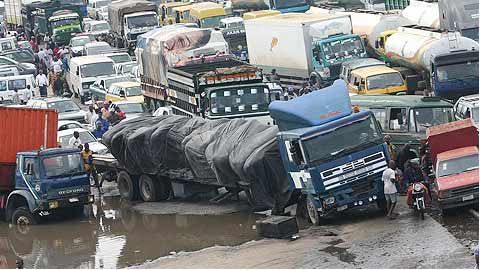
The problems at Apapa and other ports such as Calabar and Port Harcourt have been a headache for successive administrations, which have failed to fix decaying infrastructure, reduce stifling red tape and tackle corruption.
Crumbling roads, especially at Apapa, have all but ground trucks to a halt. Once they do manage to enter, drivers and businesses have to contend with a plethora of customs, immigration and security agents before they can pick up containers.
The congestion outside and inefficiency within Nigeria’s ports is choking the economy, and causes havoc for businesses that use them to import everything from cars to computers, food and machinery.
National Daily gathered from available statistics that the country loses $19 billion annually, or about 5 percent of gross domestic product, from the delays, traffic jams, illegal charges and insecurity that are increasingly prevalent at its ports.
Also Nigeria ranks 182nd out of 190 countries, below war-torn Syria and Afghanistan in the World Bank’s Trading across Borders Survey which measures the time and expense involved with importing and exporting goods.
According to findings by National Daily, the cost of moving a container from Apapa to other parts of Lagos has soared to as much as 700,000 naira ($1,930) from about 150,000 naira two years ago as trucking firms put up their prices to make up for the delays, according to the Nigerian Shippers’ Council.
Also, the issue of instituted corruption is another serious headache for business owners who use the ports.
“We can pay 80,000 naira in bribes per trip. If you don’t, it can take weeks to get in. Sometimes they will beat you if you don’t give them money,” says a 50-year old driver who has been traveling to Apapa for almost 20 years.
“You don’t face the same kinds of frustration there that you do in Nigeria,” he said, recalling how a fellow businessman still hasn’t received compensation after one of his containers was dropped into the sea early this year. “There’s been no improvement.”
Vice President Yemi Osinbajo visited Apapa in May 2017 and directed officials to start working around the clock and all agencies to locate their operations in one place to ease delays.
It’s been to little avail as the roads has become deplorable with trailers queue aiting to enter the port extending to as far as Yaba.
Many people prefer to use more efficient ports in Benin, Ghana and Togo, according to Mike Onulide, who runs a business exporting food including noodles and garri, a cassava-based staple popular in West Africa.


-

 News6 days ago
UK, Canada pledge closer cooperation on trade, defence and AI
-

 Business1 week ago
Abuja gears up for Jetour T2’s rugged-luxury experience
-

 Business7 days ago
Tinubu’s economic reforms face public confidence test as cost-of-living crisis persists
-
 Business7 days ago
Dangote: Petrol price gap fuels smuggling as Nigeria faces fresh pump price surge
-

 Business4 days ago
Dangote Refinery IPO: Can small investors really make money from the shares?
-

 Comments and Issues5 days ago
Wavy fuel prices and deepening cost-of-living crises in Nigeria
-

 Football5 days ago
FULL LIST: Eight stadiums to host 2027 Women’s World Cup in Brazil
-

 Business2 days ago
Jetour takes T1 adventure SUV experience to Abuja, targets growing Nigerian market