
Energy
Dangote refinery won’t sell fuel at government regulated price — Minister

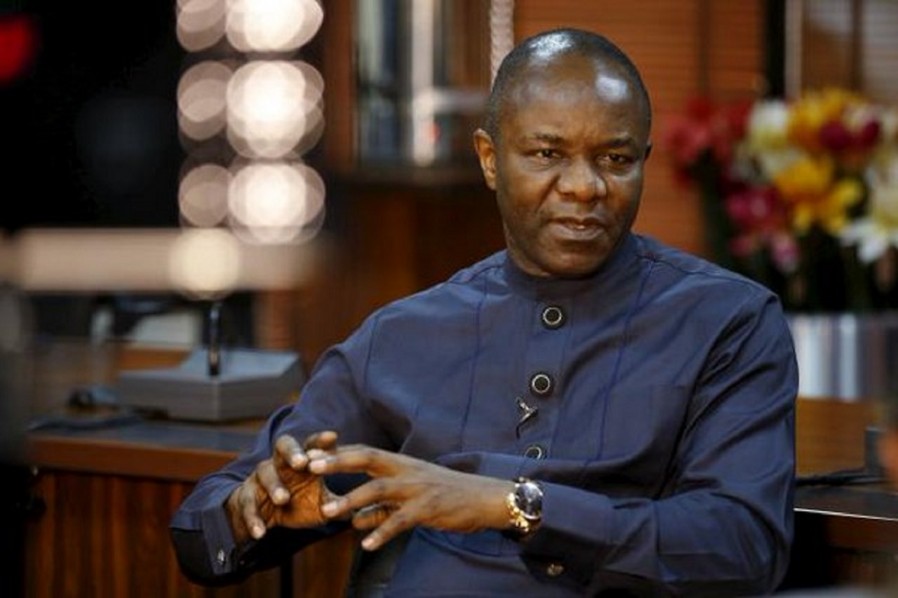
Minister of State for Petroleum Resources, Dr Ibe Kachukwu has revealed that the emerging 650,000bpd oil refinery in Lagos, is not coming to sell Premium Motor Spirit (PMS) popularly called petrol or any of its products at government regulated prices.
Kachukwu, represented by his Special Adviser, Policy and Regulation, Tim Okon, at the just concluded All Convention Luncheon of the 36th yearly International Conference and Exhibition of the Nigerian Association of Petroleum Explorationists (NAPE) in Lagos, revealed that “The plan of the refinery is not to refine Premium Motor Spirit (PMS) popularly called petrol and now sell at government regulated price. That will not happen under the private refinery structure.”
He disclosed further that the structure of the 650,000 barrels per day Dangote refinery structure would only serve as an export refinery, saying that after paid entities had exported the product, and it (the product) will then be imported back into the country. Explaining more on why both local and foreign investors are distancing the petroleum midstream (refining) segment, the minister observed that the scanty volume of investors is caused by presence of laws that have outlived their relevance and in need of reviews.
He noted that part of the reasons why price regulation is still the practice, he revealed that Section 6 of the Petroleum Act empowers the Minister of Petroleum Resources to fix prices for petroleum products which need to be reviewed in order to usher in full deregulation of the downstream.
He said the prevailing law remains a major factor why investors may not find the refineries in Port Harcourt, Warri and Kaduna attractive for business considering the facts price regime.
Kachukwu further lamented that a situation whereby a private investor strives to raise fund to rehabilitate the refineries and get it working and government on the other hand fixes petroleum products prices, is not a workable model.
He said “This stance was stalling by the aspiration of the country to privatise the state-owned refineries.
“Banks that have provided funds for these investors will want a situation where they will have control over repayment schedule and terms and inflow; this will also include pricing for the product.
“But the moment banks discover that you don’t have control over pricing, there are huge chances that they would withdraw from such transaction because the possibility of recovering their funds over a certain period of time is already threatened from the outset,” he said.
However, he hinted that government’s withdrawal from petroleum products’ pricing has been the recommendation of the Petroleum Industry Bill (PIB), which is the policy document meant to shape the direction of the industry if the bill passes the tortuous journey at the National Assembly.


-

 Featured1 week ago
BREAKING NEWS: Shouts of joy rock the world as Pastor Chris opens final Healing Streams edition for 2026
-
 Latest1 week ago
Akpabio tasks Tompolo-backed movement with spreading Tinubu’s renewed hope message
-

 Business1 week ago
How Ethiopian Airlines is challenging Africa’s aviation narrative through self-reliance
-

 Latest6 days ago
Pastor Chris to lead special family prayers as Healing Streams grand finale holds today
-
 Latest3 days ago
Tinubu endorses Nigeria’s participation in 2026 World Travel Market London
-

 Crime5 days ago
Passengers feared abducted on Kebbi-Abuja journey as viral video shows armed men threatening captives (VIDEO)
-
 Featured6 days ago
Kaduna APC rally sparks row over turnout, alleged rented crowd and AI disinformation
-

 News5 days ago
Rugby: Borthwick Faces Key Selection Questions as World Cup Looms