
News
Sudan: Military junta in disarray

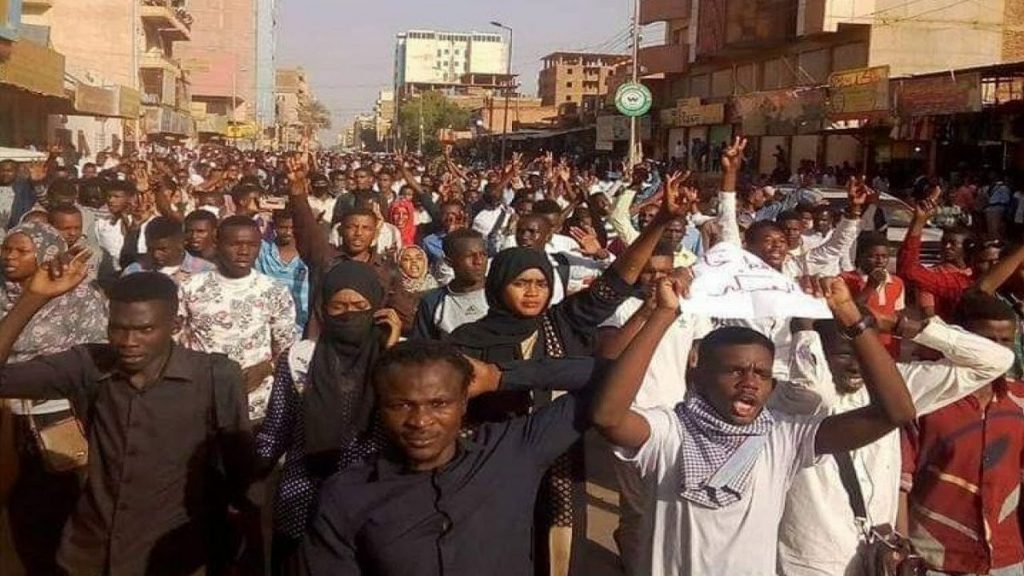
As pressure mounts from the Africn Union and Sudanese protesters, three members of Sudan’s 10-man ruling army council have resigned as the protest leaders insisted on civilian rule.
According to a statement by the council, the officers were Lieutenant General Omar Zain al-Abdin, Lietenant General Jalaluddin Al-Sheikh and Lieutenant General Al-Tayieb Babikir.
The announcement on state media came after a spokesman of the junta said the council had reached “agreement on most demands” with protest leaders who have called for a million-strong march to demand a civilian government.
The 10-member military council had invited the protest leaders for a meeting after the leaders suspended talks with the army rulers on Sunday.
“We have an agreement on most demands presented in the document of the Alliance for Freedom and Change,” Lieutenant General Shamseddine Kabbashi, spokesman of the ruling military council, told reporters after the meeting between the council and leaders of the umbrella group leading the protest movement.
He did not elaborate on the key demand of handing power to a civilian government, but said there “were no big disputes”.
One of the protest leaders who attended the meeting with the military council, Ahmed al-Rabia, said the two sides had also agreed to form a joint committee, but did not elaborate for what.
Wednesday’s late night developments came as Siddiq Farouk, one of the leaders of the protests, told reporters that the demonstrators were “preparing for a general strike” across the country if the ruling military council refuses to hand power to a civilian administration.
He also said that a “million-strong march” is planned, confirming a call for the mammoth protest Thursday by the Sudanese Professionals Association (SPA), the group that initially launched protests against longtime leader Omar al-Bashir in December.
For the first time, Sudanese judges said they would join an ongoing sit-in outside army headquarters “to support change and for an independent judiciary”.
The demonstrations initially began in the central town of Atbara on December 19 against a decision by Bashir’s government to triple bread prices.
They swiftly turned into nationwide rallies against his rule and that of the military council that took his place.


-

 Latest6 days ago
Pastor Chris Oyakhilome announces mother’s passing at 88 [VIDEO]
-

 Latest1 week ago
Arsenal eye €70-80m move for Real Madrid star
-

 Football4 days ago
How David Beckham made $51.1m from 2026 World Cup, surpassing winners’ prize
-

 Crime7 days ago
Police arrest suspect, launch manhunt for 2 others over Delta Education Director’s death
-

 Latest6 days ago
How adulterated palm oil, coloured pepper are putting consumers at risk
-

 Latest1 week ago
Obi left $155m in Anambra, Otti insists amid debt controversy
-

 Crime6 days ago
Deaths in NSCDC Custody: Can Nigeria guarantee the safety of detainees?
-

 Comments and Issues5 days ago
Fani-Kayode on Atiku: Separating claims from the record