
News
Ethiopia-Eritrea crisis deepens as diplomatic ties collapse

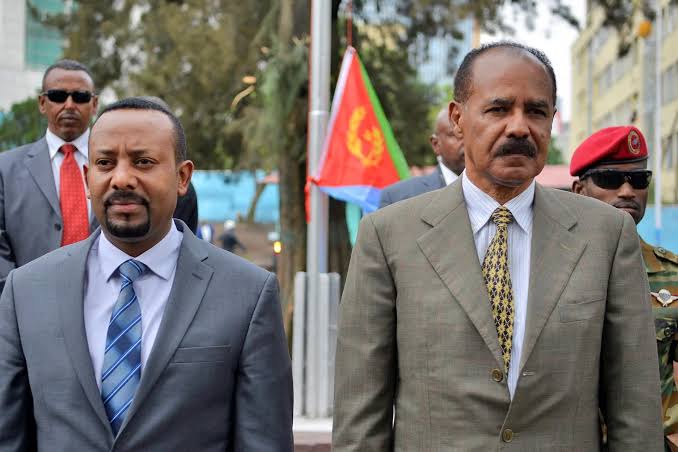
Tensions between Ethiopia and Eritrea have escalated sharply after Addis Ababa closed its embassy in Asmara and expelled 10 Eritrean diplomats, prompting Eritrea to announce that it was severing diplomatic relations with its neighbour.
The diplomatic rupture comes as fighting intensifies in northern Ethiopia, particularly in the Tigray region, raising fears that a conflict that began as an internal Ethiopian crisis could develop into a broader confrontation involving neighbouring countries.
The African Union Commission has called on Ethiopia, Eritrea and Egypt to exercise maximum restraint and resolve their differences through diplomatic channels and peaceful dialogue.
Ethiopia announced on Thursday that it was closing its embassy in Eritrea and ordering 10 Eritrean diplomats to leave the country within 48 hours.
Addis Ababa accused Eritrea of engaging in what it described as direct and indirect hostile activities and said the actions of the expelled diplomats posed a threat to Ethiopian national security.
Eritrea rejected Ethiopia’s accusations and subsequently announced that it was cutting diplomatic ties with Ethiopia. Asmara has also denied allegations that it is supporting armed groups fighting the Ethiopian government.
The diplomatic breakdown follows a rapid escalation of fighting inside Ethiopia.
Fighting erupted again in Tigray in late September, several years after the devastating 2020–2022 conflict between Ethiopia’s federal government and the Tigray People’s Liberation Front (TPLF).
Ethiopian federal forces and allied militias have advanced towards Mekelle, the regional capital. Residents told Reuters that banks and shops in the city were closed as government forces reportedly moved within striking distance of the city.
The TPLF and its allies have also been involved in fighting in neighbouring Amhara and Afar regions.
The renewed violence has raised concerns about a return to a much wider war, particularly because Tigray borders both Eritrea and Sudan.
Reports have also emerged of explosions in Addis Ababa that were attributed by a source linked to the opposition alliance to drone attacks. Reuters said it could not independently verify the claim.
Ethiopia and Eritrea have a long history of conflict and rivalry.
The two countries fought a border war from 1998 to 2000 before relations improved dramatically in 2018, when Ethiopian Prime Minister Abiy Ahmed and Eritrean President Isaias Afwerki agreed to restore diplomatic relations.
Eritrean forces subsequently fought alongside Ethiopian government troops during the 2020–2022 Tigray war.
Relations have since deteriorated again, with Ethiopia’s efforts to secure reliable access to the Red Sea becoming a particularly sensitive issue.
Eritrea controls important Red Sea ports, including Assab, and has viewed Ethiopia’s push for maritime access with concern. Analysts say the dispute over access to the sea adds another layer to the current tensions.
The crisis is not limited to Ethiopia and Eritrea.
Ethiopia has accused Egypt and Sudan, alongside Eritrea, of supporting forces opposed to the federal government. The countries named by Addis Ababa have denied the allegations.
Relations between Ethiopia and Egypt have already been strained by their longstanding dispute over the Grand Ethiopian Renaissance Dam on the Blue Nile.
Sudan, meanwhile, has been fighting a civil war for more than three years, creating another source of instability along Ethiopia’s western border.
The simultaneous crises have created the possibility that developments in one country could affect security and military calculations in another.
The geography of the current crisis is particularly significant.
Tigray borders Eritrea to the north and Sudan to the west, while the wider Ethiopian conflict is also close to the Red Sea and the strategic routes connecting the region to Djibouti.
A prolonged conflict could therefore affect trade routes, humanitarian access and regional security.
The Chatham House think tank has warned that the renewed fighting in Tigray could spill beyond Ethiopia into Eritrea and Sudan, particularly if tensions between Addis Ababa and its neighbours continue to deteriorate.
The possibility of a wider conflict has also prompted renewed international calls for diplomacy.
The African Union has called on Ethiopia, Eritrea and Egypt to avoid actions or statements that could further escalate tensions.
The continental body said the countries should keep communication channels open and address their disagreements through established diplomatic mechanisms and peaceful negotiations.
For now, there is no indication that Ethiopia and Eritrea are formally preparing for a new interstate war. However, the combination of renewed fighting in Tigray, the collapse of diplomatic relations, competing interests over Red Sea access and accusations involving neighbouring states has significantly increased the risks.
The immediate focus will be on developments around Mekelle and the Tigray front, as well as whether Ethiopia and Eritrea can prevent their latest diplomatic confrontation from developing into direct military conflict.


-

 Latest6 days ago
Pastor Chris Oyakhilome announces mother’s passing at 88 [VIDEO]
-

 Latest1 week ago
Arsenal eye €70-80m move for Real Madrid star
-

 Football4 days ago
How David Beckham made $51.1m from 2026 World Cup, surpassing winners’ prize
-

 Crime7 days ago
Police arrest suspect, launch manhunt for 2 others over Delta Education Director’s death
-

 Latest6 days ago
How adulterated palm oil, coloured pepper are putting consumers at risk
-

 Latest1 week ago
Obi left $155m in Anambra, Otti insists amid debt controversy
-

 Crime6 days ago
Deaths in NSCDC Custody: Can Nigeria guarantee the safety of detainees?
-

 Comments and Issues5 days ago
Fani-Kayode on Atiku: Separating claims from the record