
Latest
Atiku dissects Tinubu’s economic policies amid crisis, advocates recovery plan
Former Vice President Atiku Abubakar criticizes President Bola Ahmed Tinubu’s economic strategies, claiming they have led Nigeria into financial crisis. He contrasts his comprehensive Recovery Plan with Tinubu’s “erratic” approach and emphasizes the need for experienced leadership in navigating the country’s economic challenges.

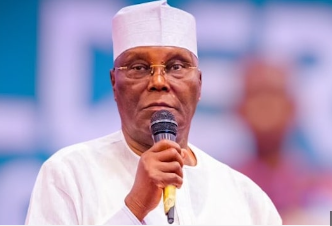
Former Vice President and 2023 Presidential Candidate for the Peoples Democratic Party (PDP), Atiku Abubakar, has sharply criticized President Bola Ahmed Tinubu’s economic policies, claiming they have plunged Nigeria into financial crisis.
In a recent statement, Atiku contrasted his comprehensive Recovery Plan with what he described as Tinubu’s “erratic, trial-and-error” economic management.
Atiku expressed concern over the Tinubu administration’s hasty and untested policies, arguing that Nigeria’s current economic troubles stem from a lack of preparation and strategic vision.
“Like many Nigerians, I believe we are in this turmoil because the Tinubu administration rushed into power without a coherent plan,” he stated.
While acknowledging the ongoing public discussions about his proposed economic alternatives, Atiku pointed to the administration’s recent responses, which included a national prayer led by the First Lady and the National Security Adviser.
“Isn’t it interesting how the so-called ‘tested’ Tinubu administration’s only policy response seems to be a national prayer… just 24 hours after I offered my alternative solutions?” he quipped.
Although he recognized the value of prayer, Atiku emphasized the need for diligent work to achieve real results, citing scriptures that advocate for both faith and action.
In contrast, Atiku highlighted his Recovery Plan, a detailed economic strategy developed with significant input from Nigerians to ensure inclusivity and relevance. His plan aims to stimulate critical sectors, reduce unemployment, and attract foreign investment.
“My team not only created a comprehensive Recovery Plan but also incorporated substantial feedback from Nigerians, ensuring our approach is well-informed and inclusive,” he explained, asserting that it would create a sustainable economic pathway focused on growth and stability.
Recalling Nigeria’s economic successes during previous PDP administrations, Atiku noted that from 1999 to 2003, when he served as Vice President under President Olusegun Obasanjo, Nigeria experienced an average growth rate of 6.59%, peaking at 15% in 2002.
He contrasted this with Tinubu’s administration, which he claims has seen an “abysmal” growth rate of 2.8%, arguing that this disparity highlights the urgency of the current economic crisis.
“The average GDP growth under the Obasanjo administration was 6.59% and peaked at 15% in 2002; it was 7.98% under Yar’Adua and 4.8% under Jonathan, compared to the dismal 2.8% of the so-called ‘tested’ Tinubu era,” Atiku said.
He called for an end to what he termed “shambolic ‘bolekaja’ economic policy prescriptions” and rejected the administration’s reliance on tax increases as a solution to Nigeria’s economic problems.
ALSO READ : BREAKING NEWS : Tinubu swears in seven new ministers
Advocating for an alternative economic approach, Atiku pointed to countries like the United Arab Emirates, Qatar, and Monaco, which have fostered economic growth through lower taxation. “Why are we focused on imposing more hardship on an already struggling populace?” he questioned, asserting that Nigeria cannot “tax its way out of the economic quagmire created by these misguided experimental policies.”
In closing, Atiku reminded the public of the controversial outcome of the 2023 presidential election, reiterating his belief that he did not lose but that the process was “criminally stolen from the Nigerian people.”
He emphasized that the current situation is a direct result of what he sees as a compromised electoral process.
Atiku’s statement highlights his conviction that Nigeria’s economy requires experienced leadership grounded in proven methods rather than experimentation.
He argues that his Recovery Plan provides a clear path forward, a message he hopes resonates with Nigerians as they face ongoing challenges. His unwavering belief in the necessity of experienced stewardship underscores his commitment to the nation’s economic recovery.










-
 Latest5 days ago
Israel marks 3 years since October 7 Hamas attack amid Gaza strikes, election debate
-

 Energy5 days ago
Fuel Battle: Dangote, marketers and government clash over petrol imports
-
 Energy6 days ago
Petrol, diesel prices rise 86% in 2026 as costs hit fresh highs
-
 Energy7 days ago
Has Iran lost control of the Strait of Hormuz? Oil flows rebound as war disruptions persist
-

 Football6 days ago
Nigeria’s World Cup exit under spotlight as FIFA’s DR Congo files emerge
-

 Latest6 days ago
US Court set to rule on release of FBI, DEA records on Tinubu
-
 Business6 days ago
Nigerian investors at a crossroads as fixed-income yields slide
-

 Business7 days ago
LoveWorld Trade and Investment Forum to Convene Business Leaders in Accra