
News
Date set for African Central Bank

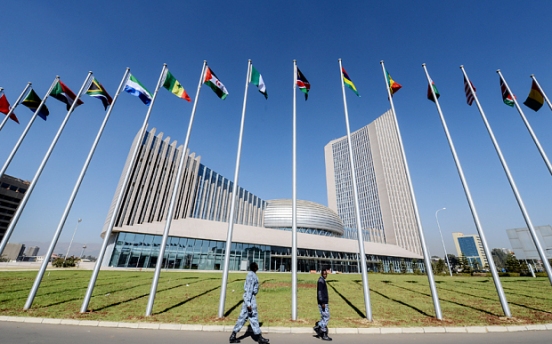
The plan to establish the African Central Bank (ACB) by the African Union will likely come to fruition by 2045.
Ms Naglaa Nozahie representing the Association of African Central Banks (AACB), said this while presenting the progress report on the convergence of criteria for the ACB to the African Union on Thursday.
The briefing was part of proceedings at the third session of the Specialised Technical Committee of the African Union (AU) on Finance, Monetary Affairs, Economic Planning and Integration, holding in Yaounde, Cameroon.
The meeting, which was organised in collaboration with the African Capacity Building Foundation, had as its theme: “Public Policies for Productive Transformation in Africa’’.
Nozahie, who is also a Special Advisor to the Governor, Central Bank of Egypt, said the purpose of ACB was “to build a common monetary policy and single African currency as a way to accelerate economic integration on the continent’’.
She said the AACB held several meetings from 2002 to 2017 and came up with the proposed macroeconomic criteria that must be met by each member state before the African Central Bank could be established.
She said inflation must be three per cent or less by 2038, overall budget deficit must also be less than or equal to three per cent by 2033.
Similarly, she said the ratio of central bank financing to the government must be zero by 2038 and that each country must have foreign reserves to cover at least six months of importation by 2038.
“In addition, the ratio of public debt to GDP must be less than 65 per cent while the ratio of total tax revenue to GDP must be more than 20 per cent.
“The ratio of government capital investment to tax revenue must be greater than 30 per cent,’’ she said.
Nozahie said experts, who worked on the convergence criteria, also agreed that member countries must maintain the stability of the nominal exchange rate at plus or minus 10 per cent.
She further said that analysis of member countries’ performance showed that only 18 countries, out of 52, currently met all the primary criteria for macroeconomic convergence.
It would be recalled that the AU Assembly in January 2005, which held in Abuja, outlined decisions for the establishment of some African financial institutions to improve intra-African trade.
Part of the decisions was that the African Central Bank should be located in Nigeria, the African Investment Bank in Libya, and the African Monetary Fund in Cameroon.
When it is fully implemented, the ACB will be the sole issuer of the African Single Currency and would become the banker of the African Government and Africa’s private and public banking institutions.
The ACB will regulate and supervise the African banking industry and will set the official interest and exchange rates, in conjunction with the African Government’s administration.


-

 Business1 week ago
Dangote Refinery IPO: 70% Subscription claim meets fourfold demand assertion as investors seek clarity
-

 Featured4 days ago
Inside INEC’s race to prepare for Nigeria’s 2027 elections
-

 Latest7 days ago
UCTH faces morgue crisis as 50 unclaimed corpses await mass burial
-

 Featured4 days ago
2027: APC unveils nationwide campaign timetable, Tinubu to rally in 12 states
-

 Business6 days ago
BREAKING: Nigeria’s Inflation Rate Drops to 14.63% in September
-

 Aviation1 week ago
Germany opens online application route for student, EU Blue Card and other long-stay visas
-

 Business5 days ago
President Tinubu and the Low Transport Fares Fiasco
-

 Business4 days ago
Court dismisses ₦170m Trade Fair contract claim, says Zenith Bank was not a party