
Crime
Reparations for Genocide: Namibia loses case against Germany

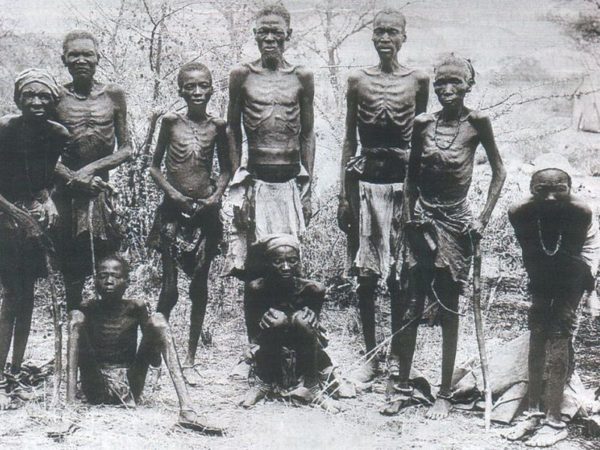
A U.S. District Judge Laura Taylor Swain on Wednesday dismissed a lawsuit seeking to require Germany to pay damages over genocide and property seizures by colonialists in what is now Namibia more than a century ago.
Swain in Manhattan said Germany was immune from claims by descendants of the Herero and Nama tribes, depriving her of jurisdiction over its role in what some historians have called the 20th century’s first genocide.
Kenneth McCallion, a lawyer for the plaintiffs, said he will discuss his clients’ legal options with them.
The case is unrelated to Germany’s atonement for its role in the Holocaust during World War Two, and its payment of more than $70 billion to survivors and others, according to the Conference on Jewish Material Claims Against Germany.
According to the plaintiffs, thousands of Herero and Nama were slaughtered, left to starve or died at concentration camps from 1904 to 1908, when Namibia was known as South-West Africa, after the tribes rebelled against German rule.
A 1985 United Nations report called the “massacre” of Hereros a genocide, and Germany has in recent years negotiated with Namibia’s government over the claims.
The plaintiffs said Germany was not shielded by the federal Foreign Sovereign Immunities Act because some of its plunder found its way to Manhattan, triggering exceptions covering commercial activity and improper “takings.”
They alleged that misappropriated funds were used to buy buildings housing Germany’s consulate general and U.N. mission, while skulls and other human remains were sent to the American Museum of Natural History, and a written account of the genocide went to the New York Public Library.
Swain, however, said the exceptions to sovereign immunity were narrow, and the plaintiffs’ relatively expansive view could subject Germany to liability for holding cultural programs or conducting boiler repairs at its buildings.
She also said the transfers of human remains and the account of the genocide bore no “direct” or “immediate” connection to Germany’s activities in southwestern Africa.
Jeffrey Harris, a lawyer for Germany, in an interview said the decision “should stand up if there is an appeal. It says the very specific requirements that would allow a foreign sovereign such as Germany to be sued in the United States were not met.”
The case is Rukoro et al v Federal Republic of Germany, U.S. District Court, Southern District of New York, No. 17-00062.


-

 Business1 week ago
Dangote Refinery IPO: 70% Subscription claim meets fourfold demand assertion as investors seek clarity
-

 Featured4 days ago
Inside INEC’s race to prepare for Nigeria’s 2027 elections
-

 Latest6 days ago
UCTH faces morgue crisis as 50 unclaimed corpses await mass burial
-

 Featured4 days ago
2027: APC unveils nationwide campaign timetable, Tinubu to rally in 12 states
-

 Business6 days ago
BREAKING: Nigeria’s Inflation Rate Drops to 14.63% in September
-

 Aviation1 week ago
Germany opens online application route for student, EU Blue Card and other long-stay visas
-

 Business5 days ago
President Tinubu and the Low Transport Fares Fiasco
-
 Business4 days ago
Court dismisses ₦170m Trade Fair contract claim, says Zenith Bank was not a party