
Business
DMO under-reporting Nigeria’s debt level, says expert

Analysts at FSDH Merchant Bank Limited have argued that considering the foreign exchange differential in the system, the Debt Management Office (DMO) has been under-reporting the country’s debt level.
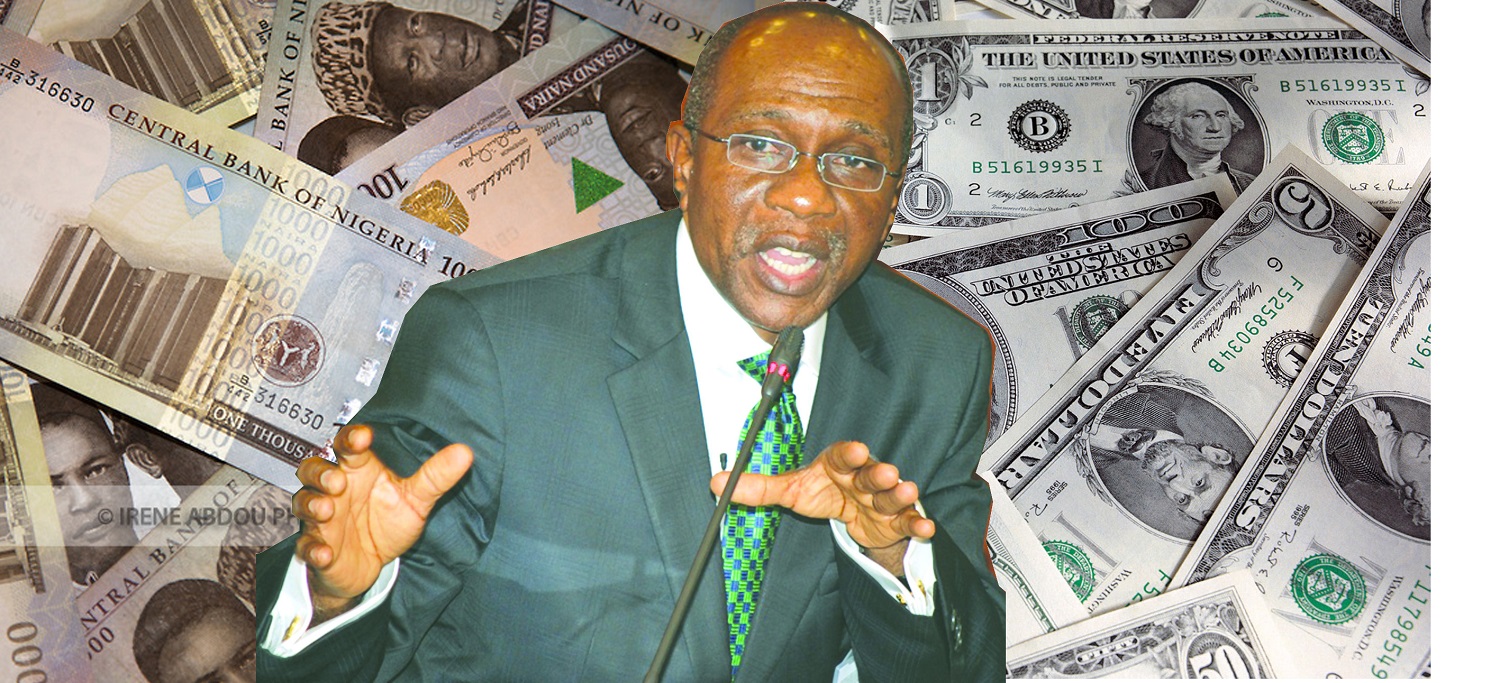
Providing insights into a report titled, ‘Public Debt Vulnerable to Exchange Rate Movements,’ released by his firm at the weekend, the Head of Research at FSDH Merchant Bank, Ayodele Akinwunmi, maintained that while the DMO uses N305 to a dollar to calculate the country’s debt level, the widely accepted rate in the foreign exchange market is N360 to a dollar.
Akinwunmi explained, “We are aware that the last Eurobond that the federal government borrowed, they did not convert the dollars to naira at N305 to a dollar. It was converted to naira at about N340 to a dollar.
“So, for example, if you have $1 billion that you converted at about N305 to a dollar, you will be reporting that you have N305 billion debt. But if you had converted it at N340 to a dollar, it means you have N340 billion debt.
“But we all know that the ruling exchange rate we have in the market today is in the region of N360 to a dollar. So, if you convert it at N360 to a dollar, it means you are under-reporting the debt by about N55 billion.
“So, when we looked at the total external debts that we have in dollars and we used N360 to a dollar, it means that the debt should have increased by about N1.2 trillion. So, rather than reporting total debt of N22 trillion, it should have been over N23 trillion.”
He added, “The International Monetary Fund and World Bank have been saying we should harmonise our exchange rate. So, if we are going to harmonise our exchange rate, there is no way we are going to go back to N305 to a dollar. Banks are not converting their assets at N305 to a dollar.”
The FSDH report anticipated that interest rates and yields in the global financial market would increase further as the normalisation of monetary policy in advanced countries continues. This development was expected to have two major implications.
According to the report, firstly, countries or corporates that plan to raise money from the international debt market may pay higher interest rates because of rising yields.
Secondly, countries in emerging markets may adjust the yields on their fixed income securities to sustain the interests of investors, both local and foreign, in the instruments.
The United States Federal Reserve increased interest rate by 25 basis points to 1.75 per cent to two per cent at its June 2018 meeting.








-
 Latest6 days ago
Israel marks 3 years since October 7 Hamas attack amid Gaza strikes, election debate
-

 Energy5 days ago
Fuel Battle: Dangote, marketers and government clash over petrol imports
-

 Energy7 days ago
Petrol, diesel prices rise 86% in 2026 as costs hit fresh highs
-

 Energy1 week ago
Has Iran lost control of the Strait of Hormuz? Oil flows rebound as war disruptions persist
-

 Football6 days ago
Nigeria’s World Cup exit under spotlight as FIFA’s DR Congo files emerge
-

 Latest6 days ago
US Court set to rule on release of FBI, DEA records on Tinubu
-

 Business6 days ago
Nigerian investors at a crossroads as fixed-income yields slide
-

 Business7 days ago
LoveWorld Trade and Investment Forum to Convene Business Leaders in Accra