
Maritime
Don’t use CVFF to set up shipping line, Obasanjo tells FG


By RICHARDS ADENIYI
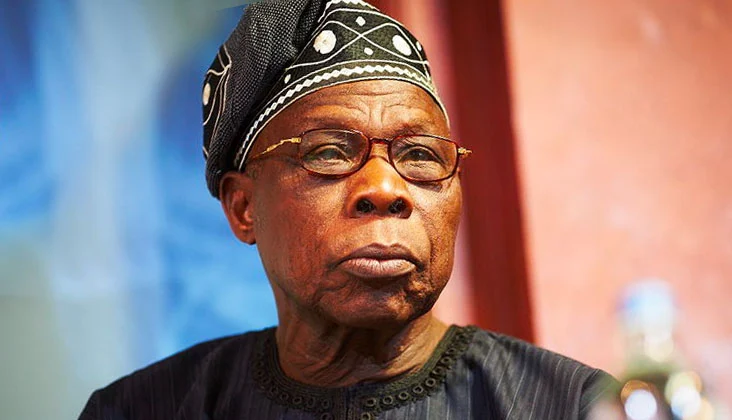
FORMER President, Chief Olusegun Obasanjo has advised the federal government against the use of the Cabotage Vessel Financing Fund, CVFF, or any other government fund to establish shipping line or the planned National Carrier.
Obaanjo who spoke at the Stakeholders Conference on the Maritime in Lagos said government should instead adopt models that have worked in other sector of the economy.
He the telecommunication sector and the Nigerian Natural Liquefied Gas (NNLG) as among the examples of models that should be adopted.
He said that in the telecoms sector, even without the involvement of government, the private sector has done well. On the NNLG, he said the company has also been doing well and also has vessels involved in the carriage of her cargoes.
Obasanjo recalled how his administration acquired 19 ships for the Nigerian National Shipping Line, NNSL which all went down the drain along with other vessels belonging to the company.
He attributed the failure of the NNSL to corruption.
ALSO SEE: National carrier will enhance competition in aviation sector – Aviation minister
The Minister of Transportation, Hon Rotimi Amaechi in his speech noted that while the industry has the potential to generate huge revenues for the government, there have been lack of adequate capacity level and revenue leakages in the sector over the years. Amaechi said that this was either caused by corrupt practices, management inefficiency, application of inappropriate technology and a slow or non-response to industry demands as the case may be.
Noting that there has been reform in the sector, he said the objectives of the sector were yet to be achieved.
Amaechi also pointed out that the maritime industry has over the years been running without a befitting policy, adding that the programme for developing seafaring officers has been punctuated by the lacunae of not providing berths on board ships for cadets to accomplish their sea training. He also drew the attention of the stakeholders to the fact that despite being the destination of well over 80 percent of cargoes in the sub-region, Nigeria does not have a national carrier since the collapse of the NNSL.
He promised that government was committed to ensuring a seamless multimodal transport system to facilitate backward integration of all sectors of the economy. He added that Nigeria as a member of International Maritime Organisation, IMO, was ready to create an enabling environment for steering the maritime industry to its rightful position through formulation of an all-encompassing maritime policy, providing a safe and secure environment for both foreign and indigenous investors to reap their returns on investment.




-
 Latest6 days ago
Full List: Meet the 2026 Nobel Prize winners across six categories
-

 Football5 days ago
Premier League Matchweek 7: Five Fixtures That Could Shape the Weekend
-

 Latest5 days ago
Umahi defends Lagos-Calabar highway route changes amid public outcry
-
 Business4 days ago
Dangote Refinery IPO: 70% Subscription claim meets fourfold demand assertion as investors seek clarity
-
Business5 days ago
Dangote Refinery IPO Extension: Was the 70% subscription report overhyped?
-

 Latest3 days ago
UCTH faces morgue crisis as 50 unclaimed corpses await mass burial
-
 Featured5 days ago
El-Rufai, ADC governorship candidate’s court appearance puts Kaduna opposition politics in focus
-

 Business3 days ago
BREAKING: Nigeria’s Inflation Rate Drops to 14.63% in September