
Featured
FG succumbs to pressure, set to review restriction on 41 items

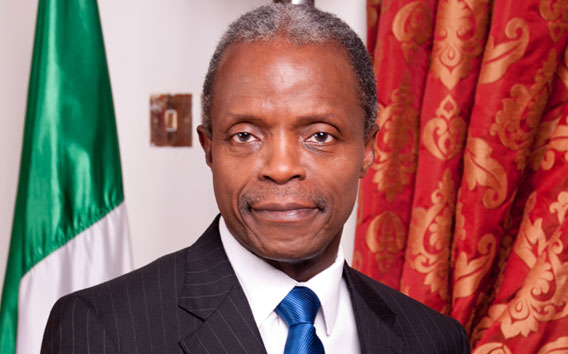
The Federal Government said it is going to review the Central Bank of Nigeria’s restriction on 41 imported items from accessing forex, replacing the policy with a more trade policy-driven restrictions.
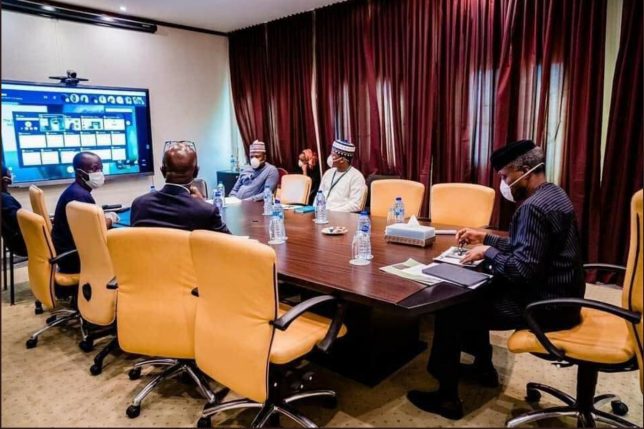
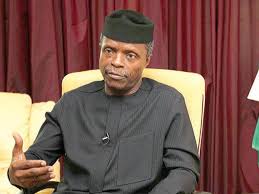
Vice President Yemi Osinbajo who disclosed this on Tuesday explained that in stabilizing the macro-economic environment, the FG has focused on aligning fiscal with monetary policy and nudging the CBN towards the objective of more market-determined exchange rates.
He the government plans to switch to “more trade policy-driven restrictions, taking into account those items that are required and locally unavailable raw materials,” Osinbajo said, according to a statement by the presidency. He did not elaborate.
Osinbajo said there was “light at the end of the tunnel” for Nigeria, which is undergoing its first recession in a quarter of a century.
Nigeria, a major oil producer has suffered from dollar shortages due to a fall in oil revenues, hurting both the public finances and the country’s foreign reserves. To avoid having to devalue its currency again, the central bank is running a system of multiple exchange rates that has confused investors.
On Tuesday CBN’s, spokesman said the bank has been working to make exchange rates converge on the official and black markets.
ALSO SEE:LASG halts pilgrims sponsorship, saves N2.4bn
The naira was quoted weaker on Tuesday at an investor trading window, at 380.31 per dollar, data from market regulator FMDQ OTC Securities Exchange showed. The official market rate was 305.85 while on the black market a dollar fetched 390 naira.
Analysts doubt whether the central bank can sustain such sales. The convoluted exchange rate system masks pressure on the naira with the regulator trying to avoid a devaluation.
The 41 items’ restriction from the official foreign exchange window by the Central Bank of Nigeria (CBN), was introduced in 2015 to support the naira after it was hammered by a fall in oil prices.
The policy has however led to the closure of plants in various sectors, as they have been unable to import the raw materials or spare parts they need to stay in production.


-

 Business1 week ago
Dangote Refinery IPO: 70% Subscription claim meets fourfold demand assertion as investors seek clarity
-

 Featured4 days ago
Inside INEC’s race to prepare for Nigeria’s 2027 elections
-

 Latest6 days ago
UCTH faces morgue crisis as 50 unclaimed corpses await mass burial
-
 Featured4 days ago
2027: APC unveils nationwide campaign timetable, Tinubu to rally in 12 states
-
 Business6 days ago
BREAKING: Nigeria’s Inflation Rate Drops to 14.63% in September
-

 Aviation1 week ago
Germany opens online application route for student, EU Blue Card and other long-stay visas
-
 Business4 days ago
Court dismisses ₦170m Trade Fair contract claim, says Zenith Bank was not a party
-

 Business5 days ago
President Tinubu and the Low Transport Fares Fiasco