
Energy
FG targets 13,000MW solar electricity – Minister

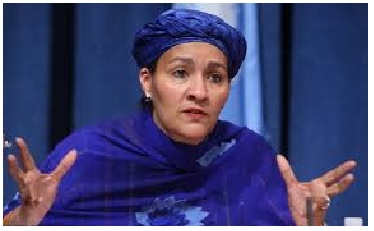
The Federal Government will develop about 13,000 megawatts (13 gigawatts) of off-grid electricity from solar energy, the Minister of Environment, Hajiya Amina Mohammed, has disclosed.
The minister, yesterday, said the Federal Government was working on the possibility of diversifying the country’s energy mix and laid emphases on renewable energy and efficient gas power in meeting the energy needs of Nigerians.
Mrs. Mohammed, according to a document she issued to the media, containing some of the highlights and agreements reached at the recently concluded Conference of Parties on Climate Change, otherwise known as COP 21, which was held in Paris, France, said that “in particular, we plan to develop around 13GW of off-grid solar power, delivering energy access to the poorest communities in a cheaper and healthier manner with less emission.”
The minister also noted that the government would increase the use of climate-smart agriculture through irrigation systems, climate-resilient crops and broader sustainable land management practices, “given the climate risks that Nigeria faces, this is the only way in which the government’s ambitious Agriculture Transformation Agenda can be delivered,” she added.
“Nigeria’s ambitious INDCs aim at reducing emissions by 20 per cent by the year 2030 with support from the international community. This will support the restructuring of the economy in a way that will facilitate inclusive growth with vast opportunities to diversify the energy mix, with emphasis on renewable energy and efficient gas power.
“In particular, we plan to develop around 13GW of off-grid solar power, delivering energy access to the poorest communities in a cheaper and healthier manner with less emission. We also plan to create a more efficient, lower carbon oil and gas sector. By ending gas flaring and using the gas for commercial purposes, including power generation, we could generate as much as $7.5bn worth of benefits,” she added.
She noted that the government would substantially increase the use of climate smart agriculture through irrigation systems, climate resilient crops and broader sustainable land management practices.
“Given the climate risks that Nigeria faces, this is the only way in which the government’s ambitious Agriculture Transformation Agenda can be delivered,” she added.
Mohammed said these opportunities would not only reduce emissions and improve climate resilience, but that the approach would unlock economic opportunities.
The minister further revealed that the World Bank has projected that a combination of low carbon activities could provide a boost to the Nigerian economy and add as much as two per cent to the country’s Gross Domestic Product.
She urged the international community to support and assist Nigeria with financing, technology and capacity building, just as she enjoined the private sector and civil society to partner the government to unlock the opportunities provided by the historic climate change agreement, emphasising that, “working together, I firmly believe that we can commit ourselves to actions that will serve as a springboard to Nigeria’s new climate economy.”








-

 Latest6 days ago
Full List: Meet the 2026 Nobel Prize winners across six categories
-

 Football6 days ago
Premier League Matchweek 7: Five Fixtures That Could Shape the Weekend
-

 Latest5 days ago
Umahi defends Lagos-Calabar highway route changes amid public outcry
-

 Business4 days ago
Dangote Refinery IPO: 70% Subscription claim meets fourfold demand assertion as investors seek clarity
-
Business5 days ago
Dangote Refinery IPO Extension: Was the 70% subscription report overhyped?
-

 Latest3 days ago
UCTH faces morgue crisis as 50 unclaimed corpses await mass burial
-

 Featured5 days ago
El-Rufai, ADC governorship candidate’s court appearance puts Kaduna opposition politics in focus
-

 Business3 days ago
BREAKING: Nigeria’s Inflation Rate Drops to 14.63% in September