
Business
Forex supply issues creating exchange rate volatility, says CBN

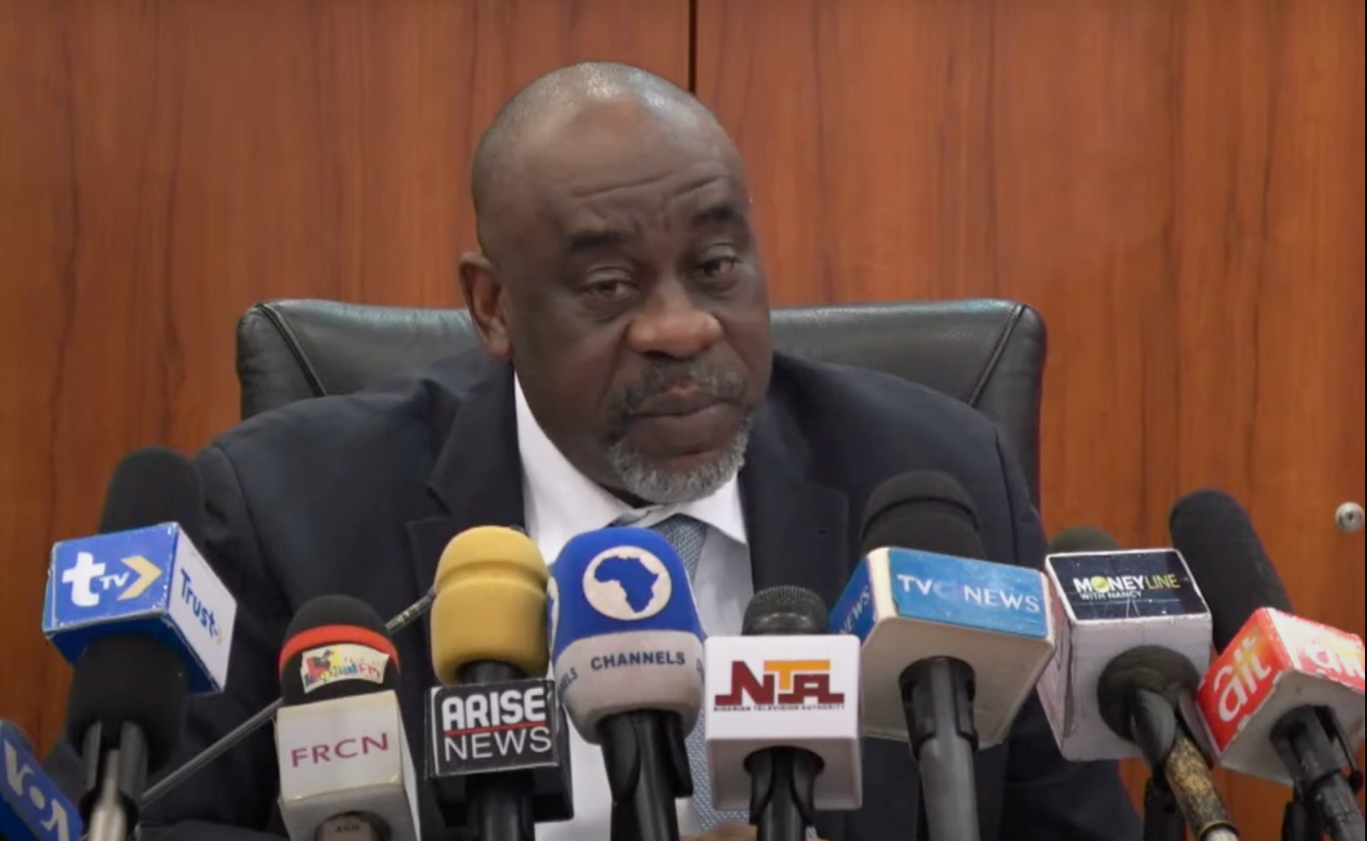
Acting CBN Governor Fola Shonubi admitted on Tuesday that supply-demand imbalances are fueling current volatility in Nigeria’s exchange rates.
In a press briefing following the Monetary Policy Committee meeting, Shonubi affirmed that the Central Bank of Nigeria (CBN) has no plans to unify rates, but is rather focused on fostering a more effective and efficient market.
“We are not trying to unify at any rate. We believe that we need to encourage the market to be more efficient and more effective and that takes a bit of time.”
READ ALSO: Dollar hits N860 at parallel market as forex scarcity worsens
He cited the supply-demand disparity and the market’s evolution as driving forces behind the current volatility in exchange rates.
The acting governor acknowledged the prevailing volatility, which he says stems from pent-up demand that outpaces current supply.
“And also the reality that there is pent up demand which current supply may not be sufficient for,” Shonubi said.
However, he remains optimistic that as this demand is met, we will see a more orderly market emerging.
Shonubi also called for a redefinition of the Import and Export (I&E) window, which he sees as more than just an exchange point for imports and exports.
“We also need to stop calling it the I&E because it is much more than the I&E for us,” he said,
“It is a market where anybody and everybody through the licensed institutions can participate.”
Despite the present instability, the acting CBN Governor predicts a normalization of volatility, with the Central Bank set to play a key role in achieving this stability.
“Role of CBN is to intervene and keep the market at a fairly stable level. We have our view as to what that level is,” said Shonubi.
He also stressed the CBN’s intervention strategy in the face of volatility, stating:
READ ALSO: Widening FX divergence raises concerns among forex traders
“As the market continues to oscillate around that level. If there is a need for us to intervene either by buying or selling, that is the role of the Central Bank.”
Shonubi assured that the CBN has already begun such interventions and will persist in this role, to guide the market towards levels deemed appropriate by the bank.
He concluded by expressing confidence in the future moderation of market volatility. “These volatile times are expected and we believe it should moderate later.”
With these revelations, the CBN appears to be assuaging the market by giving a reassuring signal to market participants about its commitment to fostering a more efficient and stable market, even amidst the current supply-demand challenges and volatility in the nation’s economy.











-
 Latest5 days ago
Israel marks 3 years since October 7 Hamas attack amid Gaza strikes, election debate
-

 Energy5 days ago
Fuel Battle: Dangote, marketers and government clash over petrol imports
-

 Energy6 days ago
Petrol, diesel prices rise 86% in 2026 as costs hit fresh highs
-

 Energy7 days ago
Has Iran lost control of the Strait of Hormuz? Oil flows rebound as war disruptions persist
-

 Football6 days ago
Nigeria’s World Cup exit under spotlight as FIFA’s DR Congo files emerge
-

 Latest6 days ago
US Court set to rule on release of FBI, DEA records on Tinubu
-

 Business6 days ago
Nigerian investors at a crossroads as fixed-income yields slide
-

 Business7 days ago
LoveWorld Trade and Investment Forum to Convene Business Leaders in Accra