
Business
GTB, Zenith Bank, 8 others grow combined profit by N120bn


Guaranty Trust Holding Company (GTCO), Zenith Bank and eight other banks in the country showed resilience in 2021 despite competition from financial technology companies as they posted a combined profit after tax of N741.7 billion.
The profit for 2021 is an increase by 19 percent or N120 billion when compared to N620.7 billion recorded in 2020 data from the bank’s financial statements shown on the Nigerian Exchange.
The other banks include Eco Bank, Fidelity Bank, Jaiz bank, and FCMB, Wema, Unity, United Bank for Africa (UBA) and Sterling bank among others.
The likes of Access Bank and First Bank are yet to release their full-year performances.
Among the banks surveyed only GTCO recorded a dip in profit from N201.4 billion in 2020 to N174.8 billion last year.
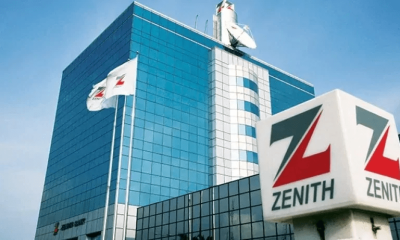
The gainers’ table was led by Zenith Bank as its profit after tax jumped to N244.5 billion in 2021 compared to the N230.5 billion recorded the previous year.
READ ALSO: Banks steps up measures to ration foreign currency sales
GT profit is the second biggest followed by Eco Bank’s N143.1 billion which is a massive 324.1% jump when compared to the profit after tax of N33.7 billion posted in 2020.
UBA also recorded an increase in profit of N118.6 billion compared to N109.2 billion in 2020.
FCMB profit after tax for last year was N20.9 billion, Sterling bank’s 12.8 billion and that of Fidelity was 11.6 billion.
Wema, Jaiz and Unity bank all recorded a profit of N8.86 billion, N3.83 billion and N2.47 billion respectively.
Despite commercial bank’s income, Fintech companies like Paystack, PiggyVest, Kuda Bank and others are innovating past traditional institutions by making digital financial services like lending, savings, or investing readily available to people.
READ ALSO: FG shuts GoCash, Okash, EasyCredit, Easy Moni, other Illegal online Banks
They have been able to recognize the pain points for users, which have not been addressed by commercial banks.
Also, other fintech startups have fueled the growth of alternative lenders which offer both higher yields to investors and faster, cheaper, more convenient loans for borrowers compared to traditional banks.
Startups like Carbon and Branch offer lower loan rates than commercial banks and this is mostly because fintech companies are not subject to the operational costs involved in running a traditional bank with multiple branches.


-

 Latest1 week ago
Global excitement builds as Healing Streams Live Services returns October 23
-

 Featured6 days ago
Inside INEC’s race to prepare for Nigeria’s 2027 elections
-

 Featured6 days ago
2027: APC unveils nationwide campaign timetable, Tinubu to rally in 12 states
-

 Business1 week ago
President Tinubu and the Low Transport Fares Fiasco
-

 Business4 days ago
Naira faces exchange rate gap as Dollar hits N1,380 on parallel market
-
 Business6 days ago
Court dismisses ₦170m Trade Fair contract claim, says Zenith Bank was not a party
-

 Latest6 days ago
Breaking: NNPCL raises petrol price to ₦1,405 per litre amid discount controversy
-

 Business1 week ago
Rite Foods targets beverage market growth with LIDA Malt